Ghana’s unemployment rate has slightly increased from the second quarter record to 13 percent in the third quarter of 2025, signaling a constraint in employment opportunities in the country.
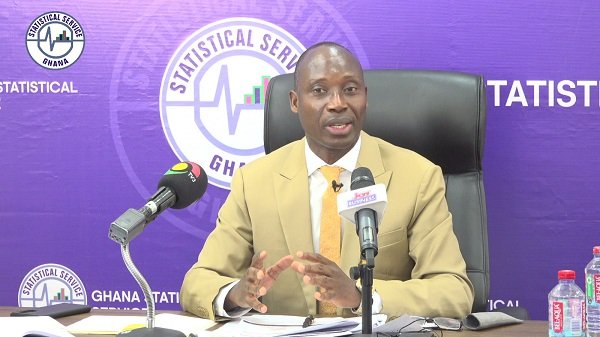
Announcing the 2025 Labour Force Statistics for 2025 Q1-3, the Government Statistician, Dr Alhassan Iddrisu, said that the unemployment rate reduced from 12.8 percent in quarter one to 12.6 percent in the second quarter but rose in quarter three.
“The overall unemployment rates averaged 12.8 percent across the three quarters, that’s quarter one, two, and three of 2025, reducing from 12.8 percent in quarter one of 2025 to 12.6 percent in quarter two of 2025, before increasing slightly to 13 percent in quarter three of 2025.”
Dr Alhassan Iddrisu, Government Statistician
According to Dr Iddrisu, female unemployment was “consistently higher than male unemployment, with an average gap of 3.7 percentage points across the three quarters. And if you look at the gap in the third quarter of 2025, we are looking at 3.6 percentage points.”
The data further disclosed that over 7.2 million women were employed, compared to about 6 million men being employed. This trend is consistent in all three quarters of 2025. This shows the vital role of women in the Ghanaian labour market, which data clarifies is within the services, trade, and household enterprises.
Urban and Rural Unemployment
Urban unemployment averaged 15.1 percent over the three quarters, compared to 9.7 percent in rural areas. Unemployment in the urban area recorded 14.8, 15.2, and 15.4 percent in Q1, Q2, and Q3, respectively, compared to 17.0, 16.6, and 15.8 percent, respectively, for the same quarterly period in 2024.
The rural unemployment also recorded 10.2, 9.0, and 9.8 percent for the first, second, and third quarters, respectively, in 2025, compared to 10.5, 9.7, and 9.9 percent, respectively, for the same period in 2024.


This means that the first three quarters of 2025 performed relatively better than the same period in 2024, in terms of rural and urban unemployment reduction. However, both periods recorded a significantly high unemployment rate.

Also, unemployment was significantly higher and more severe in urban areas (cities) than in rural communities, with the highest gap of 6.2 percentage points occurring in quarter two of 2025. This likely reflects the high competition for limited formal jobs in urban areas.
“Employment was consistently higher in urban areas than in rural areas. And the data shows that the gap was largest, actually, in quarter two, when about 1.5 million more people were employed in urban areas than rural areas.”
Dr Alhassan Iddrisu, Government Statistician
According to Dr Iddrisu, 7.5 million people were employed in urban areas, and 5.95 million people were employed in rural areas in quarter three of 2025. This, he added, reflects continued rural-to-urban economic concentration and uneven spatial development.
Regional Unemployment Figures
From the data, regional disparities are quite pronounced. Across the three quarters, four regions, namely Western Region, Central Region, Greater Accra Region, and Ashanti Region, consistently recorded unemployment rates above the national level. This implies that these four regions recorded unemployment rates higher than 13 percent.
Four regions reported a decline in unemployment rates between quarter two and quarter three: Greater Accra Region (from 20.2 percent in Q2 to 19.6 percent in Q3), Volta Region (from 11.9 percent in Q2 to 11.4 percent in Q3), Bono Region (from 10.0 percent in Q2 to 9.4 percent in Q3), and Northern Region (from 7.8 percent in Q2 to 7.4 percent in Q3).
According to the Government Statistician, this is a clear signal of labor market pressure in metropolitan areas.
Youth Unemployment Rate
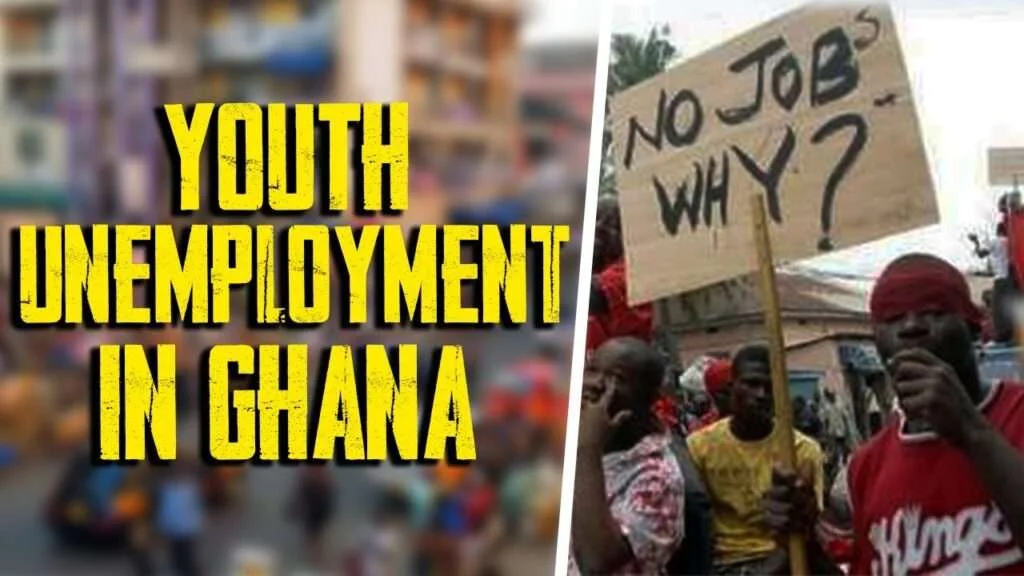
Dr Iddrisu emphasized that youth unemployment remains a major concern in Ghana. Previous and recent data points to the same concerning report.

Among youth aged 15 to 24 years, unemployment averaged 32.5 percent between quarter two and quarter three, reaching 34.4 percent in quarter three of 2025.
“So, the way we can contextualize this is to relate this to the national unemployment rate. If nationally, the unemployment rate is 13 percent, and we have the youth within the age bracket 15 to 24 years recording an unemployment rate of 34.4 percent in quarter three, then that is quite high, way higher than the national average.”
Dr Alhassan Iddrisu, Government Statistician
He again announced that for the broader age group, 15 to 35 years, unemployment averaged 21.9 percent, reaching 23.2 percent in quarter three of 2025.
The Greater Accra region recorded the highest youth unemployment for both age groups: 45.4 percent in Q2 and 49.3 percent in Q3 for the age group15 and 24 years; and 30.7 percent in Q2 and 33.1 percent in Q3 for the age group 15 to 35 years.
In contrast, regions like Bono East region recorded the lowest unemployment rates, with 7.7 percent in Q2 and 15.1 percent in Q3 for persons within the age group 15 to 24 years, and 6.6 percent in Q2 and 10.1 percent in Q3 for persons within the age group 15 to 35 years.
These, he emphasized, “are not abstract figures but represent millions of young Ghanaians searching for opportunity.”
The data serves as vital information to the government in its developmental plans to ensure that there is inclusivity for all groups in the economy. From gender (male and female), through localities (rural and urban areas), regional, and youth disparities in unemployment, the government should be more deliberate in its structural reform decisions.
READ ALSO: EOCO Recovers GHS337m, Smashes 2025 Target