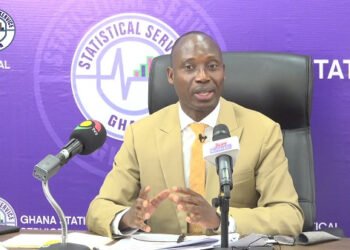
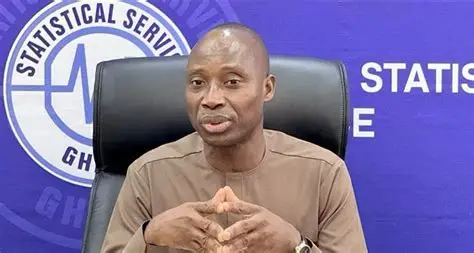
The Government Statistician, Dr Alhassan Iddrisu, has noted that Ghana’s unemployment situation is not due to a lack of new job creation but a mismatch in meeting the growing unemployment.
During his announcement of the 2025 Labour Force Statistics for Q1-3, he admitted that new jobs are being created. However, the job opportunities fail to correspond with the growing number of job seekers in a sustainable manner. This caused an excess of new entrants into the labour force.
“New job creation is still not fast enough to absorb new entrants, especially young people and urban job seekers.”
Dr Alhassan Iddrisu, Government Statistician
Wide Gap Between LFPR and Absorption Rate
According to the data, “across the three quarters, close to three-fourths (74.5 percent) of the working age population participated in the labour market.” More than a third of people within the working age in Ghana are active participants in the labour force, either working or actively seeking job opportunities.
The remaining, less than 30 percent, who are 15+ years, have generally made a personal choice not to work or actively seek employment during the period under study. Many reasons can account for this, including retirement, education, homemaking and family caring duties, disability or illness, personal choice, and discouragement.
“Across the three quarters, over 63 percent of the working-age population (15 years and older) had been employed,” the Government Statistician stated. It means that 63 percent of Ghanaians participating in the labour force within the period gained employment opportunities.
The 11.5 percent gap between the Labour Force Participation Rate (LFPR) and the Absorption Rate reflects millions of actual people. The inability of the rising jobs to match the unemployment rate, according to Dr Alhassan Iddrisu, is referenced by the gap.


Period-on-Period Unemployment Gap
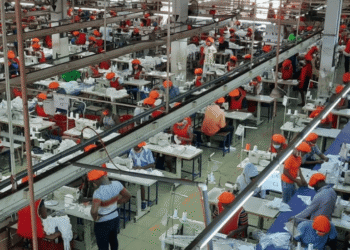
According to Dr Alhassan Iddrisu, “more than two-thirds of all workers are in vulnerable employment,” adding that “these are jobs without job security, stable income, or social protection.” This caused the persistent unemployment rate in the Ghanaian economy, despite rising job opportunities.

According to the GSS Quarterly Labour Statistics (July 2025 edition), in 2024, the quarterly Labour Force Participation Rate recorded 70, 69.9, 70.3, and 70.4 percent for Q1, Q2, Q3, and Q4, respectively. The report also recorded the Absorption Rate to be 60.1, 60.4, 60.9, and 61.2 percent, for the same 2024 quarterly period, respectively. This showed a gap (unemployment rate), on average of 9.5 percent (ranging from 9.2 to 9.9 percent).
For the first three quarters of 2025, the Labour Force Participation Rate was 72.9, 75.5, and 75.1 percent for Q1, Q2, and Q3, respectively. The Absorption Rate for the same period was 62.6, 66.0, and 65.3 percent, respectively. Also showing a gap averaging 9.9 percent (ranging from 9.5 to 10.3 percent).
For almost two years, the GSS data revealed a 9.5-9.9 percent gap despite growing employment opportunities, as stated by the Government Statistician. This persistent gap results from vulnerable employment.
He again mentioned that “vulnerable employment is especially high among women, rural residents, and those working in agriculture.” The data confirmed that “in all three quarters, female employment remained consistently higher than male employment, with over 7.2 million females employed compared with about 6 million males.”
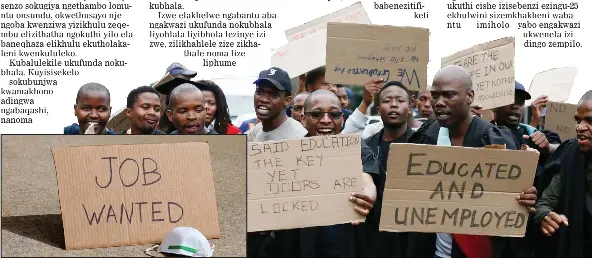
The gender with the highest employment rate also has the most vulnerable employment in the country. This should be a deep-seated concern for Ghana’s economic managers. Dr Iddrisu, therefore, raised the issue of job quality as the fundamental challenge of the Ghanaian economy, reiterating that the “employment numbers alone are not enough.”
Improving Ghana’s Job Quality
Ghana’s persistent unemployment, despite rising job numbers, stems from a mismatch between available (created) jobs and a stable, secure job that will outlast quarters or time periods. There is a need for high-quality, formal employment, coupled with the dominance of a structured and productive informal sector.
Ghana’s job market has been dominated by the informal sector, skills mismatch, low-productivity-wage jobs, and upward mobility without career advancement.

Improving job quality requires a multi-faceted approach focused on skills alignment with market demands, private sector growth, the formalization of the informal economy, a strong and central labour market information system (LMIS), and national policy consistency across years.
As Dr Alhassan Iddrisu emphasized, “the quality of jobs matters just as much as the quantity.” Rising jobs in Ghana will mean nothing to the unemployment fight if they are not stable and secure.
READ ALSO: GH¢192m Worth of Shares Traded in November As Bulls Tighten Grip on Ghana’s Capital Market