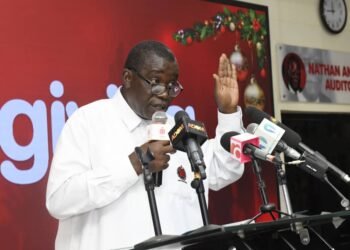
Hamza Suhuyini, a prominent member of the National Democratic Congress (NDC) communications team, has pushed back against critics of the government’s environmental record, asserting that the scale and depth of the illegal mining crisis makes a total victory within a single year an unrealistic expectation.
Speaking in the wake of the formal maturation of the Environmental Protection (Mining in Forest Reserves) Revocation Instrument, 2025, Suhuyini argued that while the government has moved decisively to secure the nation’s “green lungs,” the battle against galamsey requires a long-term strategic overhaul rather than a quick political fix.
“We are committed to the fight, but the scale and depth of illegal mining require long-term strategies and consistent action across all levels. It will be unfair to expect this government to deal with all issues of illegal mining under one year.
“We have shown commitment in fighting it in many ways. As a government, we know that because of how deep illegal mining is, it will be difficult for us to confront it in a matter of a year”
Hamza Suhuyini, NDC Communications Team Member
The new law, which officially matured on Wednesday, December 10, 2025, nullifies the controversial L.I. 2462 – a regulation that previously empowered the President to approve mining activities within protected forest reserves.
While the government and some Civil Society Organizations (CSOs) celebrate this as a fulfillment of its “listening mandate,” the move has ignited a fierce analytical debate over whether the administration is leading the fight or simply reacting to the weight of public pressure.
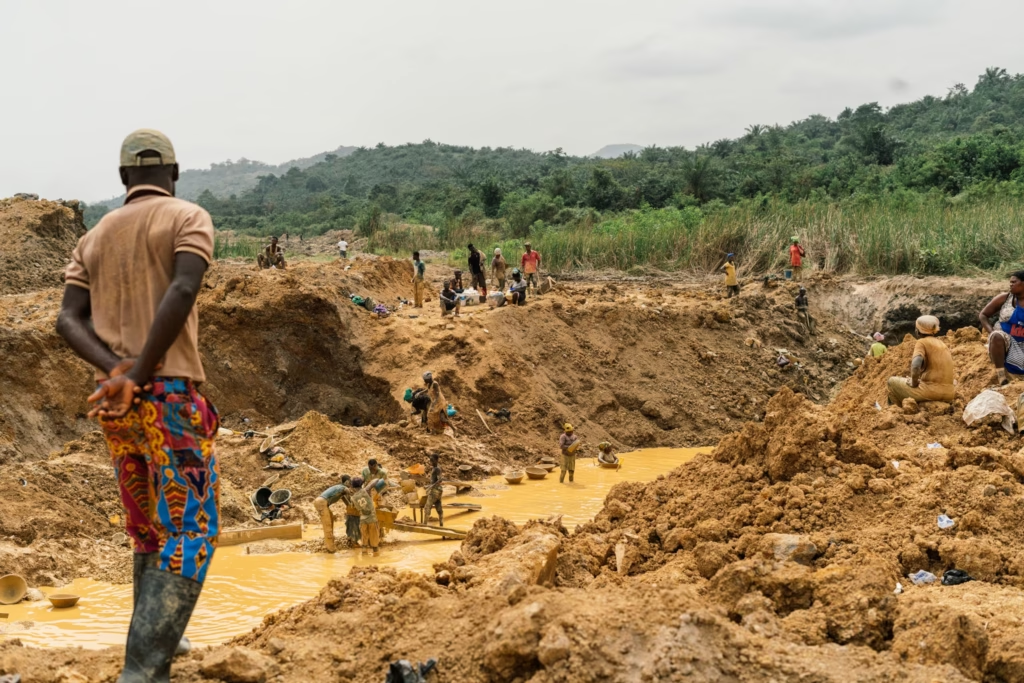
Suhuyini’s defense centered on the idea of strategic patience. He contended that the illegal mining industry is so deeply entrenched in the socio-economic fabric of certain regions that dismantling it requires more than just legislative pens; it requires sustained enforcement and inter-agency coordination that cannot be perfected in twelve months.
By framing the repeal of L.I. 2462 as a major milestone, Suhuyini positioned the NDC as a government that is methodically undoing the “existential threats inherited from the previous regime.”


12-Month Delay
However, the “strategic patience,” narrative faced a sharp rebuttal from the opposition.
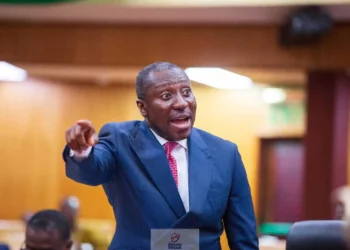
Ishaq Ibrahim, a lecturer at UPSA and NPP member, argued that the government’s timeline is not a sign of complexity, but a lack of a deliberate plan. He pointed out that if the NDC viewed forest mining as an urgent crisis while in opposition, the repeal of L.I. 2462 should not have taken a full year of governance to achieve.
The friction here lies in the definition of a “listening government.” Ibrahim suggested that the December 10th maturation of the revocation instrument was not a proactive policy choice, but a defensive retreat necessitated by a year of being beaten by public debate and opposition accountability.
“How long now since they took office? We are in December. How can a listening government wait all this while, especially when they said that mining in the forest was an existential threat to citizens?
“Even with the 12 months, it took a huge debate, and we held them accountable before they finally repealed it. It was just about entering Parliament, getting time allocated, and repealing it. Yet it took them 12 months”
Ishaq Ibrahim, Lecturer at UPSA and NPP Member

Beyond Legislation: The Enforcement Gap
While the political parties trade barbs over the legislative timeline, civil society is sounding the alarm on the practicalities of the “red zones.”
Awula Serwaa, Coordinator of Eco Conscious Citizen, welcomed the repeal of L.I. 2462 but questioned why it took so long to act on a promise touted since the campaign season. Her analysis shifted the focus from the floor of Parliament to the floor of the forest, arguing that a law on paper is useless if the Forestry Commission remains under-resourced.
The analytical consensus from the environmental lobby is that the fight has “failed Ghanaians” because it has been too heavily politicized. Serwaa’s call to action is for the government to move past the “NPP-NDC” blame game and equip forest guards to actually hold the lines that the new law has drawn.
“All the L.I. is doing now is protecting our forest reserves. We need to strengthen the Forestry Commission so that the guards are well equipped and can protect our forest reserves. This is not the time to be doing NPP and NDC matters”
Awula Serwaa, Coordinator of Eco Conscious Citizen
As the Environmental Protection (Mining in Forest Reserves) Revocation Instrument, 2025 enters the statute books, the government’s “one-year” defense will face its ultimate test.
Success will not be measured by the maturation of a document, but by whether the “listening government,” can turn legislative intent into clear, unpolluted water and restored forest cover in 2026.

“The score post is not about whether or not we did better in the galamsey fight. But I am saying they (NDC) had no plan in the fight. Beating them into repealing the LI 2462 is not part of their plan. If indeed it were, as a responsible government who was in opposition, they would have done it earlier”
Ishaq Ibrahim, Lecturer at UPSA and NPP Member
READ ALSO: Ghana’s Primary Target Crushes Debt Demons