As the year draws to a close, Ghana’s economy is delivering one of its most convincing comeback stories in recent history. In 2025, the country has recorded a sustained fiscal primary surplus, a milestone that is rapidly redefining its debt narrative.
This achievement has moved from a policy aspiration to a practical anchor for macroeconomic stability, signalling a decisive shift away from chronic deficits toward disciplined public finance management. By placing the primary balance at the heart of fiscal strategy, Ghana is steadily tightening the noose around its long-standing debt vulnerabilities, restoring confidence among investors and policymakers alike while laying firmer ground for long-term economic recovery.
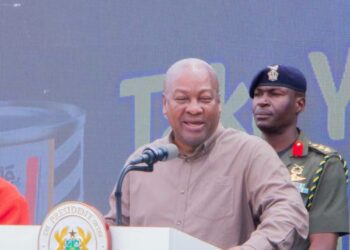
Under President John Mahama’s administration, the government has delivered on ambitious fiscal targets, transforming what was once a daunting debt burden into a manageable challenge. This primary surplus, revenue exceeding non-interest expenditures has not only met IMF benchmarks but exceeded them, signaling a shift from crisis management to sustainable growth.
The Power of the Primary Surplus
A fiscal primary surplus measures a government’s ability to cover its expenses excluding interest payments on debt. For Ghana, which faced a severe debt crisis in 2022-2023 leading to default and restructuring, achieving this surplus is pivotal. It directly reduces the need for new borrowing to service old debt, freeing resources for investment and breaking the cycle of debt accumulation.
In 2025, Ghana recorded a primary surplus of 1.1% of GDP in the first half of the year, surpassing the targeted 0.4%.
By the first eight months, this figure held steady at 1.1%, positioning the country on track for a full-year surplus of 1.5% of GDP. This performance marks one of the strongest fiscal returns in decades, driven by disciplined spending, improved revenue mobilization, and savings from debt restructuring.
Fiscal Discipline in Action, 2025 Performance Highlights
The Mahama government’s mid-year fiscal review in July 2025 revealed robust execution of the budget framework inherited and refined post-election. Revenue outperformance and controlled expenditures led to lower-than-planned borrowing, with interest savings of approximately GH¢4.9 billion supported by falling treasury yields.
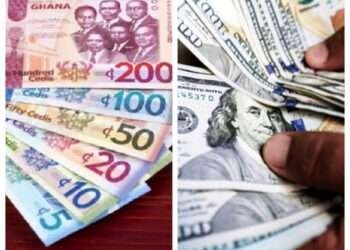
Economic growth complemented these efforts, expanding by 5.5% year-on-year in the third quarter of 2025, fueled by strong agriculture and services sectors. Inflation has cooled significantly, remaining under 10% by year-end projections, while the cedi appreciated by about 30% against major currencies.
These macro stability gains have reinforced fiscal consolidation, allowing the primary surplus to act as a buffer against external shocks.
Crushing the Debt Burden
Ghana’s public debt dynamics have improved markedly on the back of a sustained primary surplus, underscoring the central role of fiscal discipline in restoring macroeconomic stability. While nominal debt figures have continued to fluctuate, with total public debt reaching about GH¢769.4 billion by mid-2025 following some quarterly increases, the broader trajectory has shifted in a more reassuring direction.
Crucially, the debt-to-GDP ratio has begun to stabilize, supported by the completion of major restructuring processes and stronger-than-expected GDP growth, which has expanded the economy’s capacity to carry existing obligations.

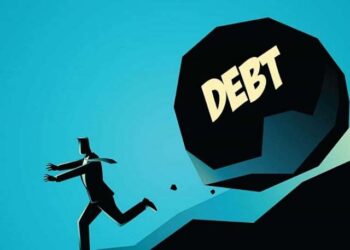
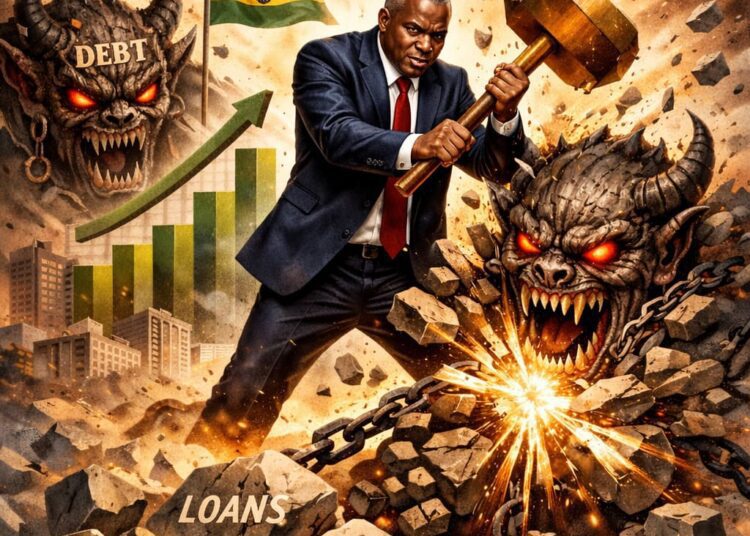
Notably, reports of a cumulative debt reduction of approximately GH¢67.5 billion between January and September 2025 point to the tangible benefits of lower interest costs and tighter expenditure control. The primary surplus has proven effective in directly confronting Ghana’s long-standing “debt demons” by curbing rollover risks, reducing gross financing needs, and limiting reliance on new borrowing to service old obligations.
This improvement has not gone unnoticed by the international financial community. Credit rating upgrades by Fitch Ratings to ‘B-’ in June and by S&P Global Ratings to ‘B-/B’ in November reflect growing confidence in Ghana’s fiscal trajectory. Both agencies have cited improving fiscal metrics, declining interest burdens, and a gradual rebuilding of external reserves as evidence that the country’s debt outlook is becoming more sustainable.
IMF Backing and Ongoing Reforms
The strong endorsement from the International Monetary Fund has become a critical pillar supporting Ghana’s economic recovery narrative. The successful completion of the fourth programme review in July 2025, followed by a staff-level agreement on the fifth review in October, signalled international confidence in the country’s reform momentum.
These milestones unlocked about $385 million in additional disbursements, providing vital balance-of-payments support at a time when fiscal buffers are being rebuilt. With cumulative disbursements now exceeding $2.8 billion under the Extended Credit Facility, Ghana’s IMF-supported programme remains firmly on track for completion in 2026.
Beyond financing, the programme has served as a powerful policy anchor, reinforcing discipline across fiscal and monetary management. Central to this effort has been the strengthening of the fiscal responsibility framework, which now prioritises sustained primary surpluses as a non-negotiable objective rather than a cyclical outcome. Complementary reforms in expenditure control, revenue mobilisation, and public financial management have helped entrench credibility and transparency in budget execution.
Importantly, the government has signalled that the reform drive will not end with the IMF programme. Projections for 2026 point to a primary surplus of about 1.5 percent of GDP alongside a narrower overall fiscal deficit, suggesting a deliberate effort to lock in hard-won gains and avoid a relapse into debt-driven imbalances.
Challenges Amid the Triumph
Despite successes, challenges persist. Quarterly debt increases in some periods reflect legacy obligations and external factors, while revenue mobilization remains critical. Industrial sector stagnation has tempered overall growth momentum, and global uncertainties could pressure reserves.
Ghana’s 2025 primary surplus achievement is more than a fiscal metric—it’s a demon-slaying victory over years of economic vulnerability.
By prioritizing discipline and reforms, the Mahama administration has restored confidence, paving the way for higher growth projections of around 4-5% in coming years. If sustained, this trajectory could position Ghana as a model for post-crisis recovery in Africa.
READ ALSO:Market Tug-of-War Tilts Bullish as GSE Indices Extend Stellar Run