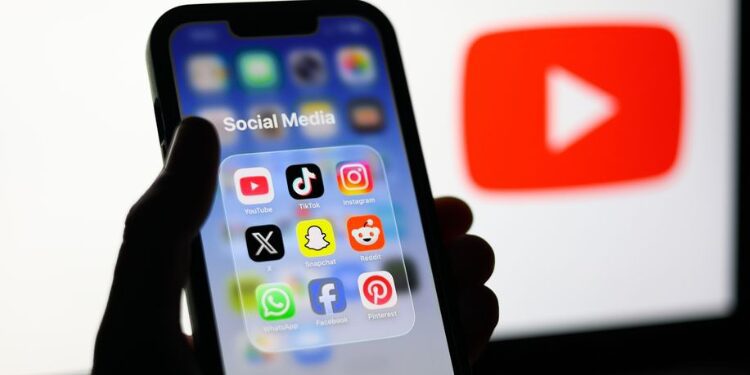
Fresh warnings from leading UK doctors have placed social media use among teenagers on a similar public health footing to smoking, amid growing concern over its impact on young people’s wellbeing.
In a submission to the Government’s consultation on restricting under-16s’ access to social media, the Academy of Medical Royal Colleges has urged that doctors should routinely ask young patients about their screen time and online activity as part of standard health assessments.
The medical body warned that exposure to harmful and extreme content online is contributing to rising mental and physical health concerns among children. It also called for improved clinical guidance to help health professionals identify when social media use may be causing harm, as well as better systems for recording such cases to build a clearer national picture.
The Academy noted that social media and smartphone use now “ranks alongside smoking and wearing seatbelts in cars as a unifying force for the medical profession.”
However, it also acknowledged that there is no full scientific agreement that screen time in general is harmful.
The warning comes as the Government prepares to introduce new measures aimed at tightening protections for under-16s online, with Technology Secretary Liz Kendall confirming that reforms will be implemented by the end of the year once a national consultation process concludes.
According to the Technology Secretary, Ministers are considering a range of options, including a possible Australia-style ban for under-16s, alongside app curfews, stricter age verification requirements, and limits on addictive design features used by platforms.
The consultation process, which closes today has attracted around 70,000 responses from the public, charities, and campaign groups. It has explored proposals such as limiting autoplay, disabling infinite scroll, and introducing stronger controls over children’s access to AI chatbots.
Kendall confirmed that the Government is also assessing how different platforms affect children, including services not covered by Australia’s restrictions such as gaming and messaging platforms like Roblox and Discord.
She stressed that, “We’ve got to get this right, and we’ve got to make it last.”
Meanwhile, Campaigners remain divided on whether a full ban is the most effective approach. Some argue that such measures may be difficult to enforce, while others say the focus should be on addressing the way platforms are designed to maximise engagement among young users.
Ian Russell, Chair of the Molly Rose Foundation, has warned against what he described as “sledgehammer techniques like bans,” arguing instead for stronger enforcement of existing online safety laws.
Other child safety organisations are calling for tougher action on targeted advertising, addictive platform features, and unsafe design practices, saying regulation should go beyond age restrictions alone.
Meta, the parent company of Facebook, Instagram and WhatsApp, has suggested that age verification should be enforced at device level to prevent underage users from downloading restricted apps.
Despite industry resistance, Kendall highlighted that, the Government is prepared to act decisively.
Social Media Should Be Treated Like Tobacco, Wes Streeting
Additionally, Former Health Secretary Wes Streeting has called for social media platforms to be treated in the same way as tobacco, arguing that Big Tech companies are using addictive design tactics that are harmful to children and require stronger regulation.
His comments come as pressure mounts on the UK Government to introduce stricter rules on social media use for under-16s.
In his intervention, Wes Streeting compared the influence of technology companies to the tobacco industry and said urgent action was needed to protect children.
“Social media should be treated like tobacco – it’s extremely addictive, bad for our health, and Big Tech is borrowing the Big Tobacco playbook to avoid regulation.We’ve got to give our children their childhood back. A ban for under-16s must be the start, not the end. We have given the pen to tech moguls to write our future for us. It’s time to take the pen back.”
Wes Streeting
Meanwhile, Doctors are equally seeing a “wave of radicalised children” from exposure to “hateful, addictive and grossly distressing content.”
Of the 454 doctors surveyed by the academy of 22 member royal colleges, half indicated that they treated at least one child a week whose mental distress or physical injury was linked to online content.
Moreover, the government plans to meet with families who have lost relatives as a result of harm caused by online platforms today to push the Prime Minister, Sir Keir Starmer to stick to the government’s promise to prohibit social media use for under-16s.
READ ALSO: Baba Rahman Returns as Queiroz Names Ghana Squad for Wales Friendly