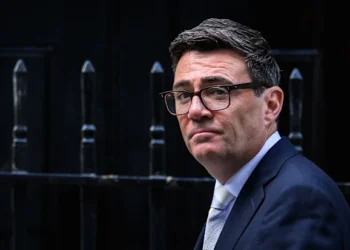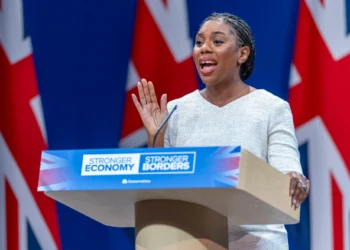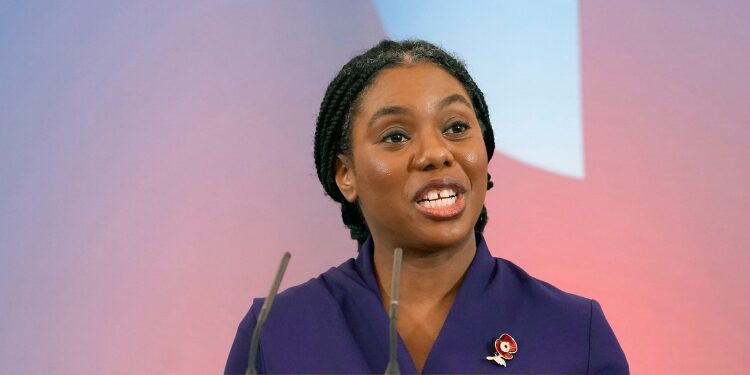
Conservative leader Kemi Badenoch has challenged Andy Burnham ahead of his first major address as Britain’s new Prime Minister, calling on him to provide clear answers on tax policy, energy strategy and welfare reform from the outset of his premiership..
In a public letter to Burnham ahead of his first speech in office, Badenoch congratulated the Labour leader on becoming Prime Minister, but made it plain that her responsibility as Leader of the Opposition would be to submit the new government to rigorous examination from the start.
The Conservative leader argued that Burnham assumes office without having fully outlined how his government intends to address some of Britain’s most pressing challenges, including sluggish economic growth, rising pressure on public finances, welfare spending, energy security and business confidence.
While extending her best wishes to the incoming Prime Minister, Badenoch signalled that the honeymoon period often associated with a new administration would be short-lived, insisting that the country requires immediate policy certainty rather than political symbolism.
“Later today you will take over as our Prime Minister. In the interest of our country, I wish you every success. As you know, however, it is my job as Leader of the Opposition to hold you to account, and I will never shirk from doing so.”
Kemi Badenoch
Badenoch accused Burnham of entering Downing Street without presenting detailed plans on the key issues confronting the country, adding that his reluctance to subject himself to extensive parliamentary and media questioning had raised concerns about transparency and accountability.
“You will enter office without having set out a clear plan on any of the issues facing our country. You have refused calls to come to Parliament for questions from MPs, and you have not submitted yourself to serious media scrutiny. This is not a promising start.”
Kemi Badenoch
Moreover, the Conservative leader used the letter to press Burnham to rule out tax increases that she argued could burden households and businesses already facing economic uncertainty. She warned that failing to provide clear assurances on fiscal policy risked fuelling speculation that could discourage investment and place additional pressure on homeowners and family finances during the months ahead.
Badenoch also called for “common sense policies to get Britain working again,” arguing that the country needs cheaper energy, lower taxes, tighter control of welfare spending and stronger border security to improve economic performance.
Opposition Leader Offers Conditional Support for Key Reforms
Alongside her criticism, Badenoch made an unexpected offer of cross-party cooperation by pledging the support of the Conservative Party’s 118 Members of Parliament if Burnham chooses to pursue reforms aimed at reducing Britain’s growing welfare bill.
The proposal mirrors an offer she previously made to former Prime Minister Sir Keir Starmer during debates over welfare legislation, arguing that Labour backbench opposition prevented meaningful reforms from advancing through Parliament.
According to Badenoch, Burnham should avoid repeating the mistakes of his predecessor by allowing ideological divisions within Labour to dictate government policy.
“You must not repeat the mistakes of Keir Starmer’s premiership which failed because he refused to stand up to his left-wing Labour backbenchers and their endless demands for tax rises to pay for more welfare.
Kemi Badenoch
She indicated that, “as the Welfare Secretary himself said: every meeting he had with Labour MPs was about who they could tax more to pay for more benefits,” adding, “Britain cannot go on like this without becoming a welfare state with a country attached.”
“We both know that Labour backbenchers will not vote to cut benefits, so I make the same offer to you. Meet with me, and if we reach agreement on a plan to bring down the benefits bill, 118 Conservative MPs will vote for it on a three-line whip.”
Kemi Badenoch
Beyond welfare, Badenoch identified energy policy as an area where she believes Burnham can take immediate action.
She criticised Energy Secretary Ed Miliband’s approach to Britain’s transition away from fossil fuels, arguing that existing policies have damaged employment, particularly in industries linked to North Sea oil and gas production.
“Ed Miliband has been a disaster for Britain: a one man deindustrialisation machine, destroying thousands of jobs which rely on the North Sea.”
Kemi Badenoch
The Conservative leader encouraged Burnham to go further by lifting the government’s ban on granting new licences for oil and gas development, although he welcomed news that suggested he would be reevaluating some areas of Labour’s energy strategy.
She said that increasing domestic energy output would improve Britain’s energy security while fostering employment and industrial investment, calling the existing policy a “destructive ban on new oil and gas licences which amounts to unilateral energy disarmament.”
While Labour enters office with significant parliamentary support and renewed optimism following its leadership transition, the government is already under pressure to clarify its economic programme, reassure financial markets and demonstrate that campaign rhetoric can be translated into practical policy.
The coming weeks are expected to provide the first major test of Burnham’s leadership as he unveils his legislative agenda and responds to growing demands from both political opponents and the wider public for detailed plans on taxation, public spending, welfare reform and Britain’s long-term energy strategy. How his administration responds to those early challenges may shape perceptions of the new government well beyond its opening days in office.
READ ALSO: Spain Win Second World Cup Title After Ferran Torres’ Extra Time Strike