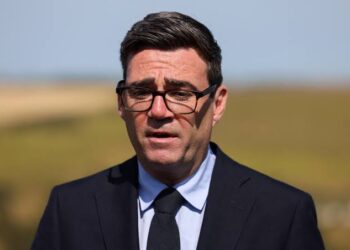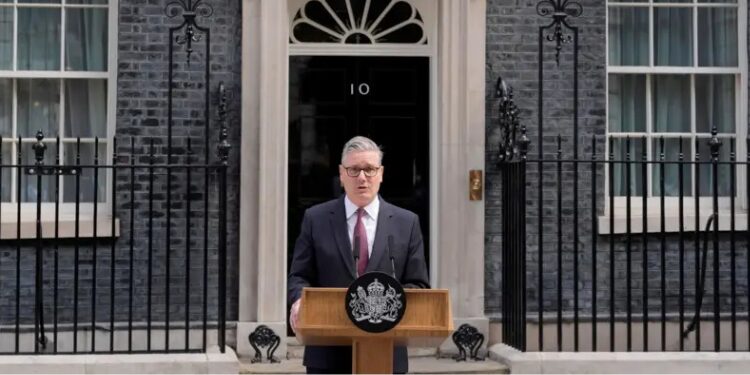
Outgoing Prime Minister, Keir Starmer has officially ended his time as Prime Minister after declaring that his “work is done” during an emotional farewell speech outside Downing Street, as he prepared to hand power to his successor Andy Burnham.
Standing outside Number 10 alongside his wife Victoria, senior ministers and close advisers, Starmer reflected on his political journey from rebuilding a defeated Labour Party to leading it back into government with a landslide victory in the 2024 general election.
Despite the difficulties encountered during his tenure in office, the departing Prime Minister declared that he was leaving office with pride and insisted that his leadership had strengthened both Labour and the nation.
Keir Starmer declared, “I’m going to visit His Majesty the King to offer my resignation and close the book on my time as Prime Minister.”
“My work is done. In six and a half years, I took our party from a historic defeat in 2019, changed it so it was fit to face the country upon a landslide general election victory in 2024.
“Since then, it has been the privilege of my life to serve you and this great country as Prime Minister. And I am confident that Britain is now stronger and fairer than it was two years ago.”
Keir Starmer
Following a remarkable political shift that saw Andy Burnham emerge as the party’s next leader and the nation’s incoming prime minister, Starmer’s departure signals the end of one of the shortest Labour premierships in contemporary British political history.
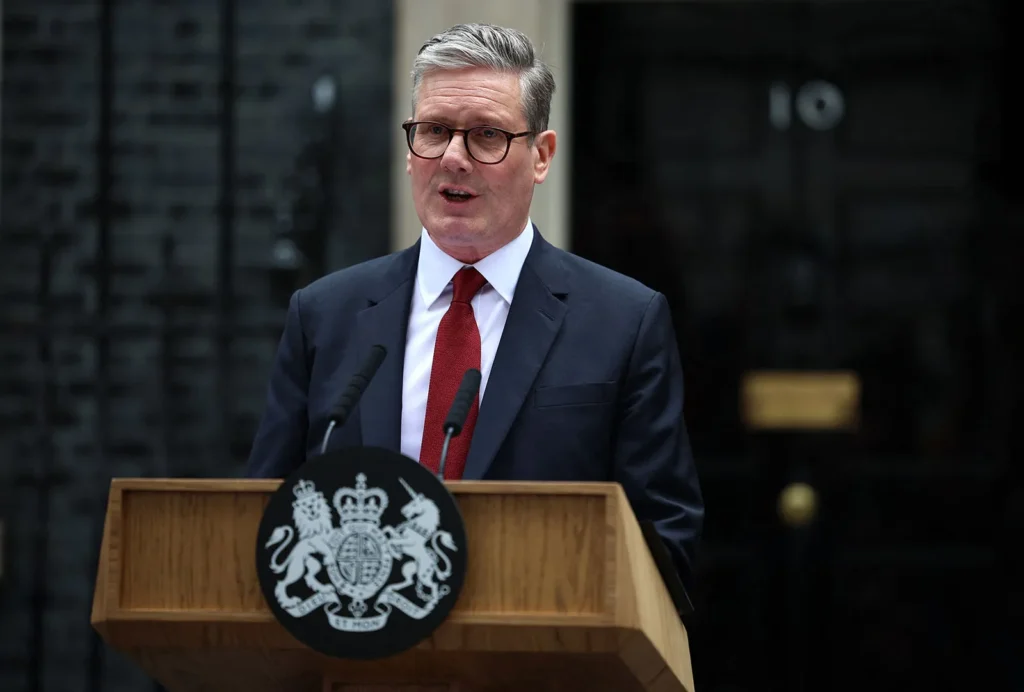
Scenes of emotion characterised the departing leader’s last moments in Downing Street as he embraced senior officials and members of his Cabinet who had collaborated with him during his premiership.
Chancellor Rachel Reeves, a minister strongly linked to Starmer’s political and economic agenda, was one of several who shared a momentous farewell with him.
In his final address as Prime Minister, Starmer sought to highlight the achievements of his government, arguing that Britain was in a stronger position than when he entered office.
He pointed to improvements in the economy, public services, poverty reduction, immigration control and Britain’s international standing as evidence of progress under his leadership.
“But the thing I will take away, the most humbling aspect of the job, is the front row seat you get to witness the greatest things of this country in action.”
Keir Starmer
Keir Starmer also highlighted the contribution of members of the armed forces, NHS workers and communities across Britain, saying their service represented the strength of the country.
“We face a world now where our enemies will stop at nothing to divide us because of our values,” he said, adding that it was “vital” for people to recognise the “greatness of Britain all around us.”
Starmer Offers Support to Burnham as Political Era Comes to an End

As he prepared to leave office, Starmer offered his successor Andy Burnham his full backing and urged him success as he takes control of both the Labour Party and the government.
“As I now pass the baton to Andy Burnham I wish him every success. He has my full support. I go with good grace, I go with a smile, and I go proud of everything that we have achieved.”
Keir Starmer
After weeks of political unpredictability and pressure on Starmer to resign so that Labour could take a new course, the announcement represented a peaceful handover of power.
But for Starmer, the change occurs far sooner than anticipated. He had expressed plans to serve for ten years and bring about long-term national change when he took office following Labour’s victory in the 2024 election.
His biggest accomplishment, according to political observers, was reviving Labour’s electoral power following its historic defeat in 2019. However, his government struggled to convert that victory into enduring public support.
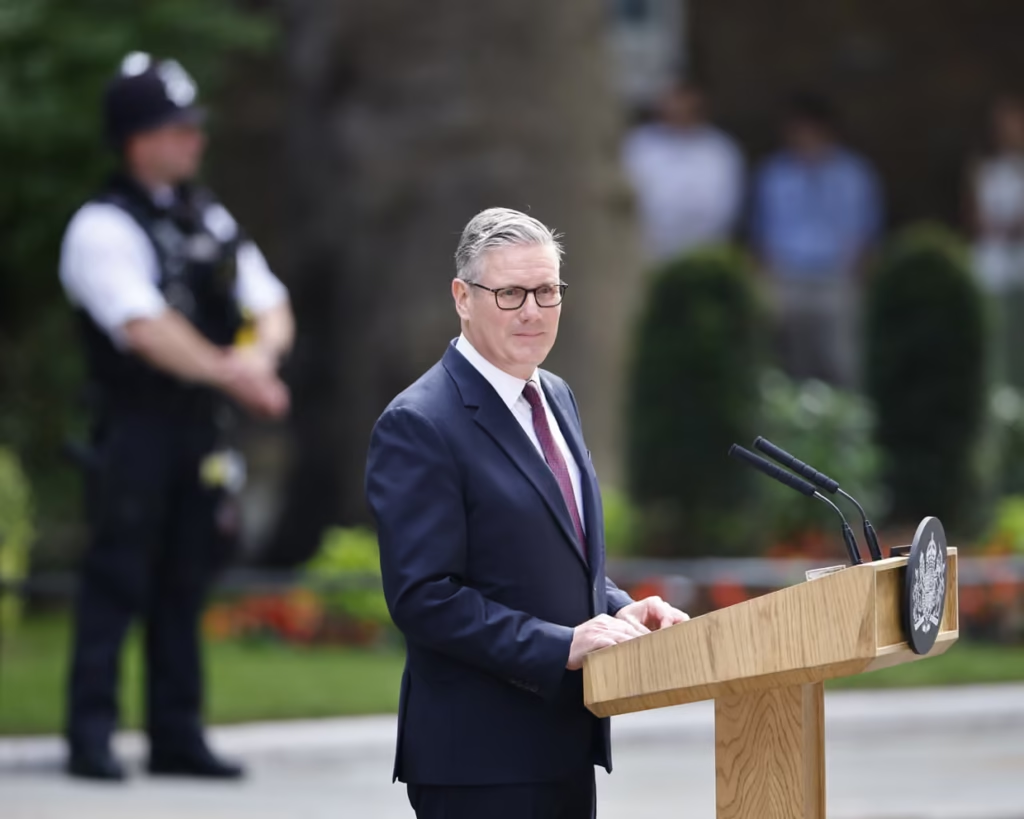
The circumstances surrounding his departure have revived a long-standing observation about political leadership: that even successful careers can end amid disappointment and changing public expectations.
Despite the challenges, Starmer maintained that his leadership had achieved significant milestones.
He argued that Labour’s transformation from opposition into a governing force represented a major political achievement, particularly after the party’s defeat under former leader Jeremy Corbyn in 2019.
By the time Starmer became Prime minister, Labour had repositioned itself as a party capable of winning broad support across Britain, culminating in its 2024 landslide victory.
After concluding his remarks, he received applause from those gathered outside Downing Street before entering a vehicle bound for Buckingham Palace.
His resignation to King Charles III formally closed his premiership and opened the next chapter of British politics under Andy Burnham.
READ ALSO: Jennifer Lopez Reprises Shira Role in Ice Age Sequel