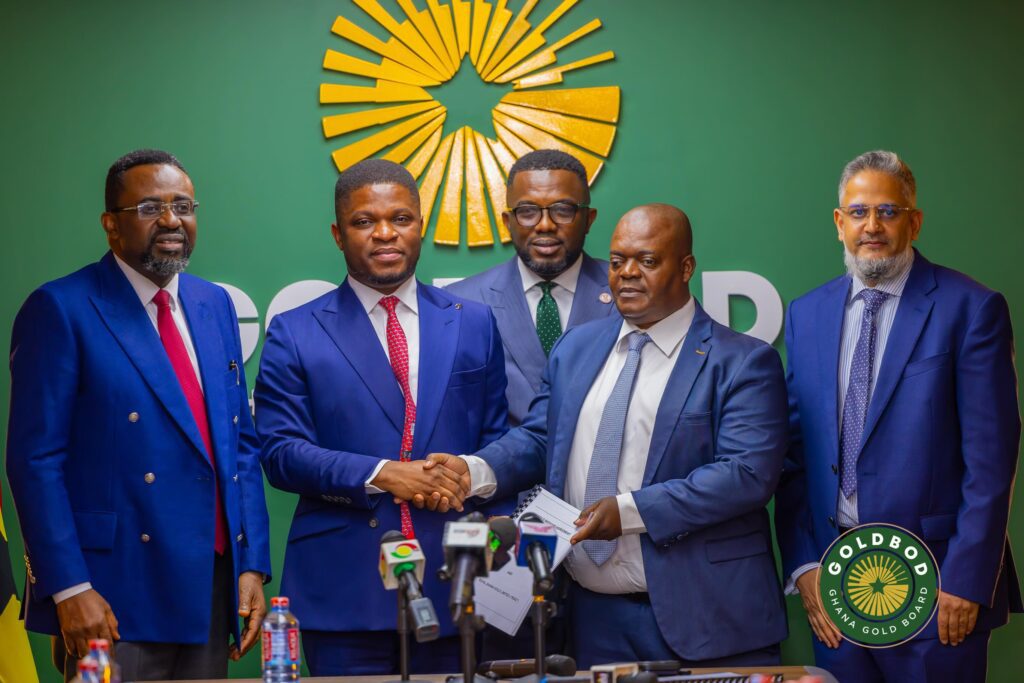
Chief Executive Officer of Royal Ghana Gold Refinery Limited, Mr. Eric Frimpong, has committed the refinery to a round-the-clock operational model as part of a landmark collaborative agreement with the Ghana Gold Board (GoldBod) to bolster national gold value addition.
This strategic partnership aims to transition Ghana from a traditional exporter of raw doré to a hub of refined bullion production, directly supporting the government’s broader industrial transformation agenda while ensuring that precious mineral resources contribute more significantly to the domestic economy.
“Royal Ghana Gold is a state-of-the-art refinery, and our vision is to help our country, Ghana. It’s about time we take a chance in our own hands to add value to what we produce here, and it will also bring jobs to our youth. We also promise you we will be doing a 24-hour economy.”
Mr. Eric Frimpong
The collaboration represents a deliberate shift in Ghana’s mineral management, aimed at retaining substantial value that was previously lost to offshore refining. By implementing a 24-hour economy, the refinery intends to maximize output, aiming to surpass its initial threshold of one metric tonne per week.
This capacity expansion is expected to generate significant employment for the nation’s youth, providing technical roles and stimulating ancillary economic activities. Furthermore, the refinery’s alignment with GoldBod ensures that the operations adhere to rigorous regulatory frameworks and national standards, positioning Ghana to compete more effectively within the global precious metals market.



Capturing Value Through Local Beneficiation
For centuries, Ghana has exported gold in its raw or semi-refined state, a practice that has limited the fiscal revenue potential of its most precious resource.
By shifting this paradigm toward domestic refining, the country can now capture the price differential between raw doré and 99.99% fineness gold.
This process is essential for formalizing the sector and ensuring that the economic multiplier effects such as increased tax revenue, technical skills acquisition, and foreign currency retention—remain within the domestic ecosystem.
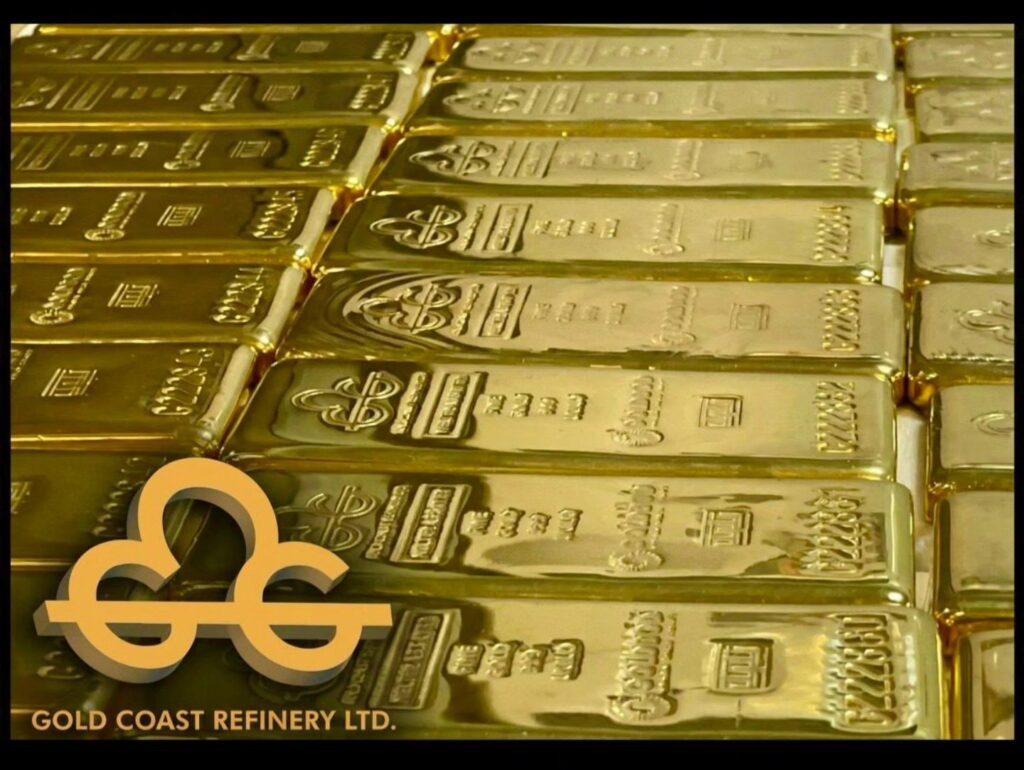
The partnership with GoldBod is designed to eliminate historical undervaluation of exports, ensuring that the true market worth of Ghana’s gold is accurately determined and retained locally.
Strategic Roadmap and Global Positioning
The long-term ambition for the facility is to attain the prestigious London Bullion Market Association (LBMA) accreditation, a milestone that would fundamentally elevate Ghana’s status in the international bullion trade.
Frimpong emphasized that the refinery currently possesses the necessary technical capacity, modern equipment, and human resource base to operate continuously.
By maintaining high international standards and ensuring traceability, the refinery intends to position the nation as a reliable and ethical source of refined gold.

This professionalization of the supply chain is critical for attracting institutional investors and fostering sustainable industrial growth.
A Unified Front for Industrial Transformation
Mr. Frimpong expressed appreciation to President Mahama, Finance Minister Dr. Cassiel Ato Forson, the Bank of Ghana, and the GoldBod for their unwavering support and confidence in the refinery’s potential.

He noted that the success of this industrial agenda relies heavily on navigating the various regulatory environments successfully, pledging that the company is “ready and poised to help and collaborate” with all stakeholders.
As the refinery moves forward with its expansion plans, the focus remains on integrating small-scale mining output into the formal refining chain, thereby creating a robust, inclusive, and profitable national gold sector.
READ ALSO: Serbia Bolsters Ties With China