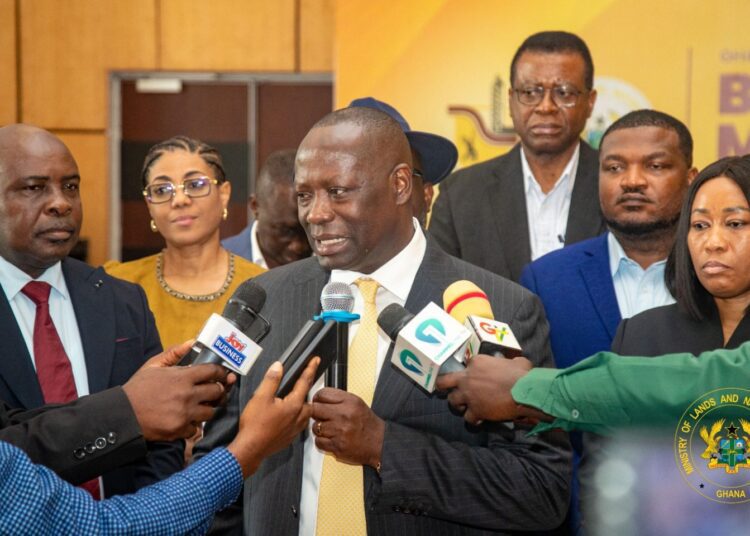
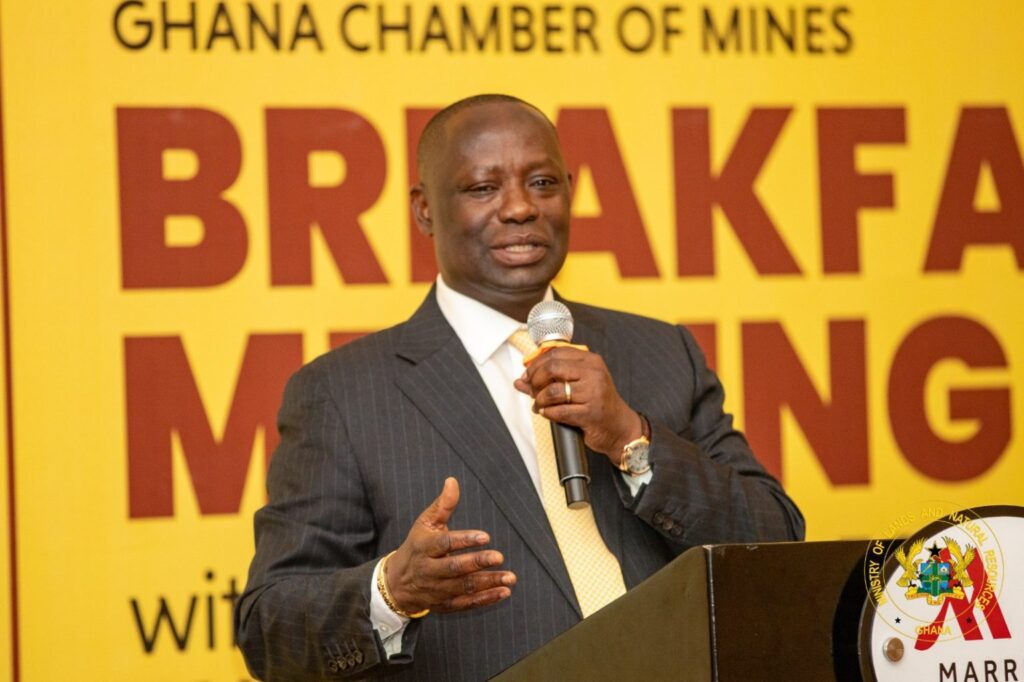
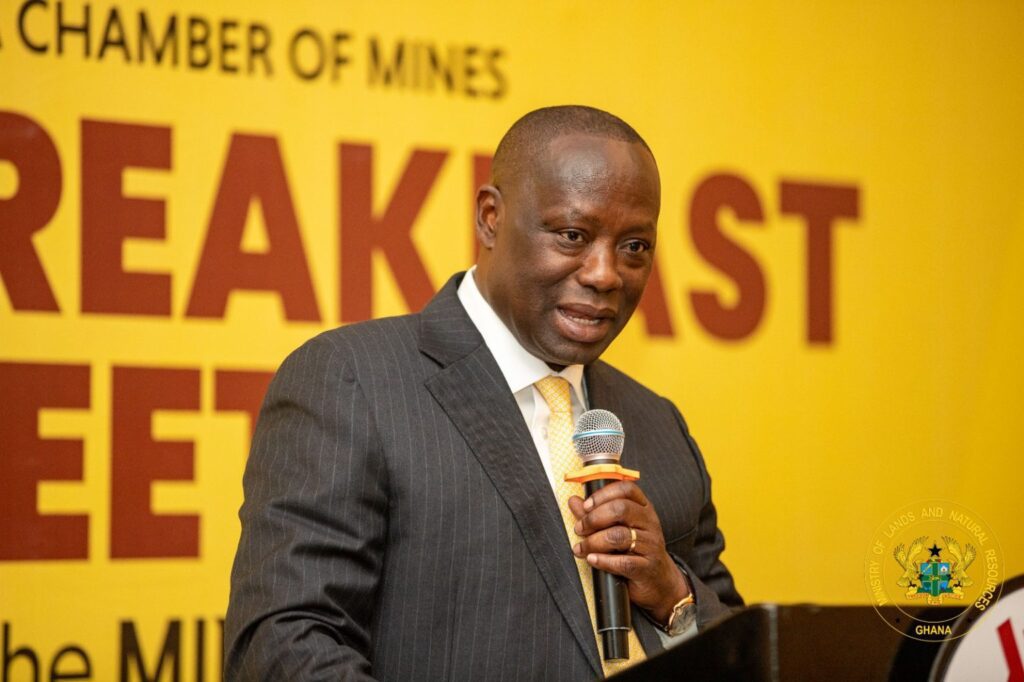
Hon. Emmanuel Armah-Kofi Buah, Minister for Lands and Natural Resources and Acting Minister for Environment, Science and Technology, has categorically affirmed that Ghana remains a prime destination for global mining capital, positioning the nation as a stable and reliable partner for international stakeholders.
This declaration serves as a definitive reassurance to the global market, aiming to dispel uncertainties while cementing the country’s status as a top-tier mining jurisdiction in Africa.
“The best policies are those shaped through open dialogue, transparency and collaboration. We need investors who understand that they are coming to make returns while leaving a lasting legacy for our people.”
Hon. Emmanuel Armah-Kofi Buah, Minister for Lands and Natural Resources and Acting Minister for Environment, Science and Technology
Beyond the initial reassurance, the Minister clarified that the government’s recent regulatory activities often scrutinized by international observers are strictly aligned with established legal frameworks rather than any anti-investor agenda.
By prioritizing policy predictability and fostering an atmosphere of transparency, the Mahama administration seeks to balance the necessity of robust capital inflows with the imperative of protecting national interests.
This dual focus ensures that while the country actively courts international expertise, it simultaneously fortifies its regulatory oversight to prevent environmental degradation and ensure equitable resource distribution.
The Strategic Imperative of Mining Investment
The pursuit of mining investment is not merely an economic preference for Ghana but a fundamental pillar for broader national development.
The extractive sector serves as a vital engine for foreign exchange earnings, significantly bolstering the national balance of payments and providing the fiscal space necessary for government infrastructure projects.
Furthermore, the industry is a major employer, driving job creation not just within the mines themselves, but across the entire upstream and downstream value chain.
To sustain this momentum, the Chamber of Mines led by CEO Ing. Dr. Kenneth Ashigbey and President Michael Edem Akafia Esq highlighted that the path forward requires an ecosystem of “policy consistency and efficient regulatory coordination.”
Without consistent investment, the sector faces stagnation, which would inhibit the country’s ability to modernize its industrial capabilities. The call for “deeper collaboration” between the state and the private sector is designed to minimize operational hurdles, thereby ensuring that Ghana remains competitive against other mineral-rich nations vying for the same global investment pools.
Championing Local Participation and Value Addition
A core component of the current government’s policy agenda is the deliberate cultivation of “Ghanaian champions.”
By emphasizing local participation in mining and contract mining services, the administration is moving beyond the traditional model of resource extraction toward a framework of economic empowerment.
This transition is essential for ensuring that mining proceeds do not merely transit through the economy but instead catalyze the growth of indigenous firms.
By integrating local businesses into the high-value mining supply chain, the government aims to localize expertise and increase the domestic retention of wealth.

This shift is intended to foster a resilient industry that is less susceptible to external market shocks and more integrated into the domestic socio-economic fabric, ultimately delivering tangible benefits to the Ghanaian citizenry.
Strengthening Institutional Partnerships for Future Growth
The long-term viability of the mining sector rests upon the institutionalization of continuous dialogue between the state and industry leaders.
As highlighted by the leadership of the Ghana Chamber of Mines, the resilience of the sector is tied directly to the quality of the partnership between regulator and operator.
By fostering a climate of “responsible investment,” the government intends to shift the narrative from a purely extractive model to one defined by sustainable, inclusive growth.

Moving forward, the focus will remain on refining the regulatory environment to ensure it is both attractive to foreign capital and stringent enough to guarantee environmental stewardship.
This balanced approach is expected to build the necessary trust for continued exploration and project expansion.
By aligning national development goals with the profit-driven motives of global firms, Ghana is positioning itself to leverage its mineral wealth as a foundational asset for sustained national economic development, proving that it remains firmly open for business.
READ ALSO: Mahama Launches Ghana’s E-Visa System, Scraps Visa Fee for All Africans