The United Nations Conference on Trade and Development (UNCTAD) has disclosed that economic resilience means persistence and not bouncing back, a lesson Ghana must uphold.
According to the United Nations, the new normal to define resilience is moving forward rather than bouncing back. The national system [Ghana] should not waver at the sight of shocks and challenges but be steadfast and resolute in its internal and external shocks.
“It requires building economies that can withstand shocks, adapt to transitions, and grow sustainably even under uncertainty.
“Resilience today requires more than returning to ‘normal.’ It means moving forward rather than bouncing back.”
UNCTAD
Growth is in persistence, UNCTAD reiterated. It needs a change of mindset and from what feels normal. Ghana has normalized consistent bouncing back of the economy after facing intense crisis, revealing a comfortable pattern of growth and economic decline.
Strategies for the New Normal of Resilience
The United Nations called for a strategy that integrates trade, finance, and climate policy as a new way of building a resilient economy. The UNCTAD revealed some priorities, which, when incorporated into the country’s economic framework, can establish persistent growth and prevent the nation from reverting to recessionary ‘normals.’
According to the UN, Ghana must reform its financial system to support climate-vulnerabilities. Climate consideration in pursuing economic growth and resilience must be complementary. Statistics show that poor households could lose up to 40 percent of their income by 2050 due to climate shocks, with significant infrastructure losses.
Strengthening public finance management, mobilizing private capital, integrating climate risk into budgeting, developing innovative financial instruments like debt-for-climate swaps, and ensuring direct access to climate finance for adaptation.


According to ActionAid Ghana, Ghana’s financial aid is shrinking, limiting the country’s ability to deliver on its climate commitments under the Paris Agreement. The Ministry of Finance revealed that in July 2025, Ghana made another US$ 349.52 million Eurobond debt repayment, bringing its total payment for the first half of 2025 to US$ 1.17 billion.
This confirms the unsustainable cost of servicing debt, even after the 2024 restructuring agreement. Climate influence on growth needs to be a priority. Debt and climate are now intertwined.
According to UNCTAD, “without major reforms, climate shocks will push more countries into debt distress,” declaring that “climate-vulnerable countries need fair financing, not higher interest penalties.”
UNCTAD also called for Ghana to expand its regional financial cooperation. Ghana is actively pursuing expanded regional financial cooperation, driven by President Mahama and the Bank of Ghana (BOG).
The initiative focuses on leveraging the African Continental Free Trade Area (AfCFTA) through payment system integration, like Pan-African Payment and Settlement System (PAPSS). It also promotes the local currency use and fosters intra-African investment to boost trade, stability, and build a resilient, unified African financial market, as seen in recent high-level discussions and policy shifts.
Ghana aims to become a regional financial hub, attracting investment and facilitating trade, requiring policy reforms and stronger regional ties. This will deepen peer learning and data sharing among central banks in the region, while viewing joint governance as vital for managing internal and continental challenges.
Stronger regional cooperation helps build resilience against global economic shocks and positions Ghana as a key trade facilitator within AfCFTA.
Furthermore, UNCTAD urged the promotion of regional bond markets, payment systems, and development funds, which can lower borrowing costs and reduce reliance on volatile global markets.
According to the government, Ghana is determined to anchor African capital market integration through its domestic bond market, particularly the Ghana Fixed Income Market (GFIM).
Ghana has committed to regional financial integration by positioning its domestic bond market as a regional hub, leading efforts in modernizing regional payment systems, and leveraging partnerships with regional and continental development funds.
In addition, Ghana is urged to strengthen its domestic financial ecosystems. Ghana is pursuing this through structural reforms, enhanced regulation (like macroprudential tools), promoting financial inclusion (VSLAs, digital finance), and diversifying exports.
These aim to reduce reliance on foreign aid and build resilience against external shocks for sustainable growth, with efforts focused on fiscal discipline, private sector development, and managing currency volatility.
Ghana’s main initiatives in strengthening its financial ecosystem include the Ghana Financial Stability Fund, capital restoration, and leveraging digital innovation for economic stability.
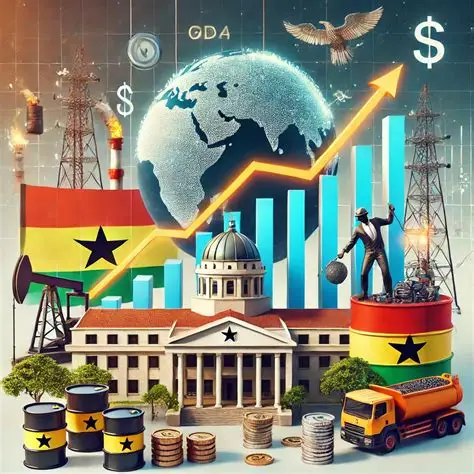
Therefore, Ghana needs a credible, modern payment and financial infrastructure – especially digital payments and capital markets – to mobilize resources and finance the green transition, UNCTAD emphasized.
UNCTAD cautioned that emerging financial risks beyond the banking sector must also be addressed, while promoting ‘networked multilateralism.’
Ghana needs an overhaul of its financial climate to achieve the new economic resilience, where growth and development are constantly built upon without intermittent recessions.
“True economic resilience requires coordinated strategies that align trade, finance, climate, and sustainability – and ensure developing countries can shape, not just absorb, economic shifts.”
UNCTAD
READ ALSO: West Africa’s Democracy and the Failed Coup d’état in Benin