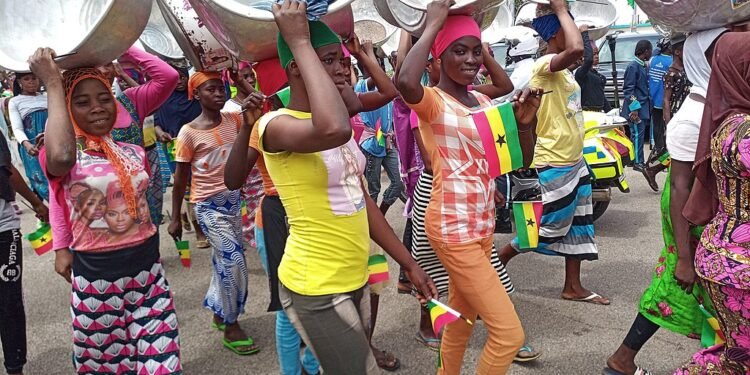
Women in Ghana continue to dominate economic activities in all three sectors, yet their needs remain largely unmet by the government and community leaders.
According to data from the Ghana Statistical Service (GSS), women dominate in all three sectors of the economy as economic actors. This makes women instrumental to the national growth and expansion of the various sectors.
“In all three quarters, female employment remained consistently higher than male employment, with over 7.2 million females employed compared with about 6 million males.”
GSS Data 2025 Q1-3
The Service added that “female employment consistently exceeded male employment, and urban areas recorded higher employment than rural areas.” The GSS therefore called on the government to address the challenges the dominant gender in terms of economic activity participation.
Contribution to the Main Sectors in Ghana
Women profoundly dominate the Ghanaian economy due to their ability to remain dynamic in fluid situations. GSS data shows that women in Ghana show high participation, particularly in the Services sector, followed by Agriculture, and then Industry, though they are often concentrated in informal and vulnerable roles.
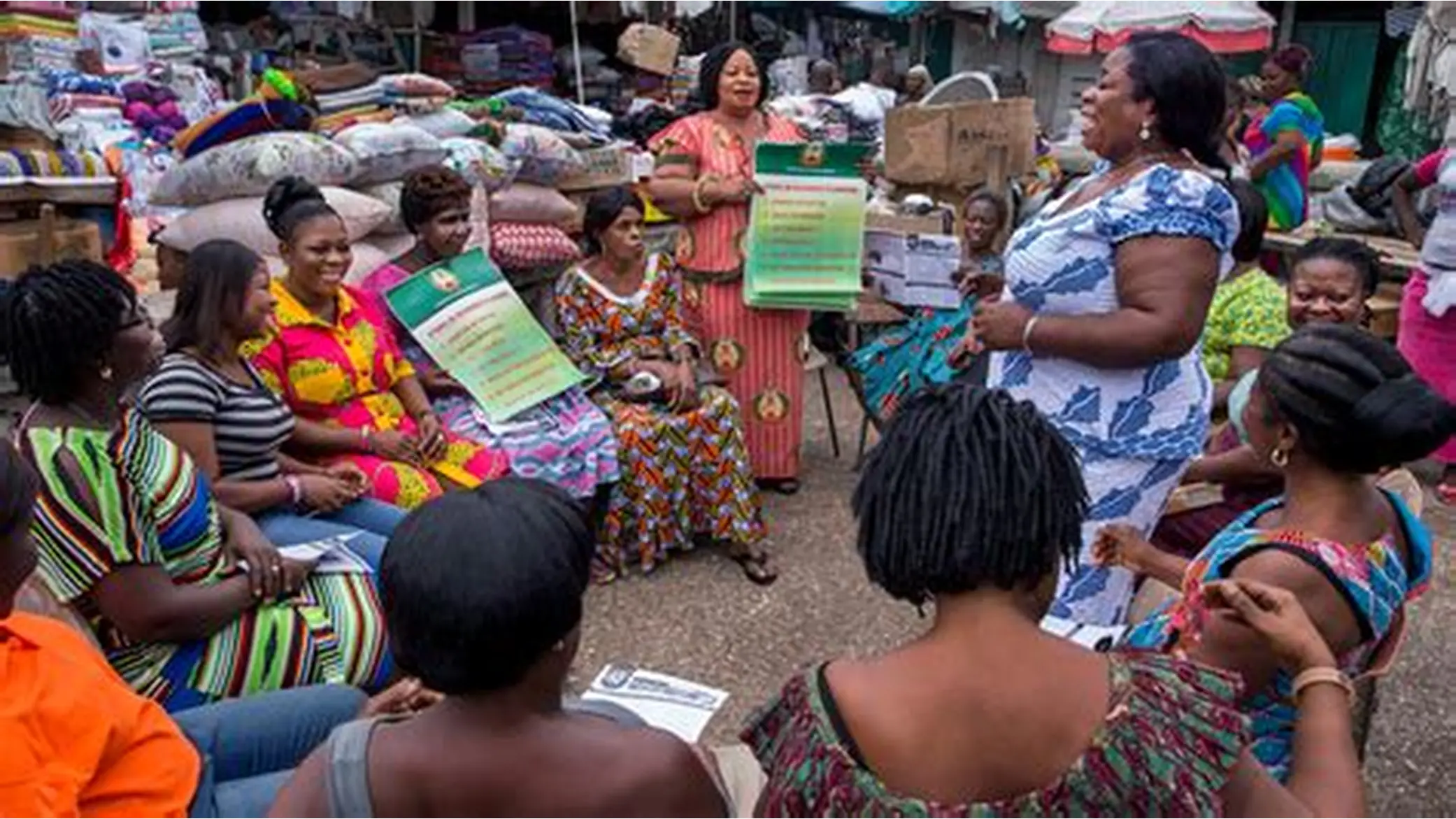
Women constitute nearly half the economically active population, heavily concentrated in the informal economy (over 90 percent of female labour force participation), often in small and medium businesses, facing lower earnings despite high activity.
Their concentration is mainly in rural areas where they are central to food production and marketing, while also increasingly driving entrepreneurship. This highlights the strong presence of women in services and informal work despite general labour force growth.


The agriculture sector leads in food production and marketing, which involves farming, processing, and distribution. Women mainly act as farm owners, partners, and labourers in the sector. The Services sector is the largest employer, especially in the informal sector. Women’s involvement in the industry sector also reveals a high concentration in the less formal sector.
All these roles are lower-paying roles, with significant informal sector participation and a persistent wage gap favoring men.
Challenges Limiting Expansion of Women’s Businesses
According to sector experts, Ghanaian women, despite being crucial economic agents (especially in the informal sector), face significant hurdles that stagnate the national gain.
Women face education and skill gap, which limits most of them to the informal sector. Low literacy levels for the majority and limited access to relevant training, technology, and extension services hindering business scaling. Experts say that, though women in the informal sectors are smart and are efficient in their small-scale operations, they lack the scaling ability.

Weak financial and infrastructural support has stalled potential economic activities on their end. Women, due to their small scale, are unable to attract formal loans, which require collateral, high savings, and complex bank procedures. The business environment for these women reveals weak support systems, poor infrastructure, and difficulties accessing markets and inputs like labor, fertilizer, and information.
According to a woman in the retail business, the culture around asset ownership, like land, in some of the rural areas limits their decision-making, and enforces traditional gender roles that burden women with unpaid care. As a result, some have low confidence, lack business planning skills, and develop societal stereotypes.
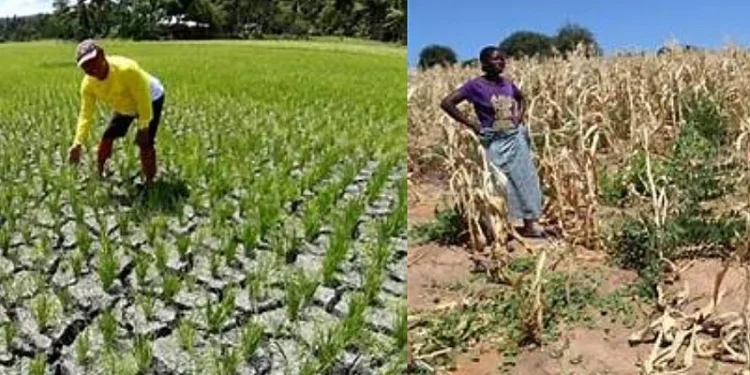
An expert in the agriculture sector declared that though women show great resilience, they remain susceptible to the harsh realities, especially in rural areas. These challenges often confine women to the informal sector and small-scale businesses, preventing them from scaling up, despite their significant economic contributions in Ghana.
Government to Support Women
The government, through some of its initiatives, aims to tackle some of these challenges women face. These policies are to ensure that women in the labour force receive same opportunities as the men.

The government has promised to establish a Women’s Development Bank to provide capital and resources for women entrepreneurs, especially those marginalized. This will provide finance to Micro, Small, and Medium Enterprises (MSMEs) through programs supported by the African Development Bank (AfDB).
There are also skills training opportunities for young women to empower female entrepreneurs. This will also boost women’s participation in the formal economy through targeted programs. The promotion of girl-child education has been ongoing through initiatives like free Senior High School Education and free first-year tertiary education. These gives equal opportunities to females.
Recognizing that over 70 percent of women are in vulnerable jobs, initiatives aim to reduce precarious employment through Results-Based Financing (RBF) to improve transparency and outcomes in employment programs to address vulnerabilities.
The government, with a female Vice President, aims to create an environment where women can achieve economic independence, leadership roles, and full participation in Ghana’s development.
READ ALSO: Mahama’s Approval Holds Firm @67%, Signals Strong Public Confidence