Executive Director of the Institute of Energy Policies and Research (INSTEPR), Mr. Kwadwo Nsafoah Poku, has intensified calls for a significant revision of the proposed royalty structure in Ghana’s pioneering lithium agreement, demanding that the sliding scale mechanism starts at a 10% baseline.
Under the current proposal presented to Parliament, the royalty rate begins at a lowly 5%, a figure Mr. Poku argues is wrongly targeted despite the concept of a sliding scale being inherently sound for the extractive sector.
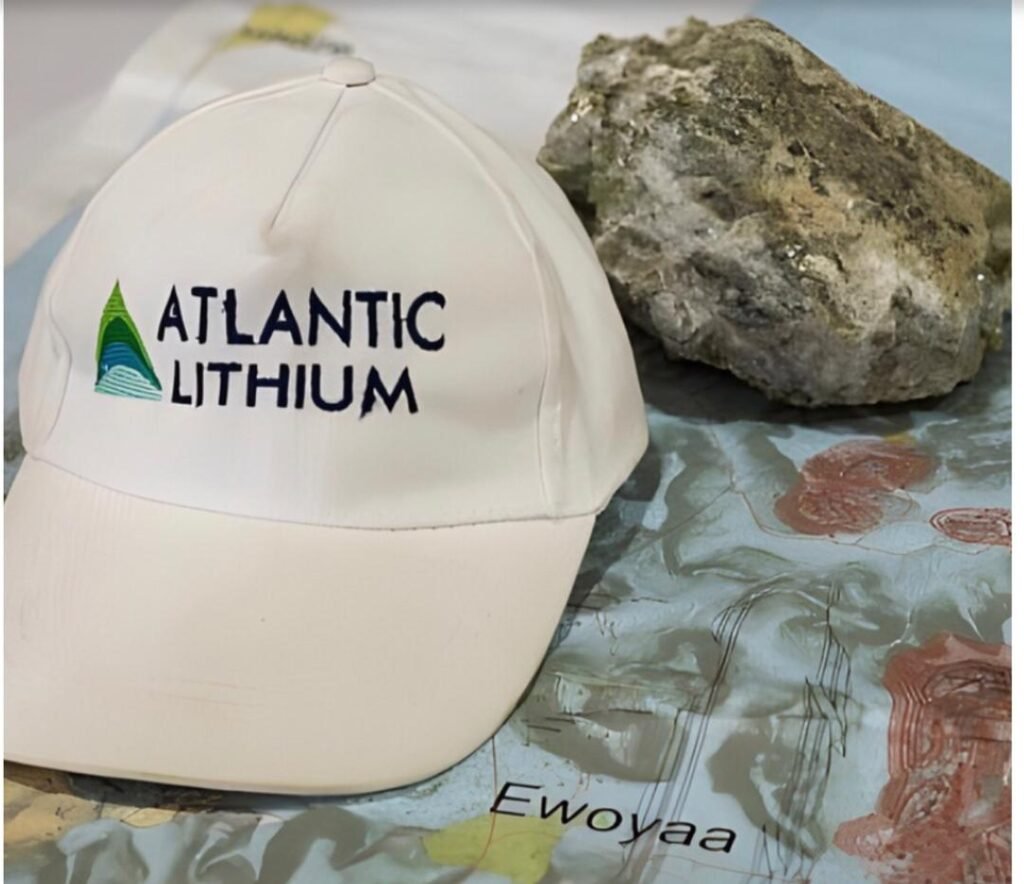
The expert’s intervention comes at a critical time when the nation is debating the fiscal terms for the Ewoyaa Lithium Project, emphasizing that the current low-end peg fails to protect the national interest against the backdrop of rising global market prices.
“The sliding scale is a good idea, but we should start off from 10%, not 5%. Today, what the NDC and Hon. Buah should tell Ghanaians is why he is allowing a company who was happy to do 10% last year to do 5%? Why is he allowing a company that was happy to do a 20% profit margin last year to do a 45% profit margin this year?”
Mr. Kwadwo Nsafoah Poku
Expanding on this position, Mr. Poku highlighted a troubling paradox where the current administration, while in opposition, labeled a 10% royalty as a “rip-off” only to now propose a starting rate of 5%.
He provided a comparative analysis of the project’s physicals, noting that when the 10% rate was initially discussed, the price of lithium was roughly $800 per tonne against an operating cost of $610, yielding a 20% margin that the mining firm was “happy to sign on to.”
With current market prices surging to approximately $1,200 per tonne while production costs remain stable, the company’s profit margin has effectively doubled to 45%.


This economic reality, according to INTERPR, makes the insistence on a 5% minimum royalty by the sector minister, Hon. Emmanuel Armah-Kofi Buah, an unnecessary concession that enriches the private investor at the expense of the Ghanaian taxpayer.
Strategic Value of ‘White Gold’ and the Global Race

Lithium, often dubbed “white gold,” has become the cornerstone of the global transition to green energy due to its indispensable role in the production of lithium-ion batteries for electric vehicles (EVs) and grid-scale storage.
As the world pushes for decarbonization, the International Energy Agency predicts demand could grow 40-fold by 2040. For Ghana, this represents a unique opportunity to diversify its mineral portfolio beyond gold and bauxite.
However, the economic significance of the Ewoyaa find extends beyond mere extraction; it is a strategic asset that should ideally trigger domestic industrialization.
Experts argue that if Ghana settles for a “straitjacket” or undervalued royalty regime, it risks repeating the historical mistakes of the gold sector, where the country exported raw wealth while retaining minimal value-added benefits or infrastructure development.
Navigating the Controversies of the Ewoyaa Agreement

The lithium deal has been mired in controversy since its inception, primarily centered on the perceived “generous” terms granted to Barari DV, a subsidiary of Atlantic Lithium.
Civil society organizations, including IMANI Africa, have raised alarms over the potential loss of billions in revenue if the fiscal framework is not “future-proofed.”
The shift from a flat rate to a sliding scale was intended to address these concerns by allowing the state to capture “windfall” profits during price spikes.
Yet, as Mr. Poku points out, if the “low end of the sliding scale” is set at 5%, the state effectively loses its baseline protection.
This has sparked a “reset” debate, with critics questioning if the government is truly prioritizing national gain or merely providing a more lucrative environment for foreign capital under the guise of being “business-friendly.”
Securing a Fairer Deal for the Future

To ensure the extractive sector truly benefits the citizenry, concerned stakeholders are advocating for a multi-pronged approach to mineral governance. First, the royalty floor must be adjusted to reflect the high profitability of lithium in the current market, ensuring a 10% minimum as suggested by INTERPR.
Secondly, there is a pressing need for “value-addition” mandates that require a portion of the lithium to be processed locally rather than exported as raw concentrate.
This would catalyze the “24-hour economy” by creating high-tech jobs and industrial hubs. Finally, transparency in the ratification process is paramount.
By aligning the sliding scale parameters with realistic production costs and market fluctuations, Ghana can create a competitive yet fair environment.
As the “Lithium Age” dawns, the consensus among experts is clear: the implementation must match the novelty of the resource to avoid the “resource curse” of yesteryears.
READ MORE: IMF Projects a 5% Convergence Growth for GDP Components in 2029