Minority Caucus in Parliament has issued a stern cautionary note to the President, John Dramani Mahama, asserting that the surge in illegal mining now constitutes a “clear and present danger” to Ghana’s environmental integrity and national stability.
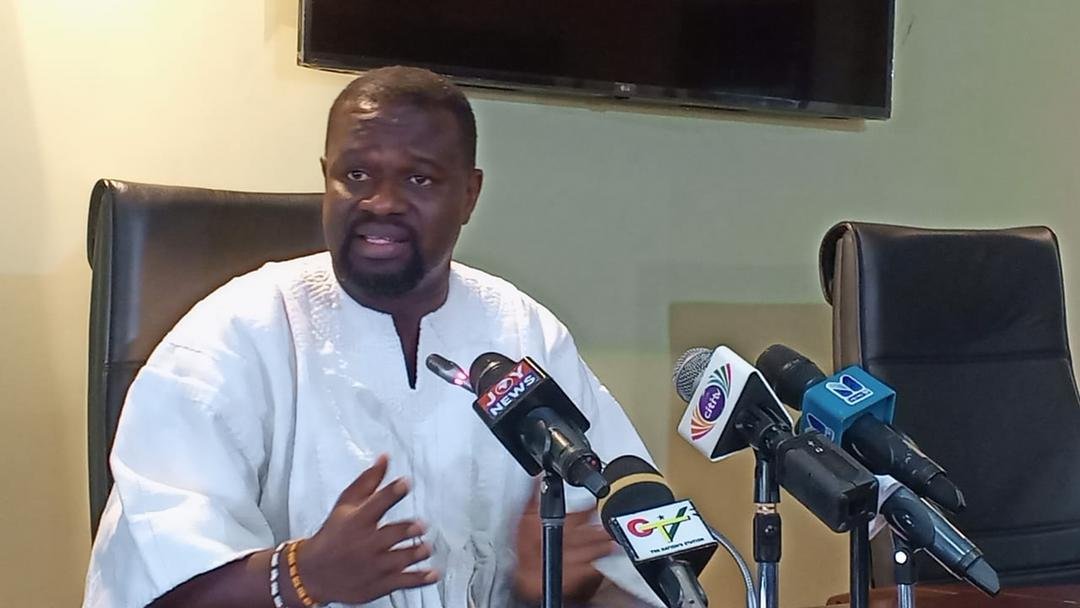
Following a high-level meeting between the President and Parliamentary leadership at Jubilee House, the Caucus, led by Minority Chief Whip Frank Annoh-Dompreh, highlighted that the degradation of the country’s natural resources has undergone a sharp and “alarming acceleration” since the beginning of the year.
This formal warning emphasizes that without immediate intervention, the compounding effects of unregulated extraction will undermine the very foundations of Ghanaian governance and ecological security.
The statement by the Minority underscores a harrowing reality supported by recent environmental audits from Pure Earth and the Environmental Protection Authority (EPA), which document a toxic legacy of heavy metal contamination in mining hubs.
“The lack of rigorous chain-of-custody risks making the state a formal purchaser of illegally mined gold, thereby sanctioning environmental destruction. Ghana cannot become a state-sponsored conduit for illegal gold. We urge President Mahama to implement fundamental reforms at the GoldBod to protect our natural resources.”
Minority Caucus
According to the EPA’s 2025 assessment, mercury levels in soil at sites like Konongo Zongo have reached 56.4 parts per million, a staggering 560% above safety thresholds, while arsenic concentrations in local water bodies have been recorded at 3.3 mg/L, exceeding national drinking water limits by over 300 times.
These statistics paint a bleak picture of “environmental terrorism” that has seen river turbidity soar and primary forest cover vanish at a rate of approximately 100 hectares per week, as per Global Forest Watch data.


The Minority further contended that the Ghana Gold Board (GoldBod) has inadvertently become a “formal purchaser of illegally mined gold” due to a lack of rigorous traceability, effectively granting state sanction to the destruction of the nation’s heritage.
Socio-Economic Toll on Lives and Livelihoods
The human cost of this crisis is as devastating as the ecological one, manifesting in a public health emergency and the collapse of rural economies.
Research conducted in 2025 indicates that nearly 48% of participants in mining-intensive zones like Damang are now entangled in galamsey due to the erosion of traditional agricultural productivity.
This shift has not only destabilized the social fabric but has also introduced severe health risks; medical reports link mercury and lead exposure to rising cases of neurological disorders, congenital deformities, and chronic respiratory illnesses among children and miners.
Furthermore, the Ghana Water Company Limited (GWCL) recently reported that nearly 60% of the catchment capacity of the Pra River is now silted, directly threatening the water security of millions and increasing the cost of treatment beyond sustainable levels.
Institutional Failures and the Legitimacy Crisis
A significant portion of the Minority’s critique centers on the perceived ineffectiveness of the Blue Water Guards, a specialized unit commissioned to protect river bodies.
Despite the deployment of over 1,600 guards by December 2025, the Minority argues that the unit has failed to “disrupt the sophisticated networks” behind large-scale illegal operations.
The Caucus specifically took aim at GoldBod, noting that while the institution plans to deploy a blockchain tracking system by 2026, the current “weak traceability systems” allow tainted gold to infiltrate official channels.
“The state must not provide a veneer of legitimacy to environmental crimes,” the Minority Chief Whip remarked, suggesting that the current oversight framework is “woefully inadequate” to stem the tide of illicit gold flows that generated over $9 billion in export earnings this year.
Combating Environmental Terrorism through Reform

The call for urgent action by the Minority is viewed by extractive experts as a necessary catalyst for shifting Ghana’s strategy from reactive policing to fundamental structural reform.
By demanding transparency in GoldBod’s procurement and questioning the efficacy of the Blue Water Guards, the Caucus is pushing for a “traceability-first” approach that could finally decouple the national economy from illegal extraction.
Implementing a rigorous chain-of-custody would not only protect the environment but also ensure that Ghana’s gold meets international standards, such as those of the London Bullion Market Association (LBMA).
Ultimately, this political pressure serves as a vital check on the executive, advocating for a future where “prosperity and environmental stewardship go hand in hand” rather than at the expense of the nation’s survival.
READ ALSO: Gov’t has Wrought Economic Stability Through Discipline – Joe Jackson