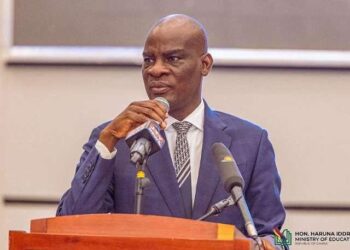
In a powerful defense of the 2025 Constitution Review Committee’s (CRC) methodology, Chairman Professor Henry Kwasi Prempeh has described the committee’s work as the “last lap of a relay,” – one that refused to simply “dust off” old reports in the face of a rapidly evolving political landscape.
Speaking following the submission of the CRC’s final report to President John Dramani Mahama, Prempeh argued that the dramatic stress tests of the last decade necessitated a radical update to Ghana’s governing charter.
“Our terms of reference required us to take a look at the previous work that had been done, so that this was part of like a relay. And as the last lap we looked at the Prof. Fiadjoe report, the Clara Kasser-Tee report and other documents related to the 1992 Constitution and generally the constitutional history of Ghana.
“But then they also said if we had stopped at that, we would have just done a desk interview, right?”
Professor Henry Kwasi Prempeh, Chairman of the Constitution Review Committee
Professor Kwasi Prempeh noted that the Ghana of 2011, which produced the Fiadjoe Report, is fundamentally different from the Ghana of 2025.

Between the rise of a digitally native Gen Z and the lived experience of “hung parliaments,” the CRC determined that a mere desk review of past work would be a disservice to a nation currently navigating regional democratic backsliding. For him, they had the chance to close the gap between theory and experience.
Professor Kwasi Prempeh explained that while the previous review process was comprehensive for its time, it lacked the “empirical scars” of recent constitutional crises.
Professor Prempeh noted that since the last major review, Ghana has survived two presidential election petitions and the unprecedented death of a sitting president in office – events that provided a real-time audit of how the 1992 Constitution handles transitions and judicial scrutiny.


For the CRC, these weren’t just news events; they were data points that exposed the needs in the current legal architecture. The chairman of the committee contended that the CRC couldn’t ignore the removal of high-ranking constitutional office holders or the functional chaos of a nearly split Parliament when designing a new set of guidelines for the republic.
“Those are experiences that shaped our understanding of how certain parts of the Constitution are working. When the Fiadjoe report was put together, we had not experienced the death of a president in the office. Now we’ve experienced that and how a vice president is chosen to succeed”
Professor Henry Kwasi Prempeh, Chairman of the Constitution Review Committee

“Gen Z” and Other Factors
Beyond domestic milestones, the CRC Chairman pointed to the shifting demographic and regional climate. He argues that the emergence of Gen Z and Millennials – citizens who engage with the state through social media and have entirely different expectations of accountability – demanded a fresh conversation.
He acknowledged that democracy is no longer a static goal but a system under threat. With coups d’etat returning to the West African sub-region, Prempeh suggested that the 2025 review was less about “tweaking” and more about “reconfiguring” the state to survive a period of intense institutional turbulence.
“Democracy was not backsliding the way we’re seeing it now. The region had not gone through these turbulences. So it makes you sit back and say, hey, how can we tailor this thing so that it responds to people’s expectations about democracy”
Professor Henry Kwasi Prempeh, Chairman of the Constitution Review Committee
Professor Prempeh’s “relay” metaphor acknowledges the work of his predecessors – including the Clara Kasser-Tee consultative report – but insists that the final lap must be run by the current generation of citizens.
He maintained that if the CRC had simply updated the 2011 report behind closed doors, it would have missed the collective wisdom of a populace that has matured through a decade of legal and political battles.

The Professor concluded that talking to the people wasn’t just a procedural requirement; it was a survival strategy for the 1992 Constitution. By capturing the current mood of the street and the courtroom, the CRC hoped to deliver a document that was not just dusted off, but battle-tested.
“It was good that we were given a chance to go back and talk to the people before proceeding,” he added.
READ ALSO: Ghana’s IMF Programme Nears Crucial Endgame as Extension Talks Begin