The Ghana Union of Traders Association (GUTA) has consistently called for action against foreign ‘petty’ traders flooding the local economy and seeks the government’s support to enforce the law.
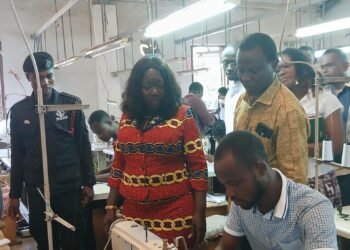
Accompanying the Minister for Trade, Agribusiness and Industry, Hon. Elizabeth Ofosu-Adjare, on a working visit to some markets in Accra, the Vice President of GUTA, Mr. Clement Boateng, called for law enforcement support to complement the efforts of GUTA.
According to the GUTA Vice President, while commending the government for the effective policy initiatives resulting in economic restoration and stabilization, insisted that local businesses are suffocating due to the influx of foreign traders in the retail trade in Ghana.
Law Protecting Indigenous Retail Traders
The Ghana Investment Promotion Centre (GIPC) Act, 2013 (Act 865), is an existing law that restricts foreigners from engaging in retail trade to protect indigenous traders. Though the law is already in place, GUTA has consistently complained about its enforcement. The country has experienced strikes from local traders and radical moves to close down the shops of foreigners.

Section 27 of the Act explicitly bars non-citizens or enterprises not wholly owned by Ghanaians from certain activities, including the sale of goods or provision of services in a market, petty trading, hawking, or selling goods in a stall at any place.
However, a foreigner may participate in the general trading sector only if they meet specific, higher capital requirements – a minimum investment of US$1 million in cash or goods and services relevant to the investment, and must employ at least 20 skilled Ghanaian nationals.


In cases of joint enterprise with a Ghanaian partner, the minimum foreign capital required is US$200,000, with the Ghanaian partner holding at least 10% equity. According to the law, the foreigner engaged in retail trade and the Ghanaian who rents a shop to the foreigner to engage in this illegal act are subject to legal penalties.
Other local trade associations, like the Abossey Okai Spare Parts Dealers Association, have long complained about the influx of foreign nationals in the retail sector who do not meet these legal requirements, creating unfair competition.
The associations boldly pointed out that enforcement actions have been sporadic, with government task forces from agencies including the GIPC, Customs, and Immigration occasionally inspecting and closing shops found to be in violation.

Currently, there are ongoing discussions and proposals for a new GIPC bill that would introduce administrative fines to make enforcement more efficient than relying on lengthy court processes.
Mr Boateng explained that the Ghanaian economy relies a lot on foreign trade and Foreign Direct Investment (FDI) to build the economy, but the law spells out how foreigners can influence the Ghanaian economy. His call to sanitize and restructure the local market is a call to support Ghanaian business growth and improved livelihood for the informal sector traders.
Economic (Local) Concerns for Market Dominance
Local concerns in Ghana regarding the dominance of foreign retail traders have been growing. Aside from the breach of the GIPC Act and weak enforcement, there is unfair competition.
Foreign traders are often able to sell goods at lower prices due to access to cheaper credit from origin countries and alleged tax evasion through smuggling, making it difficult for local traders to compete.

It is a general belief that many foreign traders do not have permanent business addresses – compounded by Ghana’s poor house addressing system – making it easier for them to evade taxes, further disadvantaging local, tax-compliant businesses.
The repatriation of profits by foreign traders puts immense pressure on the national currency and aggravates the country’s foreign exchange challenges. Foreign traders often employ very few locals, enhancing their repatriation system.
Local traders express fear that if the situation continues unchecked, the entire retail sector will be dominated by foreigners, leading to the collapse of indigenous businesses and a threat to livelihoods and national economic sovereignty.
READ ALSO: Ing. Gomashie Slams GoldBod CEO over ‘Profit’ claims, Demands Clarity