National Anti-Illegal Mining Operations Secretariat (NAIMOS) has apprehended two Chinese nationals in the in the Birim North District in the Eastern region for actively engaging in illegal Mining activity.
According to the Ministry of Lands and Natural Resources, a specialized taskforce operating within the Eastern Region intercepted Li Yongjin and Nou Chin Haw at Pankese, situated in the Birim North District.
These individuals were found actively engaged in illicit mining operations that have long threatened the ecological stability of the region, marking a decisive strike by the state against foreign-led environmental degradation.
“A NAIMOS Taskforce deployed in the Eastern Region arrested two Chinese Nationals, LI YONGJIN and Nou Chin Haw, who were actively engaged in illegal mining. Their activities caused significant destruction of forests and cocoa farmlands while severely polluting local streams including the Birim River. The team also seized a Toyota Tundra pickup used to facilitate these illegal operations at the site.”
Ministry of Lands and Natural Resources
This enforcement action highlights a broader, more systemic crisis where foreign nationals leverage heavy machinery to accelerate the destruction of Ghana’s vital natural resources.
In the Pankese enclave, the activities of these two miners have decimated vast tracts of primary forest and productive cocoa farmlands, which serve as the backbone of the local economy.
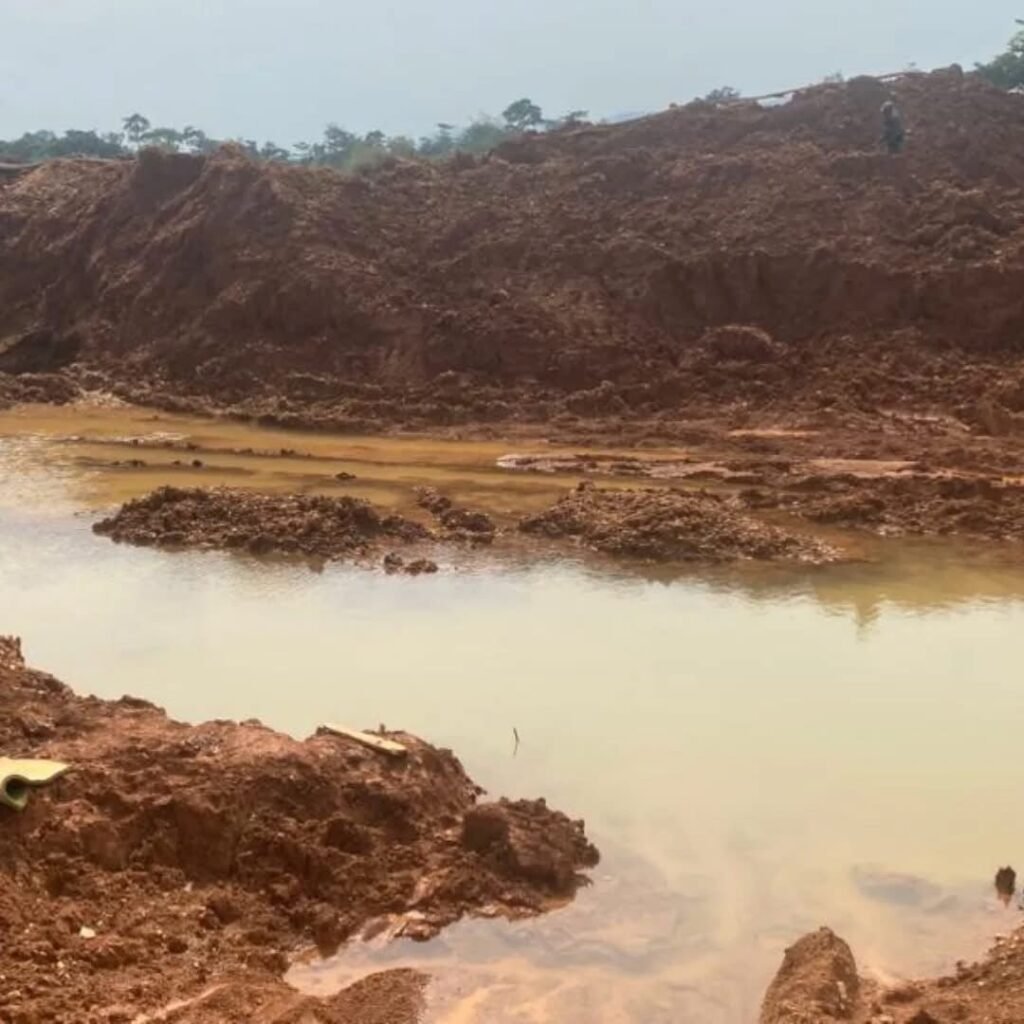
Beyond the terrestrial damage, the “galamsey” operations have introduced toxic turbidity into local water systems, with the Birim River suffering severe pollution that affects downstream communities.


To prevent further ecological abuse, the NAIMOS Taskforce immobilized two excavators on-site by extracting their monitors and control boards, a strategic move necessitated by the lack of immediate heavy-duty transport while simultaneously destroying makeshift housing and processing equipment used to facilitate these unauthorized activities.
Shadow of Foreign Capital in the Extractive Sector

The involvement of Chinese nationals in Ghana’s illegal mining sector represents a complex challenge that transcends simple border control.
Over the last decade, the influx of foreign “investors” into the artisanal and small-scale mining (ASM) space, a sector legally reserved for Ghanaian citizens has transformed traditional mining into a highly mechanized, destructive industry.
These actors often provide the financial “largesse” and technical equipment, such as the changfa and high-capacity excavators, which allow for the rapid stripping of topsoil and the dredging of riverbeds.
This mechanization has turned once-pristine water bodies into mud-filled channels, rendering them unusable for domestic or agricultural purposes.
The presence of foreign syndicates often creates a “legal lacuna” where local patrons front for foreign interests, making it difficult for the Minerals Commission to enforce the strict indigenization of small-scale mining.
Ecological Warfare and the Cocoa Crisis
The environmental fallout from these illicit operations is particularly devastating for Ghana’s cocoa industry, which is already under siege from climate change and disease.
In Birim North, the conversion of fertile cocoa acreage into lunar landscapes of open pits has long-term economic consequences, as the heavy metals used in gold recovery, specifically mercury and cyanide leach into the soil.
This contamination not only kills the current crop but also threatens the international reputation of Ghanaian cocoa, as global markets like the European Union increasingly demand “clean” and “deforestation-free” produce.
By targeting these specific foreign operators, the government is attempting to sever the supply chain of environmental destruction that turns sustainable agricultural land into barren, toxic waste zones.
Enforcement as a Mitigant for Future Incursions

While the arrest of two individuals may seem like a drop in the ocean, the tactical approach employed by NAIMOS at Pankese serves as a vital deterrent against the perceived impunity of foreign galamseyers.
By dismantling the logistical infrastructure burning makeshift camps and seizing specialized vehicles like the Toyota Tundra (AS 8120-20), the state is increasing the “cost of business” for illegal syndicates.
This shift toward intelligence-led field operations and the immobilization of heavy machinery is intended to mitigate the “rapid reentry” of deportees and the recycling of equipment.
As the Ministry of Lands and Natural Resources intensifies its surveillance through National Anti-Illegal Mining Operations Secretariat (NAIMOS), the hope is that high-profile arrests and the physical destruction of mining assets will eventually outweigh the lure of illicit gold, preserving the Birim River and the surrounding forests for future generations.
READ ALSO: BoG Sets 90-Day Approval Window Under New International Remittance Rules