Ghana’s current trajectory of economic performance would likely improve the country’s position on the Top Least Risky African countries for investors in the next Global Investment Risk and Resilience Index.
Ghana’s macroeconomic stability, resilience, and consolidation for 2025 outperformed the projections of international agencies and organizations. According to analysts, the unfolding gains and uncertainty that clouded the economic sustainability did not favor the country; however, there is hope that the country will improve its ranking of 42nd Least Risky African Country for investors and 211th in the world, as indicated by Henley & Partners and AlphaGeo in October 2025.
The momentum of growth began in 2025, which the economic managers have assured of its sustenance, has given Ghana a good start in 2026. The year began with the macroeconomic indicators fairly good and still inspiring confidence from Ghanaians and the international community.
2025 Rating and Conditions
According to the 2025 rating, Mauritius topped Africa as the least risky African country for Investors and 83rd in the world. Behind Mauritius are Tanzania, Botswana, Seychelles, and Uganda, as the top five favorable investment countries in Africa. Only the top three cracked the global top hundred Investment Risk-Resilience Index.
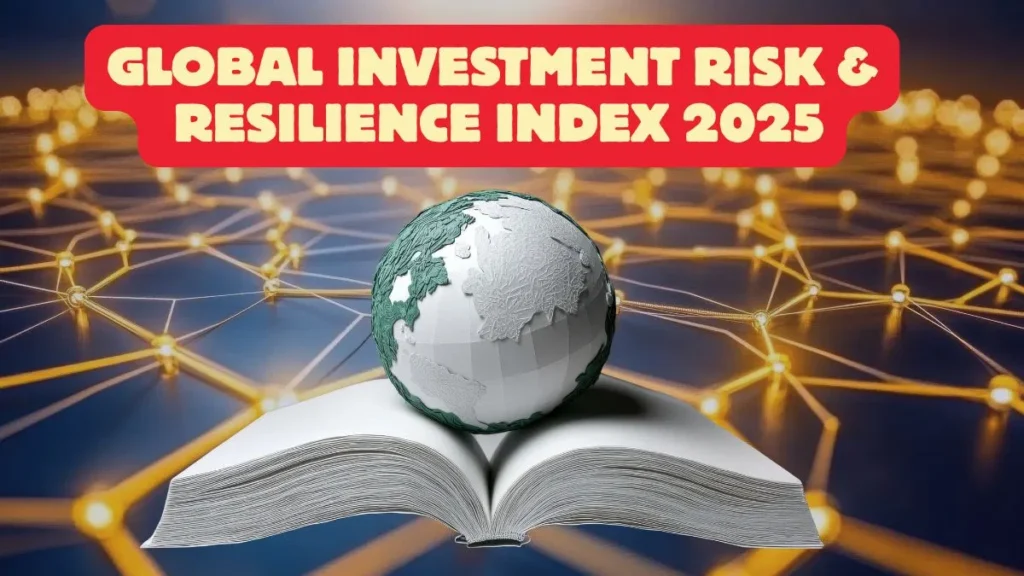
South Africa was 8th, Cote d’Ivoire was 14th, Burkina Faso was 41st, and Nigeria was 52nd in Africa. The index rates 226 countries and territories in total, across 13 indicators grouped under two main pillars: Risk and Resilience.
According to the rating agencies, the risk pillar “captures national vulnerabilities that could undermine investment performance,” and the resilience pillar “measures a country’s capacity to absorb shocks and adapt to major changes, thereby protecting investments and ensuring long-term stability.”


The risk measure captures inflation, currency volatility, political instability, rule of law, regulatory quality, and physical climate risks. The resilience pillar also covered external accounts, fiscal headroom, economic complexity (the technological sophistication of production and exports), gross fixed capital formation, innovation, governance quality, social progress, and climate change resilience.
Ghana’s Current Assessment
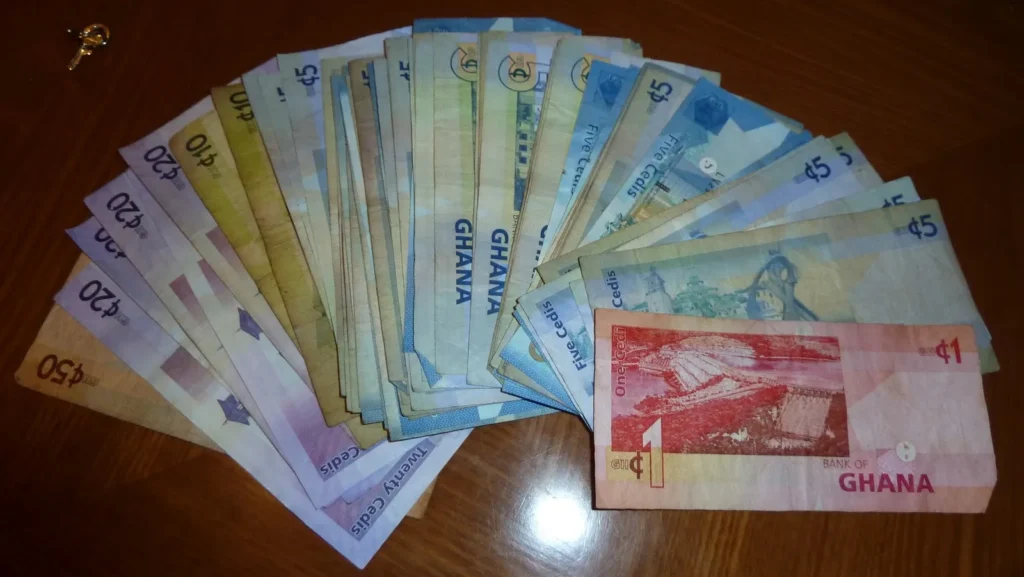
As of December 2025, Ghana’s headline year-on-year inflation recorded 5.4 percent, and with the currency volatility, as of January 12, 2026, the Cedi was 10.7154 to the dollar, beginning the year at 10.5053 Cedis to the dollar. This represents a fairly stable Cedi and a very low inflation rate.
Ghana’s external account has in 2025 significantly strengthened, marking a substantial current account surplus and a robust increase in gross international reserves. Ghana gained a surplus of about US$3.8 billion by the end of the third quarter. Trade surplus of US$8.5 billion by end-October 2025, up from US$2.8 billion a year earlier. This implies that the country’s exports have significantly risen over imports.
Ghana’s Gross Fixed Capital Formation (GFCF) shows strong growth, recording 11.41 percent of GDP in 2025 Q2, up from 7.9 percent in Q1. This suggests a significant positive trend in capital investment as Ghana’s economy recovers, supported by strong household consumption and business activity.
The fiscal stands of the country have improved, with Ghana’s public debt reducing drastically as the country now settles its debt obligations on time. Against the IMF’s projection of a 59-60 percent debt-to-GDP ratio for 2025, as of November 2025, Ghana’s debt ratio stood at around 48.9 percent, showing progress in further reducing it in 2026.
In terms of climate change resilience, the Ghana Meteorological Agency (GMet) is enhancing systems with a National Weather Call Centre, community outreach, and flood drills. The government is integrating climate resilience into major programs (like the 24-hour economy) and reviewing actions for stronger collaboration. A major push is the “Fund Resilience, Not Disasters,” shifting from reactive response to proactive investment.
Ghana is a very stable country politically and remains one of the few African countries with a stable democracy. Ghana’s governance is highly praised around the world, the rule of law is working, and regulatory control has all been improved.
The government has hinted at more reforms and projects to be undertaken this year, including the Value Addition on raw materials for export initiative, infrastructure expansion, prioritizing the real sectors of the economy, and the 24-Hour Economy initiative.
Ghana, clearly, had a major upgrade in its economic indicators in 2025. With the projections from accredited agencies and institutions, and assurances from the Bank of Ghana, the Ministry of Finance, and the President of the Republic, analysts are confident that 2026 will outperform 2025.
Projections for 2026
Although subject to risks from commodity price fluctuations and global economic uncertainty, Ghana’s external position is expected to remain favorable. The IMF and rating agencies like S&P Global Ratings have noted significant improvements, with a stable outlook contingent on sustained fiscal discipline and structural reforms.
According to Fitch Solutions, economic momentum in Ghana will remain robust with “real GDP growth edging up from 5.8% in 2025 to 5.9% in 2026.” The Ghana Statistical Service (GSS) reported that economic activity softened slightly in Q3, slowing growth to 5.5 percent year-on-year from 6.5 percent in Q2.

According to Fitch, “this was largely due to weaker performance in the industrial sector, where growth fell from 2.3 percent in Q2 to just 0.8 percent in Q3, caused by a deeper contraction in mining and quarrying and easing construction activity.” The services and agriculture sectors, however, have improved.
According to analysts, Ghana is well on a path to full recovery and sustainability. Continuing in this trajectory, Ghana could improve its performance to be among the Top Least Risky African countries for investors in the Global Investment Risk and Resilience Index.
READ ALSO: IES Hails Decisive US$1.47bn Energy Debt Clearance in Energy Sector