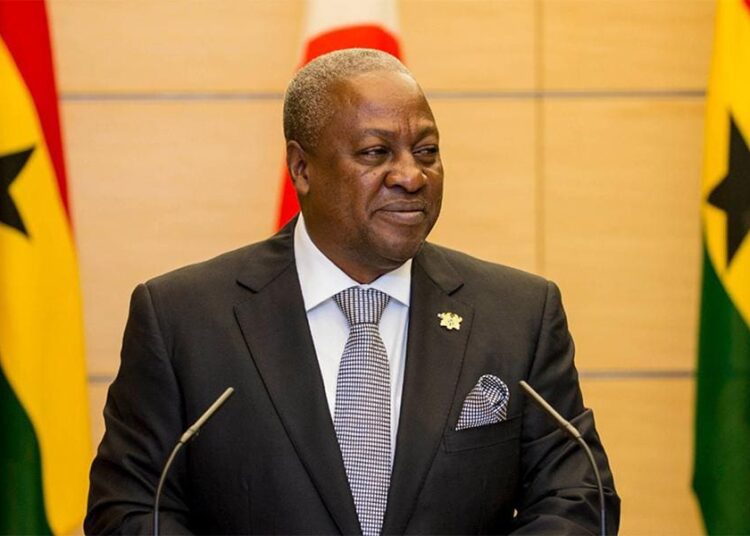
The President of Ghana, John Dramani Mahama, has consistently extended strategic partnerships to all the world blocs as global growth and prosperity shift and become more uncertain to ensure growth and investment opportunities for Ghana.
Revealed during the President’s various engagements with countries, investors, and world leaders, his focus for Ghana is to build resilience, strategic adaptability, collaboration, and leverage technology for inclusive and sustainable development.
Ghana’s convergence with investors aims to promote industrialization, technology, strategic partnerships (especially with China, the United States, and the European Union), and governance reforms, leveraging its AfCFTA role and resources.
While opening Ghana to the rest of the world, the economy is poised for manufacturing expansion, job creation opportunities (through the establishment of the 24-Hour Economy initiative), investment in energy and technology, and enhanced value addition, thereby securing inclusive prosperity and navigating geopolitical uncertainty.

The success of the President’s strategic partnerships will make Ghana a regional hub, increasing exports, modernizing infrastructure, transferring skills, and diversifying its economy for greater resilience and shared prosperity.
President Mahama Joins WEF 2026
The World Economic Forum (WEF) Annual Meeting 2026 in Davos, Switzerland, assembles global leaders and key stakeholders in global economic and business affairs – such as business executives, policymakers, and development partners – to discuss the global economy and developmental issues.
President Mahama is said to participate in this year’s WEF to promote Ghana’s economy through various engagements, while sidelining significant bilateral meetings. The President will use the opportunity to further expose Ghana to the world and seek ideas and prospects to situate Ghana’s local reforms and economic expansion.
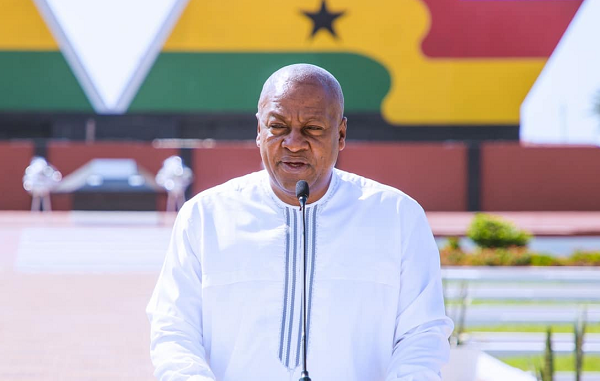
The Strategy of Ghana in Opening Up to the World
Ghana aims to widen its relationship with countries, organizations, and investors to increase investment inflows to sectors of the Ghanaian economy that support the President’s economic transformation agenda.
Also very importantly, Ghana is deepening ties with China to boost infrastructure and technology, the United States to sharpen investment in technology and energy, and the European Union to foster trade and investment, leveraging Ghana’s role as host of the AfCFTA Secretariat.
Technology boost is instrumental in all Ghana’s partnerships because of the redefining nature of Artificial Intelligence (AI) as a tool that is rewriting development, growth, efficiency, and economic transformation. Ghana seeks to embrace digital health, 5G (via Huawei), and other tech for efficiency and new growth areas, alongside vocational training.
Through the potential investment inflows, Ghana will be equipped to establish two key economic transformational strategies – value addition and diversification. With the current macroeconomic stability, various key sectors in Ghana are ready for a boost and growth. Shifting from resource dependency to producing higher-grade goods, leveraging AfCFTA to access larger markets, and diversifying exports.
The government of Ghana is implementing both its own reforms adjusted to Ghana’s economic situation and the IMF-Supported reforms to achieve fiscal consolidation, better public finance, and create an enabling business environment to build investor confidence. Some of these reforms are capital-intensive, and the government, in preventing public debt accumulation through the acquisition of loans, is promoting private sector investment.
The government’s main avenue to revive the economy is the improvement in the real sector, in terms of increased productivity, import substitution industries, food security by growing most basic farm products while reducing imports of such, and job creation. To transform the industry and agriculture sectors, for instance, Ghana has partnered with China to set up assembly plants to create local jobs and reduce trade gaps, supported by the 24-Hour Economy initiative.
Local Economic Impact of the Strategic Partnerships
Ghana’s local economy builds resilience with investment in key sectors as more investors take advantage of the macroeconomic stability and conducive business environment. More investments support diversification, which in turn reduces vulnerability of the Ghanaian economy to global shocks.
Increased investment that births more growth in the real sector will not only create more job opportunities, but will also improve existing jobs as industrial growth creates better-paying jobs.
As investment grows, technology transfers also grow. The introduction of advanced technology improves efficiency and output through the acquisition of new skills and knowledge for modernization. Improving methods of production yields more output, growth, and development.
Ghana’s economic improvements have positioned the country in a leading role on the African continent. Ghana has become the gateway for West Africa and the continent in general. President Mahama’s trips to seek more investment and partnership not only benefit Ghana but the continent through the AfCFTA initiative.
Therefore, Ghana’s leadership aims to turn global challenges into opportunities by strategically investing in its people, infrastructure, and partnerships to build a more productive, technologically advanced, and inclusive economy. With more investment, more expansion in the Ghanaian economy will be evident.
READ ALSO: Muted Gains, Massive Value: GSE Records Capitalisation Leap Despite Single Gainer