The significant losses recorded by the Bank of Ghana have sparked public debate, but leading economist Dr. Gloria Afful-Mensah, speaking at a public forum, insists they were necessary to prevent a deeper economic crisis.
According to her, these losses should not be viewed as policy failure but rather as deliberate and strategic interventions that ultimately shielded the Ghanaian economy from collapse.
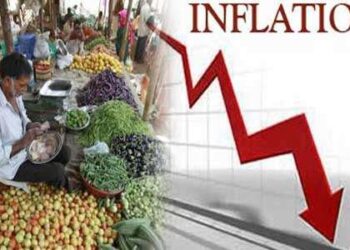
Ghana’s recent macroeconomic recovery did not occur by chance. It was the result of difficult decisions taken during one of the most turbulent periods in the country’s economic history. At the peak of the crisis in 2022, inflation surged beyond 50 percent, eroding purchasing power and threatening livelihoods. Without decisive action, the consequences could have been far more severe.
The Role of the Central Bank
The Bank of Ghana stepped in as a stabilising force, implementing aggressive monetary policies to restore confidence and control inflation. These measures included tightening liquidity, raising interest rates, and issuing central bank securities to mop up excess money in the system.
Dr. Afful-Mensah explained that such interventions inevitably come at a cost. “The losses that we are talking about are accounting losses and necessary correction losses,” she stated. In essence, the central bank absorbed financial shocks so that households and businesses would not bear the full brunt of the crisis.
This approach reflects the broader role of central banks globally, particularly during economic downturns. In Ghana’s case, the Bank acted as a shock absorber, taking on risks that would otherwise have destabilised the entire financial system.
Inflation Control and Policy Transmission
A key objective of the Bank of Ghana’s intervention was to bring inflation under control. Through its inflation targeting framework, the central bank aims to maintain price stability within a band of 8 percent, plus or minus 2 percent.
However, Dr. Afful-Mensah pointed out structural challenges within the financial system. She noted that lending rates do not always respond effectively to changes in the policy rate, limiting the impact of monetary policy on the real economy. Despite this rigidity, the Bank’s actions succeeded in reducing inflation significantly, creating a more stable economic environment.
By December 2025, inflation had dropped sharply, and by 2026 it was estimated at around 3.2 percent. This marked a remarkable turnaround from the crisis years and signaled growing confidence in economic management.
Stabilising the Cedi and Financial System
Beyond inflation, the Bank of Ghana also focused on stabilising the cedi and rebuilding foreign exchange reserves. Currency instability had previously driven up the cost of imports and worsened inflationary pressures. Through targeted interventions, including innovative programmes such as gold-based reserve accumulation, the central bank managed to restore some stability to the currency.
These efforts were not without risk. The Bank took on exposure to market fluctuations and operational costs that contributed to its financial losses. Nonetheless, the outcome was a more stable exchange rate and improved external confidence in Ghana’s economy.
Equally important was the preservation of financial system stability. By stepping in decisively, the Bank prevented panic in the banking sector and avoided the possibility of widespread bank failures. This intervention helped maintain trust in financial institutions during a period of uncertainty.

What Was Prevented
The true value of the Bank of Ghana’s actions lies in what they prevented. Without intervention, Ghana could have faced hyperinflation, a rapid collapse of the cedi, and a breakdown of the financial system. Such a scenario would have had devastating consequences for businesses, households, and the broader economy.
Instead, the central bank’s policies helped cushion the impact of the crisis. While the Bank’s balance sheet weakened, the broader economy gained stability. This trade-off highlights the concept of opportunity cost, where the losses incurred by the Bank represent the price paid to avoid greater economic damage.
Growth and Recovery Outlook
Ghana’s economic indicators now reflect a steady recovery. Gross domestic product growth is projected to reach around 6.0 percent in 2025, up from 5.8 percent in 2024. This growth, combined with easing inflation and improving policy conditions, suggests that the country is on a path toward sustained stability.
Dr. Afful-Mensah emphasised that managing public expectations remains critical. The success of the inflation targeting framework depends largely on the confidence of households and businesses in the central bank’s ability to maintain stability.

The losses recorded by the Bank of Ghana should be understood in context. They are not merely financial setbacks but strategic costs incurred in the process of stabilising the economy. By absorbing these losses, the central bank protected the real sector and created conditions for recovery.
Ghana’s experience underscores an important lesson in economic management. Stability often comes at a price, and in this case, that price was borne by the central bank rather than ordinary citizens. As the economy continues to recover, the focus will shift to rebuilding the Bank’s balance sheet while sustaining the gains achieved.
READ ALSO: Government Has Not Accounted For The “Dumsor” Levy, Kojo Oppong-Nkrumah