President John Dramani Mahama has ordered a GH¢2.00 per litre reduction in the regulatory margin on diesel for one month, in a move designed to cushion consumers, prevent transport fare increases and contain inflationary pressures following the latest surge in fuel prices.
The directive, announced by the Presidency on Monday, 3 August 2026, takes effect from Tuesday, 4 August 2026, and will remain in force for one month unless reviewed by government.
The intervention comes only days after the National Petroleum Authority (NPA) raised benchmark fuel price floors for the first pricing window of August, with diesel recording the sharpest increase in recent months.
Under the new NPA benchmarks, diesel rose from GH¢14.35 to GH¢16.97 per litre, an increase of 18.3 per cent, while petrol increased by 9.4 per cent to GH¢14.53 per litre.
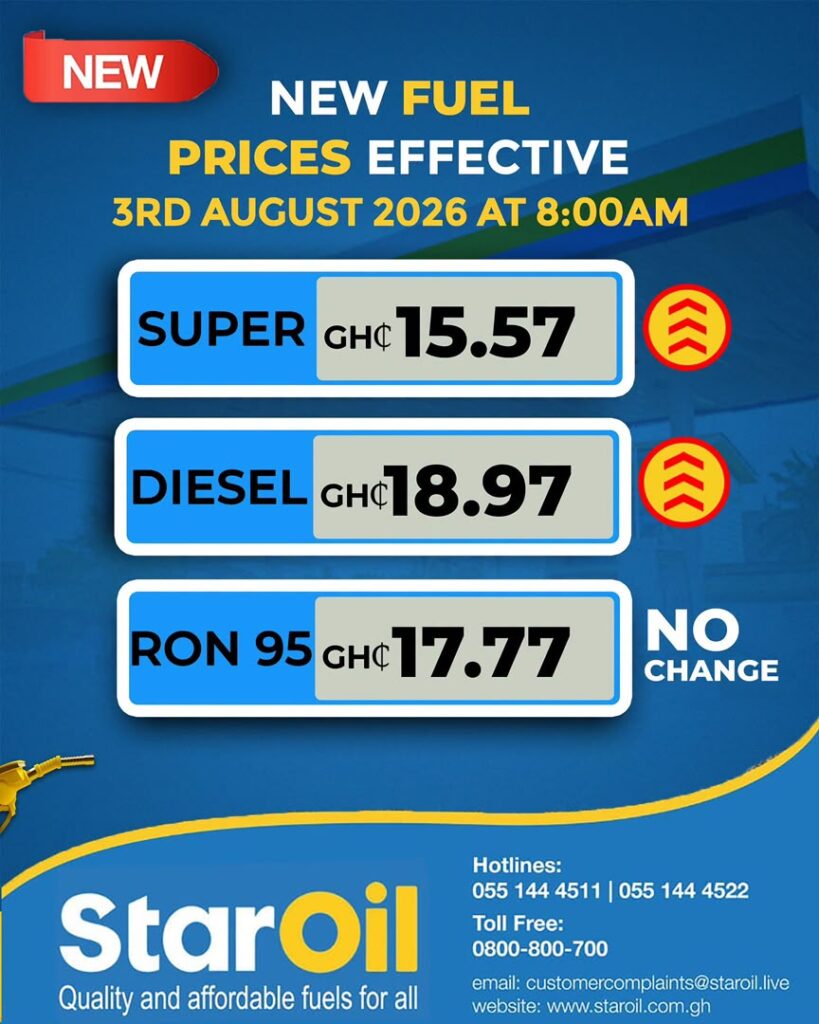
Several oil marketing companies subsequently adjusted pump prices upward, with diesel approaching GH¢19.00 per litre at some stations.
In its statement, the Presidency said the temporary measure was intended to cushion consumers and limit the pass-through effect of higher fuel prices on the cost of living.
This temporary intervention is intended to cushion consumers, prevent transport fare hikes, contain inflationary pressures, and mitigate the pass-through effect of higher fuel prices on the cost of living.
Why diesel becomes the target
The decision to focus exclusively on diesel is economically significant.
Diesel is the dominant fuel for commercial transport, haulage, agriculture, mining, construction, manufacturing and many backup generators used by businesses across the country.
A sharp increase in diesel prices therefore affects not only motorists but also freight charges, food distribution and industrial production costs.

From a macroeconomic perspective, diesel has a stronger inflationary transmission mechanism than petrol.
A reduction in diesel costs can help slow increases in transport fares and logistics expenses, which in turn can moderate pressure on food prices and other consumer goods.
Government appears to be treating diesel less as a private consumption fuel and more as a strategic economic input.
That distinction is important because it suggests the intervention is aimed primarily at stabilising the broader economy rather than providing universal fuel relief.
What the announcement does not say

The Presidency’s statement refers specifically to a reduction in the regulatory margin on diesel, not a direct reduction in the international price of diesel or in all components of the pump price.
The actual effect at the filling station will depend on how the adjusted margin interacts with international product prices, exchange-rate movements and the pricing decisions of oil marketing companies.
In practical terms, the intervention is likely to reduce diesel prices from the levels that would otherwise have prevailed under the current market conditions.
The question many motorists will ask: what about petrol?
The most immediate public reaction is likely to be the question government did not answer: Why diesel and not petrol?
Petrol prices have also risen significantly, and private motorists are facing higher commuting and household transport costs. Excluding petrol may create the perception that relief is being directed at commercial operators while ordinary consumers continue to absorb the full impact of global oil market volatility.

Yet the economic logic is not entirely straightforward.
If government had reduced both diesel and petrol margins simultaneously, the fiscal cost of the intervention would have been considerably larger. By targeting diesel alone, the administration may be attempting to achieve the greatest anti-inflation effect for the lowest fiscal cost.
The unresolved issue is whether the benefits will actually reach consumers through lower transport fares or be partially absorbed within the transport and logistics chain.
A temporary cushion, not a structural solution
The intervention is explicitly temporary.
That matters because the underlying drivers of fuel price increases remain in place: higher international petroleum prices and pressure on the Ghana cedi.

The Presidency said government would continue to monitor developments in the international energy market and consider additional policy measures if necessary.
The Government will continue to monitor developments in the international energy market closely and take additional policy measures, where necessary to protect the interests of the Ghanaian people and sustain economic recovery.
This suggests that authorities recognise the current measure is a short-term stabilisation tool rather than a long-term fuel pricing strategy.
The deeper policy dilemma
The announcement highlights a broader challenge in Ghana’s energy policy.
The country is trying to balance three competing objectives: protecting consumers, containing inflation, and preserving fiscal sustainability.
Repeated fuel interventions can provide short-term relief, but they also reduce government revenue or require adjustments elsewhere in the pricing structure.
The key question is whether Ghana is moving toward a more selective and economically targeted approach to fuel support.
If diesel is being prioritised because of its impact on food prices, transport and industrial activity, the intervention reflects a more sophisticated use of pricing policy than a blanket fuel subsidy.
However, selective relief also requires clear communication. Without it, the public may see inconsistency rather than strategy.
What this says about the 24-Hour Economy agenda
The diesel decision also has implications for the government’s broader 24-Hour Economy agenda.
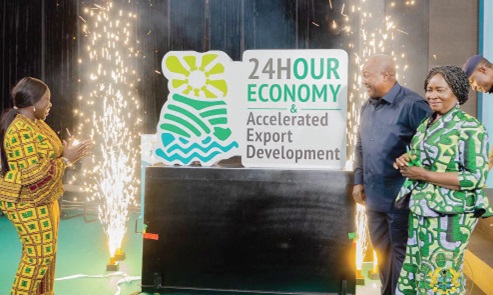
Continuous industrial operations depend heavily on transport, logistics, power backup systems and fuel availability. A sharp rise in diesel costs would increase operating expenses across many of the sectors expected to drive round-the-clock economic activity.
In that sense, the intervention can be read as support not only for transport operators but also for the wider production and distribution network that underpins the government’s industrial ambitions.
A learned caution: avoid making diesel the new subsidy trap
The policy may be defensible, but it carries a risk.
If temporary diesel relief becomes a recurring response to every episode of global oil volatility, Ghana could gradually recreate the fiscal pressures associated with broader fuel subsidies.
The smarter path would be to combine short-term cushioning with deeper structural reforms: improving public transport efficiency, strengthening local refining where commercially viable, enhancing fuel market transparency and stabilising the macroeconomic environment.
The GH¢2 diesel margin reduction may help ease immediate pressure on transport costs and inflation.
The more important question is whether it marks the beginning of a coherent fuel stabilisation strategy, or simply another temporary intervention in a market that remains fundamentally exposed to global oil prices and currency movements.
READ ALSO: ORAL Cases Stall as Courts Take Long Break, GOGO Warns