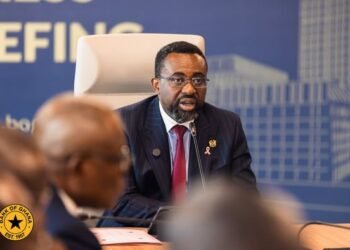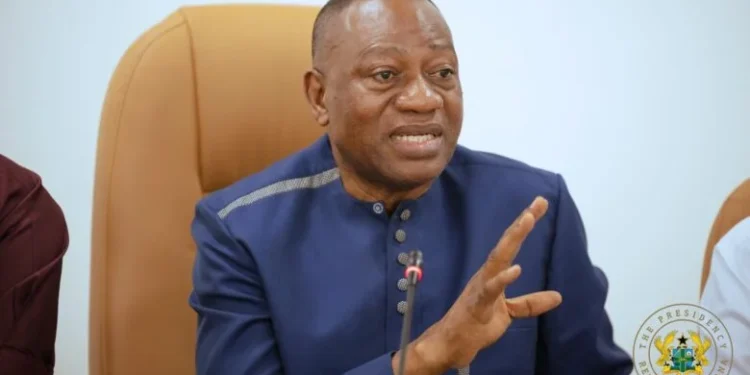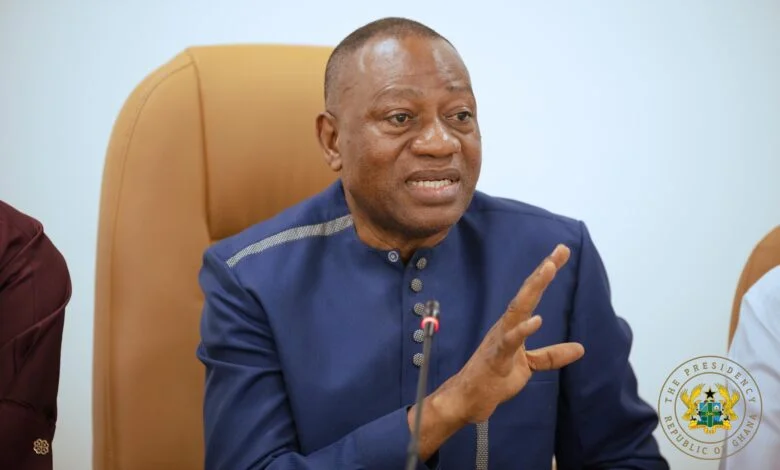
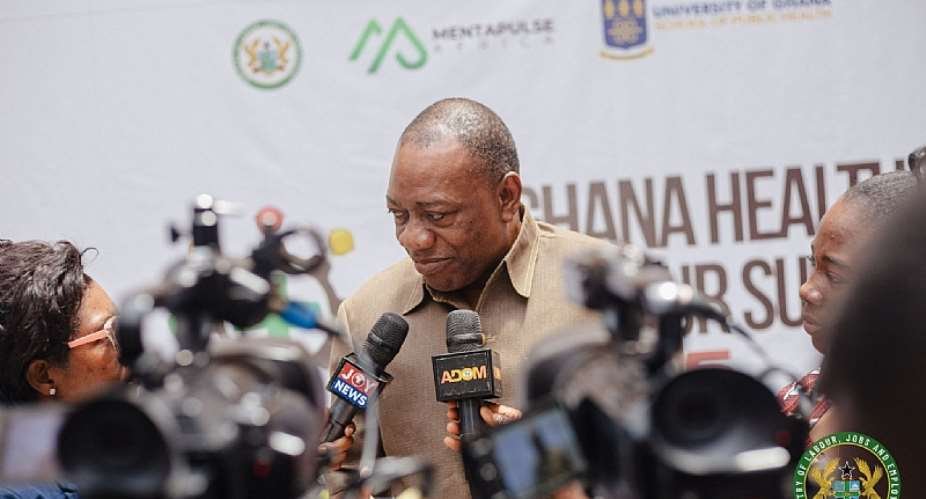
The Minister for Labour, Jobs, and Employment, Dr. Abdul Rashid Hassan Pelpuo, has assured Ghanaians of more job opportunities and improvement in existing jobs this year as the foundation laid in 2025 begins to yield results.
In his response to the press, he disclosed several cooperations, initiatives, and partnerships that the Ministry has made with agencies and institutions to improve the well-being of labour in the country. He also noted that as the year unfolds, many opportunities would be announced, workers will be supported, and the welfare of the labour front of the country will improve. The hope, he added, is to give opportunities to the youth and women and see households’ welfare improved.
According to Dr Rashid Pelpuo, the Ministry was very active in laying foundations and partnerships to create job opportunities for the people of Ghana. He mentioned that there are several initiatives from the Ministry that will be evident soon for the people of Ghana.
Labour Expectations for the Year
According to the Minister, there are several programs and initiatives aimed at increasing opportunities for decent employment and skills development for the youth this year. Key among these are the Ghana Jobs and Skills Project (GJSP) supported by the World Bank, the Youth Employment Agency (YEA) programs to provide market-relevant skills, and various Technical and Vocational Education and Training (TVET) reforms stemming from the Strategic Plan for TVET Transformation.
The Ministry has also assured strong protection of workers’ rights and improved working conditions through enhanced enforcement of existing laws – including the minimum wage – and efforts to modernize the current labour legislation to ensure the safety and security of labour in Ghana.
Expanded support for enterprises and cooperatives as engines of job creation is a key strategy for economic development, involving targeted policies, financial assistance, capacity-building programs, Public-Private Partnerships (PPPs), market access and infrastructure development, and support of the informal economy and workers, from governments and international bodies like the International Labour Organization (ILO).


A stable and harmonious labour environment is built on robust labour relations, respect for rights, and a supportive workplace culture, which collectively foster productivity and economic resilience.
Collaborations of the Ministry in 2025
According to the Minister, the government has “collaborated with development partners to promote job creation, provide support to the private sector through business promotion initiatives, and enhance access to public employment services, including job registration and job matching services at the various Public Employment Centres (PECs) in over seventy (70) Districts in all sixteen (16) regions across the country.”
In 2025, the government engaged with companies that were willing to support labour both within the country and abroad on all labour-related issues to ensure that Ghanaian labour is safe and the general labour welfare is upheld. “These efforts contributed to skills transfer, remittances, and employment diversification,” the Minister stated.
The Ministry has developed two Bilateral Labour Migration Agreements with Qatar & Saudi Arabia, and five MOUs with Germany, UAE, Jordan, Grenada, and Italy. The Minister again revealed that the Work Abroad Programme was upscaled in collaboration with the Youth Employment Agency.
The Ministry is working with the World Bank to put the necessary structures in place to fully operationalize the Ghana Labour Market Information System (GLMIS). This would connect jobseekers with available vacancies.
According to the Minister, engagements with our tripartite partners to update and repeal most of the obsolete laws governing our labour front are being sped up. These laws include the Labour Act, 2003 (Acts 651), Workmen’s Compensation Act, 1987 (PNDCL 187), Factories, Offices, and Shops Act, 1970 (Act 328), and the Cooperative Societies Decree, 1968 (N.L.C.D. 252).

The Ministry is also updating the National Employment Policy 2015, National Labour Migration Policy 2020-2024, and the National Green Jobs Strategy 2021-2025.
In 2025, the government intensified investments in skills development and re-skilling programmes to enhance the employability of Ghanaian workers. Special emphasis was placed on green skills, digital skills, entrepreneurship, and technical and vocational competencies in response to emerging labour market trends and the green transition agenda.
The Ministry partnered with the ILO through the EU-Ghana Pact for Skills – Integrated Action on Green Jobs and Skills Project to develop a curriculum in green skills at the vocational level.
According to Dr. Rashid Pelpuo, 2026 looks promising, and these frameworks, some of which are still being rectified, will strengthen the labour front, improving and creating job opportunities.
READ ALSO: Banks Face Sanctions as BoG Links Forex License Validity to Strong Internal Controls