The Spanish government has summoned Iran’s Ambassador in Madrid, Reza Zabib to formally protest against the crackdown on the nationwide demonstrations.
Spanish Foreign Minister, Jose Manuel Albares said that the government conveyed its “condemnation” of the response to the protests, which have been met with mass arrests and the use of lethal force.
The demonstrations that broke out over economic conditions have snowballed into a broader challenge for the clerical rulers who have governed since the 1979 Islamic revolution.
Opposition activists said that hundreds of protesters have been killed in the protests while state media have reported the deaths of more than 100 security personnel.
The sustained nationwide protests that have gripped Iran since late December have divided global opinion, with some governments raising concern about what they fear are foreign, instigated riots, while others have accused Iran’s leaders of responding violently to those protesting.
Several senior Iranian figures have acknowledged the grievances of the demonstrators but have attempted to distinguish between people motivated by economic duress and rising costs, and what they have described as rioters seeking to “sow discord”, as Iran’s Foreign Minister Abbas Araghchi stated.


In an interview, Albares emphasized that the right of Iranian men and women to peaceful protest, their freedom of expression, must be respected. He added that “arbitrary arrests must cease.”
The Spanish Foreign Minister also urged Iran to re-engage diplomatically, calling on Tehran to “return to the dialogue tables and to the negotiating tables.”
Also, Finland said that it will summon Iran’s Ambassador in response to its crackdown on nationwide protests and the blocking of internet access.
Foreign Minister Elina Valtonen said that Iran’s regime has shut down the internet to be able to “kill and oppress in silence.” Valtonen added, “This will not be tolerated. We stand with the people of Iran – women and men alike.”
Valtonen also said that Finland is working with the European Union to explore measures aimed at supporting the Iranian people and restoring what she described as their “freedom.”
The UN Human Rights Chief noted that he’s “horrified” by the mounting violence against protesters in Iran.
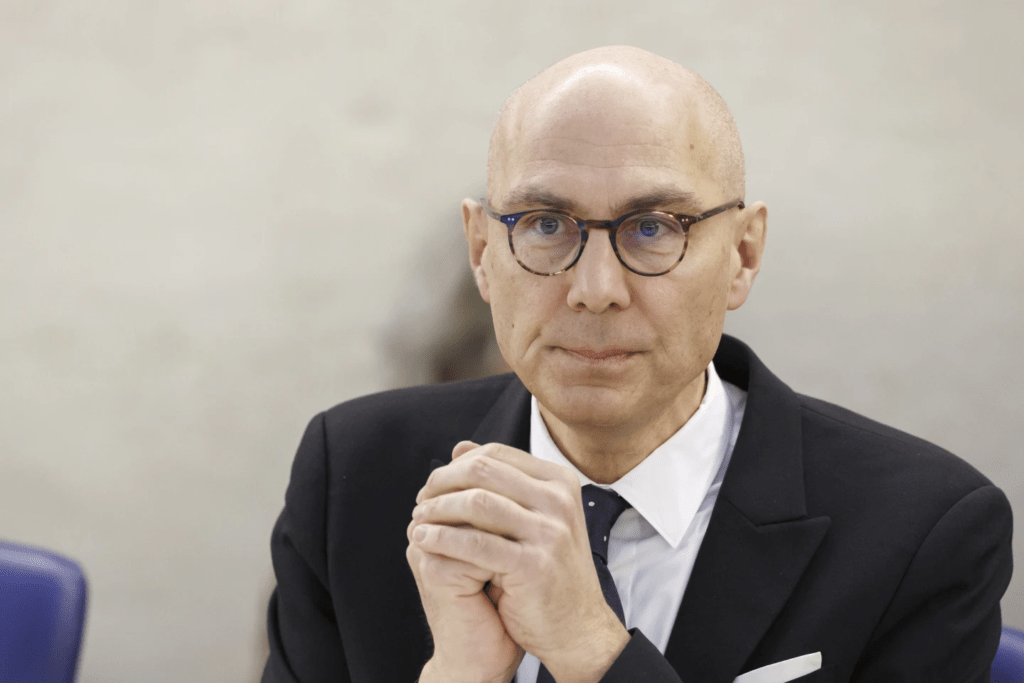
UN High Commissioner for Human Rights Volker Turk said in a statement read out by Spokesperson Jeremy Laurence, “This cycle of horrific violence cannot continue,” adding that the Iranian people and their demands for fairness, equality and justice must be heard.
In comment on the scale of the killings, Laurence, citing the UN’s own sources in Iran, said that he cannot give a precise number but added, “The number that we’re hearing is hundreds.”
Turk said it was “extremely worrying to see public statements by some judicial officials indicating the possibility of the death penalty being used against protesters through expedited judicial proceedings.” He also decried the labelling of protestors as “terrorists.”
Qatar Makes Effort To Ease Tensions

Meanwhile, Gulf nation, Qatar is trying to mediate the rising tensions and threats of war between the US and Iran.
Qatari Foreign Ministry Spokesperson Majed al-Ansari said at a news conference in Doha that there are expectations that the current tension will lead to an escalation in the region, and “we are trying to de-escalate the situation.”
“We know that any escalation … would have catastrophic results in the region and beyond and, therefore, we want to avoid that as much as possible.”
Majed al-Ansari
Al-Ansari added diplomacy is the most effective way to resolve regional crises, and “we are working on this with our neighbours and partners.”
He added that Qatar is a party to the contacts aimed at calming the situation in the region and resolving the disputes between Washington and Tehran.
READ ALSO: GNFS Records Over 5,000 Fire Outbreaks As Chief Fire Officer Demands Prosecutorial Powers