
The Ghana National Fire Service (GNFS) has reported a total of 5,585 fire outbreaks across the country between January and November 2025. This figure, which encompasses residential, non-residential, and market fires, represents a marginal decline from the 5,596 cases recorded during the same period in 2024.
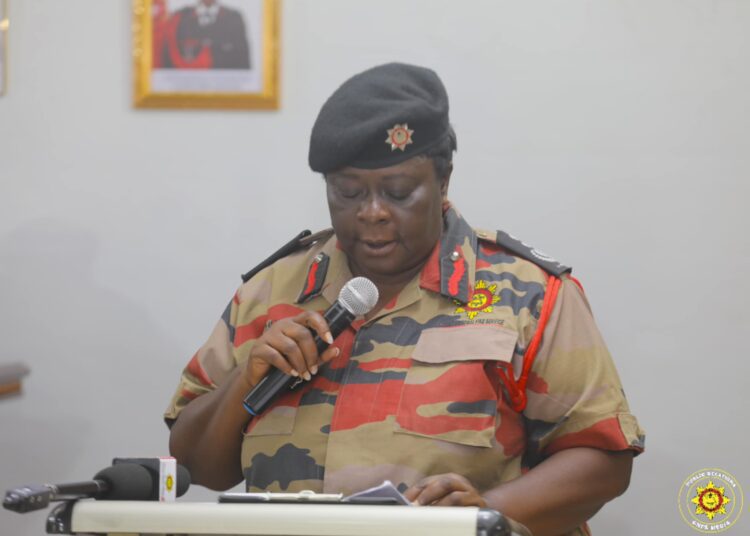
Chief Fire Officer (CFO) Daniella Mawusi Ntow Sarpong, speaking in an interview emphasized that while the statistics show a minor improvement, the level of devastation remains a significant threat to national property and lives.
“I will say it is negligence on the part of the citizenry because these are things that are preventable. We don’t have to wait for them to occur before we try to manage it – so the negligence is too much.
“You advise them they don’t take it. You go to the market and they are using cylinders all over, and the market managers are also not helping”
Daniella Mawusi Ntow Sarpong, Chief Fire Officer

The Chief Fire Officer noted that many individuals continue to ignore basic safety protocols, particularly in high-risk areas.
According to the CFO Ntow Sarpong, the refusal of market managers and traders to regulate the use of hazardous materials, remains a major bottleneck in the fight against urban fires. She maintained that until there is a fundamental shift in the public’s attitude toward fire safety, the burden on emergency responders will continue to grow.
Structural Hurdles
Beyond the issue of prevention, the CFO Ntow Sarpong highlighted significant operational challenges that hinder effective firefighting, some of which are due to external factors beyond their control.
Sge noted that poor road networks in densely populated urban centers and obstructions from the public – including unauthorized structures and crowds – frequently interfere with the swift movement of fire engines. These delays often result in fires spreading to adjacent properties before the Service can gain full access to the site.

To combat these challenges and improve compliance, the Chief Fire Officer proposed a significant shift in the legal mandate of the Service. She argued that “equipping the GNFS with prosecutorial authority would serve as a powerful deterrent.”
Currently, the Service relies on advocacy and inspections, but giving them the power to directly prosecute arsonists and safety violators would, in her view, significantly reduce the incidence of intentionally or recklessly set fires.
In a bid to restore discipline, the GNFS announced a strict enforcement regime for 2026. The Chief Fire Officer cautioned that the Service will no longer tolerate property owners who bypass mandatory fire safety inspections.
Starting this year, the GNFS intends to “crack the whip” on individuals and businesses that fail to seek the necessary certification for their properties. This move is intended to ensure that all structures meet the minimum safety standards required to prevent outbreaks and facilitate easier firefighting should an emergency occur.
CFO Ntow Sarpong urged Ghanaians to be safety conscious and to view fire prevention as a collective responsibility rather than an exclusively institutional one.

As the dry season approaches and poses an elevated risk, the GNFS expects property owners to proactively engage with their regional offices for safety audits.
READ ALSO: Dr. Manteaw Calls for Minerals Revenue Management Framework to Strengthen Sector Gains