President John Dramani Mahama has urged a fundamental shift in global health governance, warning that reform efforts risk becoming symbolic unless matched with concrete structural change.
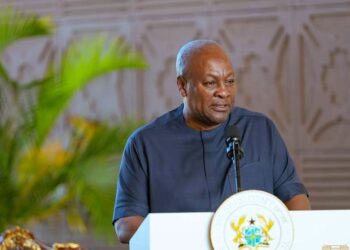
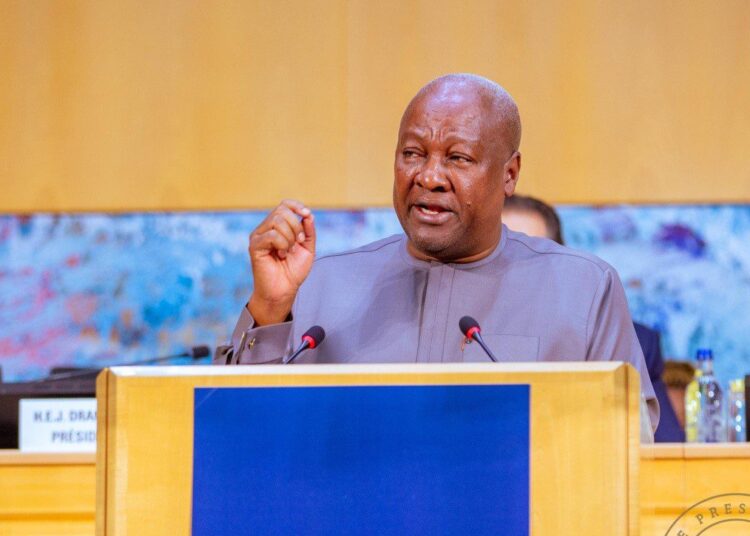
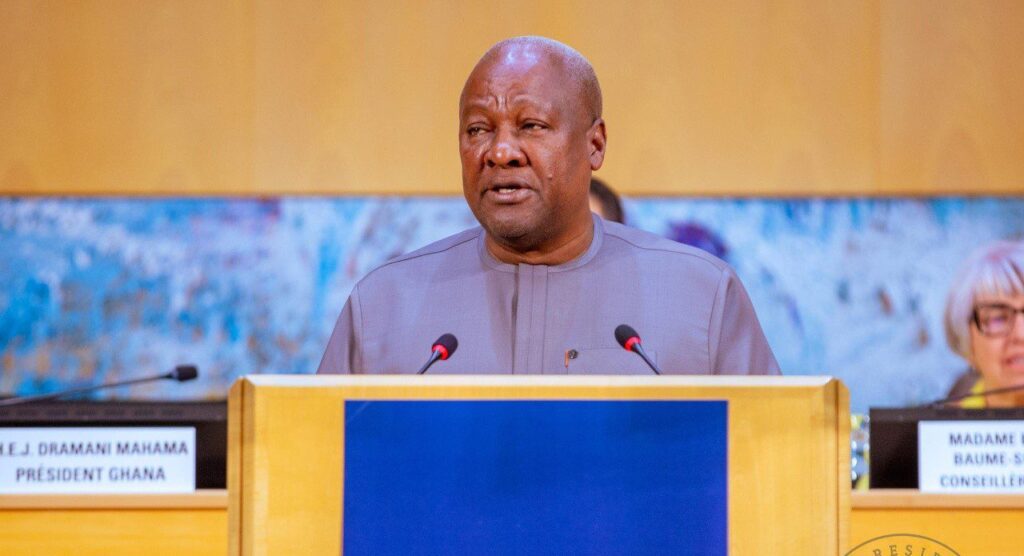
Speaking at the 79th World Health Assembly in Geneva, Switzerland, he described a global environment marked by uncertainty, geopolitical tension, and what he called deliberate pressures on the multilateral system that are weakening international cooperation.
Addressing delegates, including Federal Councilor of the Swiss Federation Elizabeth Bomb Schneider, President of the Assembly Dr. Victor Atala Lajam, and WHO Director General Dr. Tedros Adhanom Ghebreyesus, President Mahama said the global health architecture is undergoing rapid transformation six years after the COVID-19 pandemic.
He noted that humanitarian assistance has declined by about 40 percent, while several major Western economies have significantly reduced overseas development assistance.
He further pointed to the financial strain on the World Health Organization, explaining that the withdrawal of United States support has forced the agency to scale down operations and undertake staff reductions.

According to him, these developments reflect a wider weakening of global health cooperation at a time when demand for support remains high. In Ghana’s case, President Mahama said health financing from bilateral and multilateral partners has dropped significantly since 2025.
He stated that Ghana lost approximately 78 million dollars following the closure of the United States aid programs. These funds, he explained, were directed toward malaria control, maternal and child health services, nutrition programs, and HIV and AIDS interventions, including testing and antiretroviral drug delivery.
Concerns Over the Direction of Reform
President Mahama welcomed the proposal before the Assembly to establish a joint process for reforming the global health architecture, noting Ghana’s role as co-chair of the working group for the Lusaka Agenda.
However, he expressed concern over what he described as indications that the current draft resolution may preserve existing institutional mandates while restricting recommendations for consolidation or structural change.
He warned that such limitations would undermine the purpose of reform. Drawing on a proverb from the Dogon people of Mali, he noted, “do not let the sight of those eating roasted maize force you to cook your maize seeds,” using it to caution against superficial imitation of change without substance.
According to him, if reform processes are designed in a way that prevents meaningful recommendations, then they amount to “performing a ritual.” He emphasized that global health governance must not prioritize institutional comfort over human survival.
In his view, the legitimacy of the World Health Organization is strengthened not by protecting organizational silos but by undertaking honest assessments of what delivers results.
Health Sovereignty and Structural Imbalances
Reflecting on discussions held in Accra in 2025 with WHO Director General Dr. Tedros Adhanom Ghebreyesus, former Nigerian President Olusegun Obasanjo, and other global leaders, President Mahama revisited the concept of health sovereignty.
He defined it as the practical capacity of states to finance core health functions predictably, regulate quality at regional levels, and produce essential health inputs locally.
He argued that many regions, particularly in Africa, remain structurally vulnerable. He pointed out that the continent manufactures less than 1 percent of global vaccines while bearing approximately 25 percent of the global disease burden. In his view, this imbalance illustrates dependency rather than sovereignty.
President Mahama clarified that sovereignty does not mean isolation. Instead, he described it as the ability of countries to finance their own health systems, regulate standards, produce medicines, and manage health data independently.
He also highlighted inefficiencies in global health administration, noting that health ministers in the global South often spend more time preparing donor reports than strengthening primary healthcare systems.
He said the current system confuses the expansion of institutions with the achievement of real impact, resulting in fragmented efforts that do not adequately improve health outcomes.
The Accra Reset and Reform Frameworks
To address these challenges, President Mahama referenced the Accra Reset initiative, supported by a Presidential Council of leaders from the global South. He outlined three operational pillars designed to move reform discussions into practical implementation.

The first pillar is a high-level panel on reform, described as an independent body of global experts tasked with evaluating the global health architecture.
The second is a reform interlock and observatory mechanism intended to ensure coordination between institutions such as the WHO and the Global Fund, preventing conflicting strategies from reaching implementation levels in countries.
He also highlighted what he referred to as health investment national gateway enablers, which he described as an operational mechanism to translate political commitments into viable investments. These would focus on strengthening local manufacturing capacity and advancing bio innovation in developing regions.
A Call for Execution and Accountability
Concluding his address, President Mahama issued three key appeals to the Assembly. First, he urged delegates not to allow reform processes to be constrained by existing institutional boundaries, insisting that meaningful change requires open examination of mandates and structures.
Second, he called for greater focus on execution rather than declarations, arguing that global health systems require infrastructure, production capacity, and resilient supply chains rather than repeated communiqués.
Third, he emphasized that success should be measured at the level of healthcare delivery rather than international conferences. According to him, the most important indicator is whether a child in the global South has the same chance of survival as one in the global North.
He indicated that the current global health order, shaped in a different historical era, is under strain but is being replaced by a new system defined by agency rather than aid and partnership rather than paternalism.
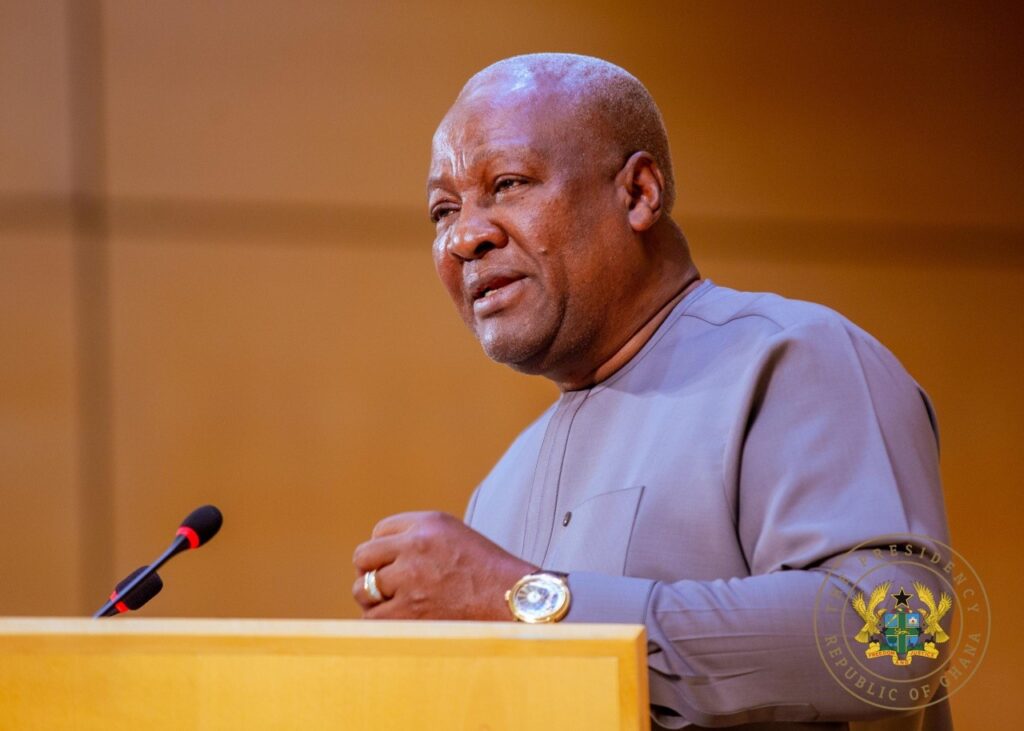
He stressed that this emerging order is being built with the realities of vulnerable populations in mind, including mothers in the global South who continue to give birth under difficult conditions.
President Mahama concluded by referencing an African proverb, noting that “one who plants the tree does not always sit in its shade.” He indicated that the reforms under discussion are intended for future generations, and that today’s seriousness will determine whether those generations inherit a stronger and more equitable system.
He expressed gratitude to WHO leadership and reaffirmed appreciation for ongoing collaboration among global health partners.
READ ALSO: Black Sherif Claims First IRAWMA Win