Hungary and Ukraine are set to begin consultations on the rights of Ukraine’s ethnic Hungarian minority.
In a post on X, Hungary’s new Foreign Minister Anita Orbán wrote that “expert-level consultations aimed at resolving the rights of the Hungarian minority” will begin as soon as this week.
This marks an early sign that strained relations between Budapest and Kyiv could improve under Hungary’s new government. Bilateral ties between the neighboring countries eroded for years under the pro-Russian government of former Hungarian Prime Minister Viktor Orbán, which refused to provide Ukraine with money or weapons to assist in its defense against Russia’s full-scale invasion.
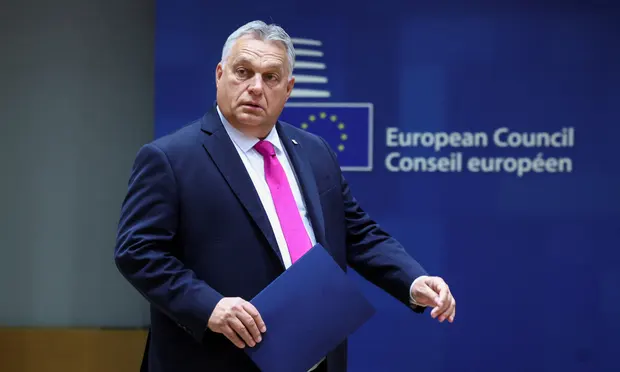
His nationalist-populist government had blocked crucial European Union funding for Ukraine, held up sanctions against Moscow and threatened to impede the war-ravaged country’s efforts toward eventually joining the bloc.
Orbán, who was voted out of office in a landslide election in April, justified many of his government’s anti-Ukraine policies with what he said was the restriction of language and education rights for the roughly 100,000 ethnic Hungarians that live in the Ukrainian region of Zakarpattia.
Aimed at combating Russian influence but ultimately affecting other minority languages, Ukraine passed a law in 2017 that made Ukrainian the required language of study past the fifth grade, angering Romanian, Bulgarian and Hungarian minorities.
Anita Orbán, who is not related to the former Prime Minister, noted that the talks will form “an important foundation for the prompt and reassuring settlement of minority rights issues.”

She expressed hope that the dialogue will be “constructive and productive,” and that the negotiations will soon bring “tangible progress” for the Hungarian community.
Ukrainian Foreign Minister Andrii Sybiha also wrote on X that his government is “ready to open a new, mutually beneficial chapter in Ukrainian-Hungarian relations without delay,” with the aim of “restoring trust and good-neighborly relations between our countries.”
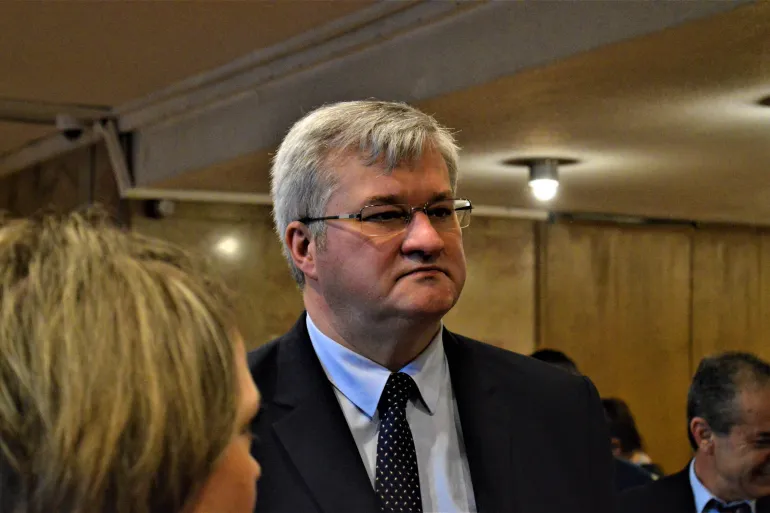
Sybiha wrote that during a phone call with Anita Orbán, he had thanked her for “the Hungarian government’s principled and swift reaction to the latest Russian strikes against Ukraine.”
Orbán’s statement did not specify how long the consultations are expected to continue or whether senior political leaders would become directly involved in the process. However, the decision to begin talks this week suggests both sides view the matter as requiring renewed attention.
Observers say the outcome of the consultations may influence not only bilateral relations but also broader discussions involving European cooperation and regional stability. Minority rights remain a politically sensitive issue in several parts of Europe, particularly in border regions with historically mixed populations.
For Ukraine, maintaining constructive relations with neighboring countries remains important as it seeks closer integration with European structures. For Hungary, the protection of ethnic Hungarian communities abroad has long been a central element of its foreign policy.
Hungarian Government Asking For What “Every Minority In Europe Deserves”

Following a Cabinet meeting later on Monday, Hungarian Prime Minister Péter Magyar said his government was “asking for nothing more than what every minority in Europe deserves.”
He added that the forthcoming talks would be a “prerequisite” for Hungary agreeing to open the first phase of Ukraine’s accession process during an EU meeting next month.
In the lead-up to the April election, Orbán’s government ran an aggressive anti-Ukraine campaign, casting the neighboring country as an existential threat to Hungary that threatened to tank its economy and drag it into the war.
However, with the election of the center-right Tisza party and its leader Magyar, hopes emerged that Hungary’s new government would pursue a more constructive approach.
In a stark example of the turnaround in relations with Moscow ushered in by Magyar’s election, last week, Hungary’s new Foreign Minister summoned the Russian Ambassador over a massive drone strike in Zakarpattia, a move nearly unthinkable during Orbán’s 16-year tenure. Ukrainian President Volodymyr Zelenskyy called the summons in Budapest an “important message” and thanked the new government for its response.
As the consultations begin, attention will likely focus on whether the talks can produce practical steps to address Hungarian concerns while balancing Ukraine’s domestic policy priorities. For now, the announcement signals a willingness from both countries to engage through diplomatic and technical discussions on an issue that has remained unresolved for years.
READ ALSO: Drone Strike Targets UAE’s Sole Nuclear Power Plant