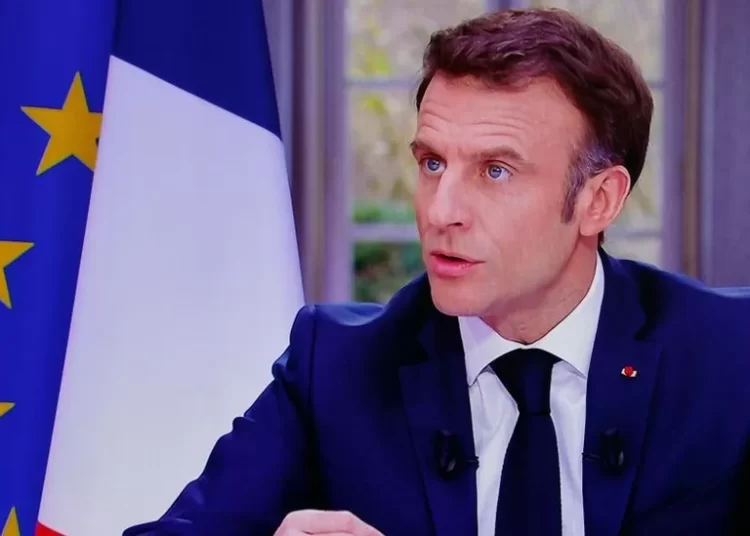
French President, Emmanuel Macron has announced plans to convene a Group of Seven meeting in the coming weeks to coordinate a response to the deepening global energy crisis.
Speaking to reporters at the Elysee Palace after meeting political party leaders, Macron linked the sharp rise in energy prices to conflicts in the Middle East and Ukraine, as well as disruptions to shipping through the strategically important Strait of Hormuz.
The French President said that the ongoing conflict in the Middle East was exacerbating pressures on global energy markets, with the impact increasingly being felt by households and businesses facing higher fuel and energy costs.
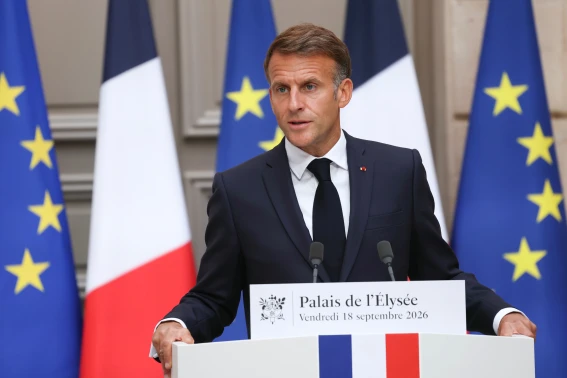
Macron called for a diplomatic solution that would ensure the Strait of Hormuz is reopened to shipping, stressing the importance of maintaining the flow of energy supplies through the key maritime route. “The situation is very difficult and distressing for many families,” Macron said, acknowledging the pressure that rising energy costs are placing on households.
The Strait of Hormuz is a major international shipping route for energy supplies, and disruption to traffic through the waterway has contributed to heightened concerns over fuel availability and prices.
Macron has instructed his government to pursue what he described as full mobilisation on fuel supply and prices, including international efforts aimed at securing energy supplies and supporting the “peaceful reopening” of the Strait of Hormuz.
The issue has also become a growing domestic political concern in France. Fuel prices have risen sharply, placing additional pressure on consumers already dealing with a higher cost of living.
French fishers staged another protest on Thursday, blocking access to two ports and a fuel depot in southern France over soaring diesel prices. Diesel prices reached €2.37 a litre during the week, just below the previous record of €2.38.
The demonstrations reflect growing concerns among sections of the population and economic sectors that depend heavily on fuel about the impact of international conflicts and supply disruptions on domestic prices.
Macron’s announcement of a G7 meeting comes as governments seek to coordinate their responses to the energy pressures rather than address them solely through national measures.
France and Italy are also heading toward major elections next year, with the cost of living expected to remain an important issue for voters. Rising energy prices have added to the economic pressures confronting governments and households across Europe.
By bringing the G7 together, Macron intends to encourage coordination among major industrialised economies at a time when geopolitical developments are placing additional strain on global energy markets.
Macron Warns of Intensifying Russian Hybrid Threat
Alongside the energy crisis, Macron warned that France and other European countries face an intensifying Russian hybrid threat, including drone and cyberattacks against critical infrastructure.
The French President said that he had instructed his government to prepare a plan to protect critical infrastructure, including sensitive sites within the defence industry, against potential drone attacks and cyberattacks. “In recent weeks, the threat — particularly the Russian hybrid threat — facing Europeans and France has intensified,” Macron said.
Macron specifically pointed to attacks involving drones and cyber operations as examples of the growing security challenge. The European Union has described Russian hybrid activities as including sabotage, cyberattacks, disinformation and interference in democratic processes.
The French President said that such attacks would not go unanswered and accused Moscow of attempting to intimidate European countries into reducing their support for Ukraine. “We are not intimidated,” Macron said, arguing that Europe’s present and future security was at stake in Ukraine.
The warning adds a broader security dimension to Macron’s discussions with political leaders and comes as European governments continue to strengthen protections around critical infrastructure.
For France, the energy crisis and wider security concerns are increasingly interconnected. The conflict in Ukraine has already reshaped European energy and security policies, while the conflict in the Middle East and disruptions around the Strait of Hormuz have created additional uncertainty for global energy supplies.
Macron’s planned G7 meeting is therefore expected to focus on how major economies can coordinate their response to the immediate energy pressures while working toward greater stability in international energy markets.
His call for the peaceful reopening of the Strait of Hormuz also reflects France’s emphasis on a diplomatic response to the disruption, rather than measures that could further escalate tensions in an already volatile region.
As households confront higher fuel costs and governments face pressure to secure energy supplies, Macron is seeking to combine domestic measures with international coordination. The proposed G7 meeting will provide a forum for major economies to discuss the broader consequences of the crisis and possible avenues for cooperation.
READ ALSO: 24-Hour Economy Unveils Six Strategic Industrial Projects for Private Investors in Ghana