The 24-Hour Economy Secretariat presents six strategic industrial projects as bankable opportunities for private-sector investment in Ghana’s productive economy, signaling a major push by government to industrialize through partnerships.
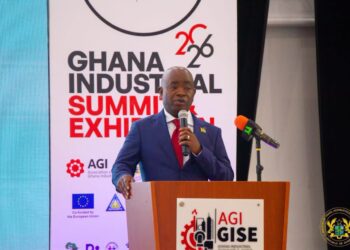
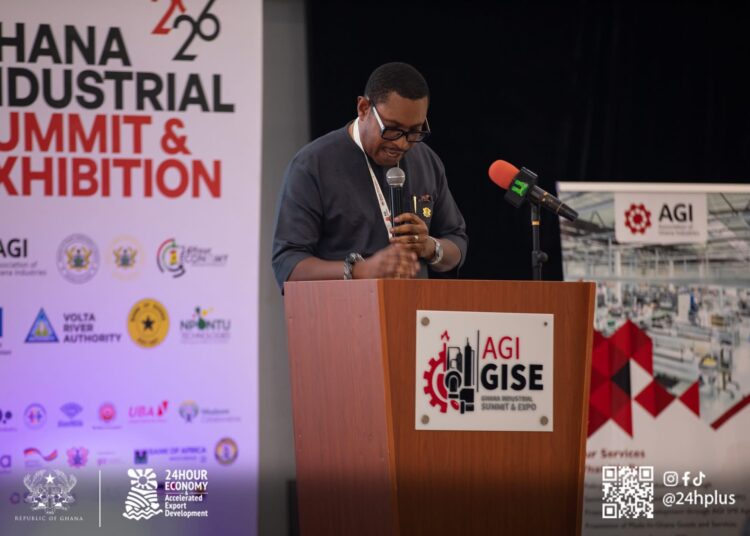
Speaking at the opening of the 9th Ghana Industrial Summit and Exhibition 2026 at the Underbridge Annex, East Legon, the Chief Partnership Officer of the 24-Hour Economy Secretariat, Dr. Ishmael Doodo, calls on investors to partner with government to advance projects that will transform Ghana’s industrial landscape.
The projects include the Legon Pharmaceutical Innovation Park, the Volta Economic Corridor, and the Kumasi Machinery and Technology Park, alongside three other transformative initiatives that form the core of the 24-Hour Economy’s industrialization agenda.
Dr. Doodo says the projects are part of deliberate efforts to expand Ghana’s productive capacity, create sustainable jobs for the youth, and strengthen the country’s position as an export-oriented economy under the African Continental Free Trade Area (AfCFTA).
“We are presenting to the private sector six strategic, de-risked, and high-impact industrial projects that are ready for partnership. Government alone cannot industrialize Ghana. We need the private sector to co-invest, co-build, and co-own the future of Ghana’s productive economy. This is an invitation to investors to be part of Ghana’s industrial transformation.”
Chief Partnership Officer, Dr. Ishmeal Dodoo
He explains that the 24-Hour Economy policy, a flagship programme of President John Dramani Mahama, is not just about extending working hours but about building a resilient productive system where industries operate around the clock, supported by reliable energy, efficient transport, and digital infrastructure.
Six Industrial Projects Unveiled at the GISE
The six projects unveiled at GISE 2026 represent the first batch of industrial enablers under the policy. The first project is the Legon Pharmaceutical Innovation Park. The project seeks to position Ghana as a pharmaceutical manufacturing hub in West Africa.
Ghana currently imports over 70 percent of its pharmaceutical needs, valued at more than $400 million annually. The Legon Pharmaceutical Innovation Park leverages the research capacity of the University of Ghana, Legon, to develop a world-class ecosystem for drug formulation, vaccine production, quality control laboratories, and biotechnology research.
The park will host local and international pharmaceutical companies, with shared infrastructure and incentives to produce for the Ghanaian and ECOWAS market. The second project is the Volta Economic Corridor, a transformative agro-industrial and logistics corridor designed to unlock the economic potential of the Volta Basin.
The corridor integrates irrigated agriculture, agro-processing, fisheries, and light manufacturing, with river transport and road linkages to the Tema Port. Dr. Doodo says the Volta Economic Corridor is critical for food security and export growth, particularly for crops like tomato, rice, and cassava where Ghana has high import bills.
The third project is the Kumasi Machinery and Technology Park, which aims to end Ghana’s dependence on imported machinery and spare parts. The park, to be sited in the Ashanti Region, will focus on fabrication of agricultural machinery, industrial equipment, and spare parts using local steel and engineering talent from the Kwame Nkrumah University of Science and Technology (KNUST).
This project directly supports Ghana’s import substitution and job creation agenda. The fourth project is the Akosombo Industrial and Garment Park, which seeks to build a large-scale industrial park for textiles, garments, and apparel manufacturing. Ghana’s textile industry has declined from employing over 25,000 people in the 1970s to less than 3,000 today. The park aims to revive the sector by attracting global garment brands to produce in Ghana for export to the US under AGOA and to the EU.
The fifth project is the Western Industrial and Minerals Value Addition Park, which focuses on value addition to Ghana’s natural resources, including bauxite, manganese, and lithium. Instead of exporting raw minerals, the park will host refineries and processing plants to produce alumina, battery-grade lithium, and other industrial inputs, in line with government’s policy to industrialize around natural resources.
The sixth project is the Digital and Logistics Hub for 24-Hour Trade, a nationwide platform that integrates digital marketplaces, cold chain logistics, and night markets to enable continuous trading and movement of goods.
The hub includes the Nkabom Collaborative Job Search Portal, which is launched today at GISE, and other digital tools to connect farmers, manufacturers, and traders to markets in real timed. Doodo says these projects are carefully structured as public-private partnerships with clear incentives, including tax holidays, access to land, guaranteed off take under AfCFTA, and support from the Ghana Infrastructure Investment Fund.
24-Hour Economy Partners with Government Stakeholders, Agencies and Industries
‘’The 24-Hour Economy Secretariat is working closely with the Ministry of Trade, Agribusiness and Industry, the Ghana Investment Promotion Centre (GIPC), and the Association of Ghana Industries (AGI) to ensure that the investment framework is transparent and investor friendly.’’
Chief Partnership Officer, Dr. Ishmeal Dodoo
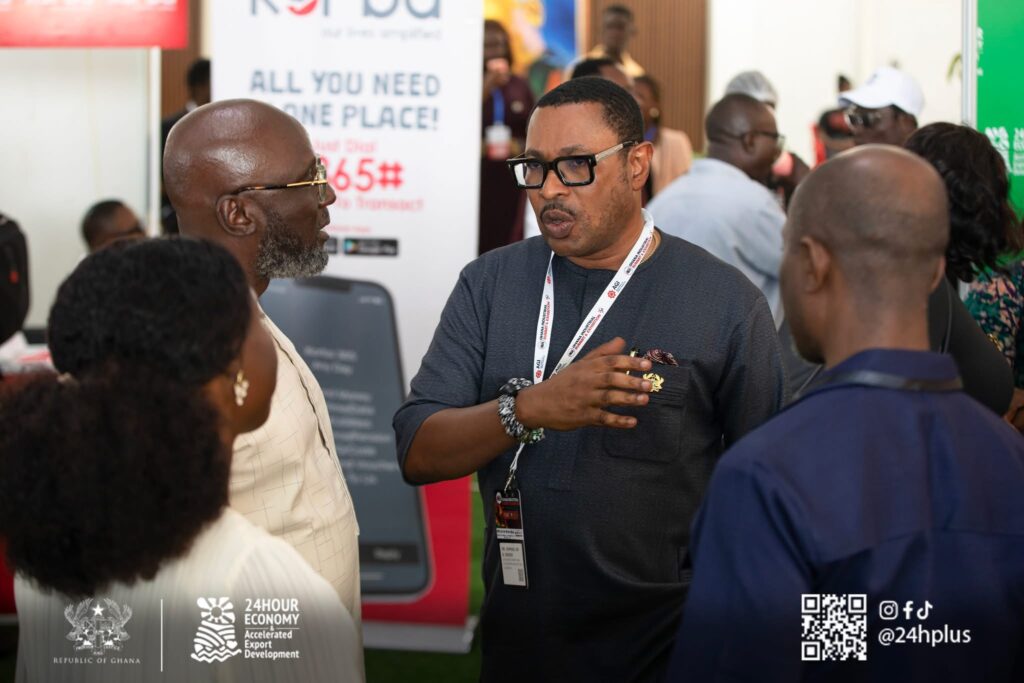
The announcement generates excitement among participants at GISE 2026. Industry leaders say the unveiling of the six projects provides clarity on where government wants private capital to go and how investors can align with national priorities.
The President of the Association of Ghana Industries, Dr. Humphrey Ayim Darke, welcomes the initiative and says AGI members are ready to partner with government to implement the projects. He says the key to success is policy consistency, affordable energy, and access to patient capital.
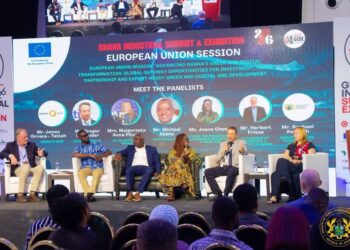
Development partners, including the European Union delegation present at the summit, express interest in supporting the projects with technical assistance and blended financing. Analysts who assess the six projects say their impact could be transformative if executed effectively.
The Legon Pharmaceutical Innovation Park alone could save Ghana over $300 million in pharmaceutical imports annually and create over 10,000 direct jobs. The Volta Economic Corridor could reduce Ghana’s rice and tomato import bill by 40 percent within five years. The Kumasi Machinery and Technology Park could catalyse a new generation of Ghanaian engineering firms and reduce machinery import costs for farmers.
The 24-Hour Economy Secretariat says it will open an investor portal next week where local and foreign investors can access feasibility studies, financial models, and partnership terms for each of the six projects. Roadshows are also planned in Accra, Kumasi, London, and Dubai to market the projects to diaspora and international investors.
As GISE 2026 enters its grand finale today at the Underbridge Annex, the unveiling of the six strategic industrial projects stands out as a defining moment. It signals a shift from policy rhetoric to concrete, investable projects that can drive Ghana’s productive transformation.
Dr. Doodo assures investors that the Secretariat will provide hand-holding support from project conception to execution and that government is committed to removing bottlenecks that have historically hindered industrial projects in Ghana.
“We are building an economy that works 24 hours, produces 24 hours, and exports 24 hours. These six projects are the foundation. We invite the private sector to join us to build a Ghana that is productive, competitive, and prosperous.”
Chief Partnership Officer, Dr. Ishmeal Dodoo
READ ALSO:New Winneba Violence Must Never Happen Again, Afenyo-Markin Tells Effutu and Gomoa