The European Union has urged the United States to reconsider its decision to deny visas to Palestinian Authority officials seeking to attend the United Nations General Assembly in New York, marking the second consecutive year that Washington has imposed the restrictions.
The EU said that it regretted the decision and raised concerns about its implications for Palestine’s participation in the annual UN gathering. “In light of its existing headquarters agreements with the UN and its obligations as host state, we urge the United States for this decision to be reconsidered,” said Anouar El Anouni, a spokesman for the EU’s diplomatic service.
The statement came days after the UN General Assembly voted to allow Palestinian President Mahmoud Abbas to address the body during the upcoming 81st session through a prerecorded statement.
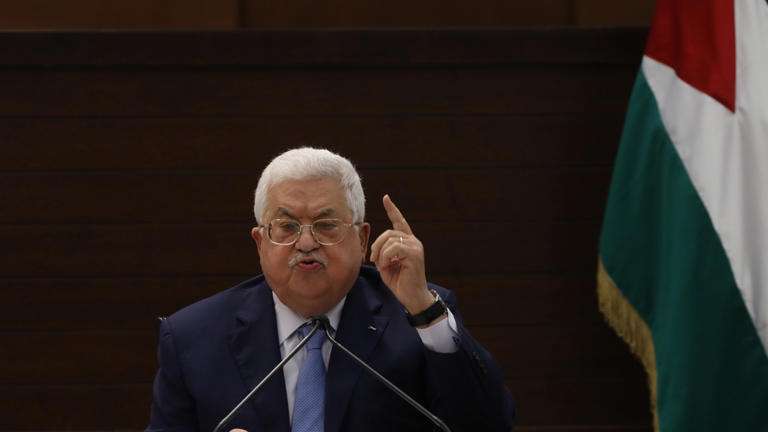
The US Department of State announced that it would extend visa sanctions against officials of the Palestinian Authority and members of the Palestine Liberation Organization, preventing them from travelling to the United States to participate in the General Assembly.
Washington has defended the decision by citing what it described as the Palestinian Authority’s failure to undertake reforms and activities that it said undermine prospects for peace. “As a consequence of their failure to reform, contrary to their commitments to the United States, and their ongoing activities that undermine the prospects for peace, the United States will extend sanctions that deny visas to PLO members and PA officials,” the State Department said.
The department also accused the Palestinian Authority of violating US law by pursuing international recognition of Palestinian statehood rather than negotiating directly with Israel.
Washington further cited the PA’s decision to pursue its dispute with Israel through international courts and its financial support for individuals and families whom the US and Israel associate with attacks against Israelis.
The visa restrictions have drawn criticism from European and United Nations officials, who have raised concerns about the impact on Palestine’s ability to participate in the work of the world body.
UN Secretary-General, Antonio Guterres on Friday expressed regret over the US decision and said he was concerned about its consequences “on the ability of the State of Palestine to participate fully in the work of the United Nations.”
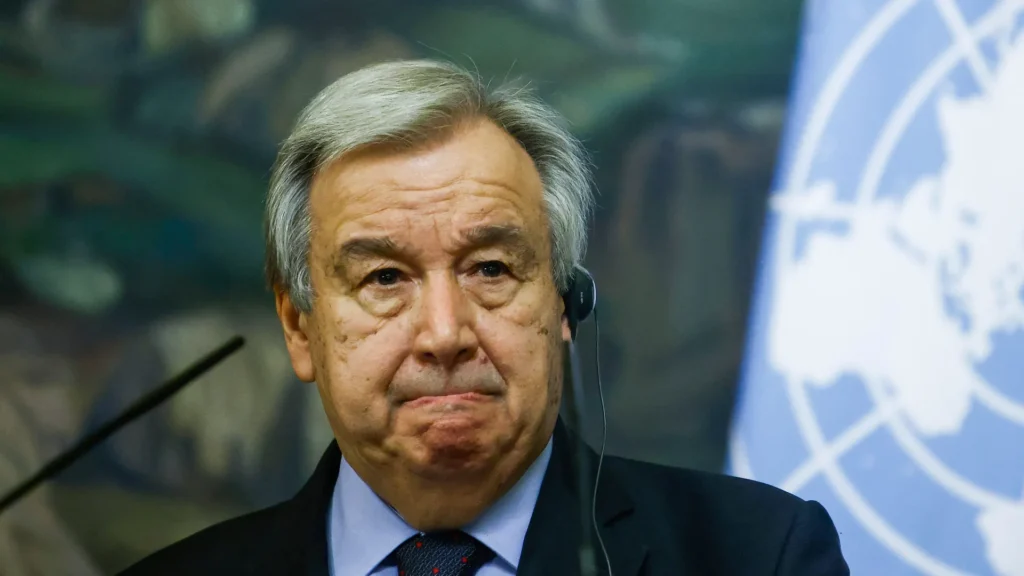
The EU’s intervention similarly focused on the United States’ responsibilities as the host country of the UN headquarters in New York and its existing arrangements with the United Nations.
The dispute comes as the General Assembly prepares for its 81st session, with the Israeli-Palestinian conflict expected to remain a significant issue on the agenda.
UN Allows Abbas to Address General Assembly
The UN General Assembly has voted to allow Palestinian President Mahmoud Abbas to address the upcoming session through a prerecorded video, enabling him to participate despite the US visa restrictions.
The decision followed a resolution passed by the General Assembly on Thursday. Palestine’s Ministry of Foreign Affairs and Expatriates welcomed the measure, describing it as an important step in preserving Palestine’s participation in the annual UN gathering.

The ministry said that the resolution “represents a breaking of the attempt to prevent Palestine’s participation” in the UNGA’s annual session. The arrangement means Abbas will be able to deliver his address remotely rather than travel to New York in person.
The development highlights the competing positions surrounding Palestinian participation in international diplomacy. While Washington has maintained its visa restrictions against PA and PLO officials, the General Assembly has taken steps to ensure that the Palestinian leadership can still participate in the proceedings.
The EU’s call for Washington to reconsider the visa decision comes within that broader dispute over access to the United Nations and the methods being used by Palestinian officials to pursue international recognition and address their conflict with Israel.
The United States has maintained that its visa sanctions are connected to the conduct and policies of the Palestinian Authority and PLO. The State Department has specifically pointed to what it considers failures to reform, efforts to pursue Palestinian statehood through international institutions and legal actions against Israel.
Palestinian officials, meanwhile, have continued to use international institutions as a platform for advancing their diplomatic position and securing support for Palestinian participation in global affairs.
The disagreement places the United States, European Union and Palestinian leadership at odds over the appropriate mechanisms for Palestinian diplomatic engagement at the United Nations.
As the 81st General Assembly session approaches, Abbas’s prerecorded address will allow the Palestinian leadership to present its position to member states despite the US visa restrictions.
The EU’s latest statement adds pressure on Washington to reconsider its decision, while the United Nations’ decision to facilitate Abbas’s participation ensures that the Palestinian issue will remain represented during the upcoming session.
READ ALSO: 24-Hour Economy Unveils Six Strategic Industrial Projects for Private Investors in Ghana