Vice President Professor Jane Naana Opoku-Agyemang has reaffirmed the government’s commitment to strengthening Ghana’s justice delivery system following a high level briefing by the leadership of the Judiciary on reforms undertaken over the past year and priority initiatives planned for the months ahead.
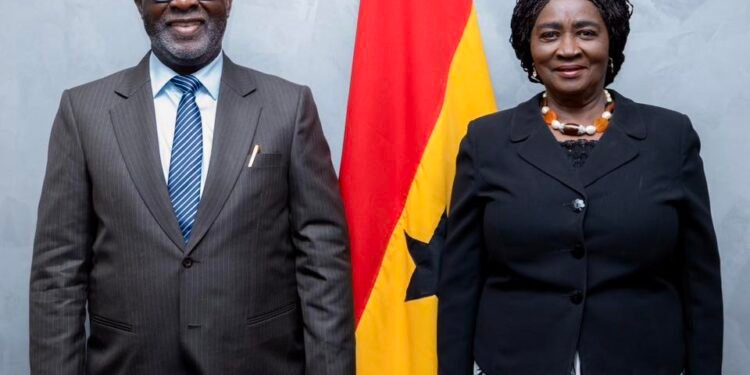
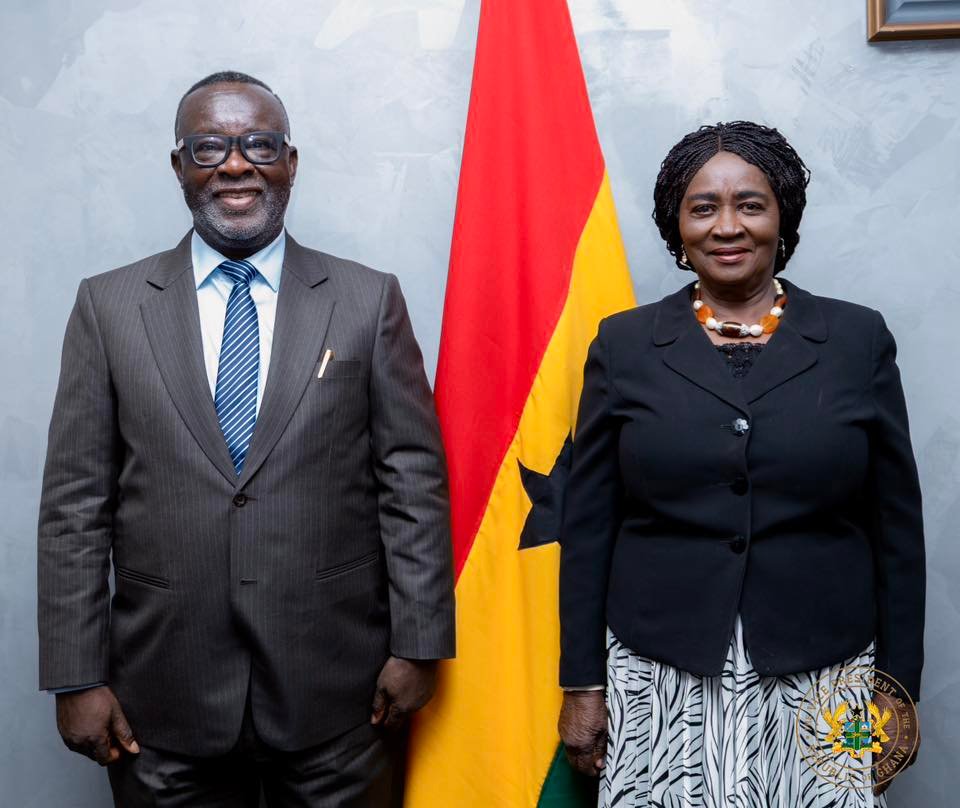
In a written account of the engagement, the Vice President disclosed that she received the Chief Justice, His Lordship Justice Baffoe Bonnie, at her office alongside the Judicial Secretary of the Office of the Chief Justice, Mr. Musah Ahmed, and constitutional law scholar Professor Raymond Atuguba.
The delegation used the meeting to outline key institutional achievements and present proposals aimed at improving efficiency, reducing case backlogs, and expanding access to justice nationwide.
According to the Vice President, a major focus of the discussion was the Judiciary’s strategy to decongest the courts, which have faced mounting pressure from growing caseloads.
The Chief Justice explained that a combination of administrative and procedural reforms is being pursued to address delays and enhance the speed of adjudication.
Among the measures highlighted were the introduction of morning and afternoon court sessions to maximise the use of judicial time and resources. This approach is expected to increase the number of cases heard daily and ease congestion in busy courts, particularly in urban centres.


The expansion of Alternative Dispute Resolution services also featured prominently in the briefing. The Chief Justice noted that strengthening ADR mechanisms would help divert appropriate cases away from the formal court system, allowing disputes to be resolved more quickly and amicably while freeing courts to focus on complex litigation.
Specialised courts were another key area of emphasis. The Chief Justice outlined plans to establish dedicated courts to handle specific categories of cases, including Galamsey courts focused on prosecuting illegal mining offences.
These specialised courts are intended to improve case management, ensure consistency in rulings, and support national efforts to address environmental degradation linked to illegal mining.
The Vice President reported that the Chief Justice also provided updates on ongoing revisions to the Rules of Court. These reforms, which are expected to come into force by March, aim to modernise court procedures and align them with contemporary legal practice.

The revisions are intended to simplify processes, reduce technical delays, and promote fairness and efficiency in the administration of justice. Another significant proposal discussed during the meeting relates to legal education and access to the legal profession.
The Chief Justice announced plans to decentralise the Ghana Law School entrance examination by accrediting selected law faculties across the country to administer a standardised entrance exam. This initiative is expected to reduce congestion at centralised examination centres and make the process more accessible to qualified candidates nationwide.
Infrastructure challenges within the Judiciary were also raised. The Chief Justice expressed concern about security and office space constraints at the Supreme Court Complex, noting that these limitations affect both staff and court users.
He indicated that plans are underway to construct a new Supreme Court Complex to address these challenges and provide a more secure and functional environment for the nation’s highest court. The briefing further touched on efforts to accelerate the implementation of the E-Justice system.
According to the Vice President, the Chief Justice outlined plans to make digital justice platforms fully operational, enabling electronic filing, case tracking, and enhanced information management. The move toward E Justice is expected to enhance transparency, reduce paperwork, and make court services more accessible to the public.
In her response, Vice President Opoku-Agyemang expressed appreciation for the comprehensive update and commended the Judiciary for its ongoing reform efforts. She reaffirmed her support for initiatives aimed at improving efficiency and expanding access to justice, particularly those designed to decongest the courts and reduce delays that affect litigants.
She noted that an effective and responsive justice system is essential to democratic governance, economic confidence, and social cohesion. The Vice President emphasised that reforms within the Judiciary complement broader government efforts to strengthen institutions and improve service delivery across the public sector.

The meeting underscored the importance of collaboration between the Executive and the Judiciary while respecting the independence of the courts. By engaging directly with judicial leadership, the Vice President signalled the administration’s recognition of the Judiciary’s central role in upholding the rule of law and protecting citizens’ rights.
As the Judiciary moves forward with its reform agenda, the initiatives outlined by the Chief Justice are expected to shape the justice delivery landscape in the coming year. With political support at the highest level, stakeholders are hopeful that these measures will translate into faster, fairer, and more accessible justice for all Ghanaians.
READ ALSO: Heavy Volume, Limited Winners as GSE Ends Week with Strong Liquidity but Narrow Gains