Government says it is pursuing a comprehensive response to Ghana’s worsening public transport challenges, as mounting commuter frustration exposes deep structural weaknesses in the system.
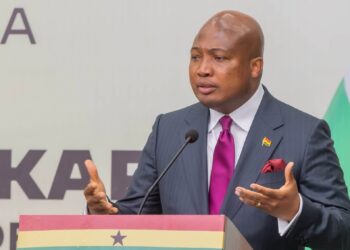
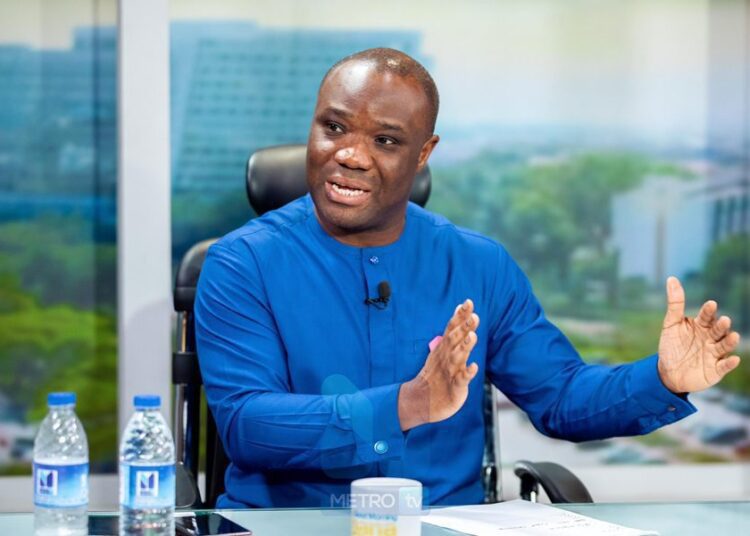
Presidential Spokesperson and Minister of State in Charge of Government Communications, Hon. Felix Kwakye Ofosu, says recent disruptions are being addressed through immediate interventions while longer term reforms are being developed to prevent a recurrence.
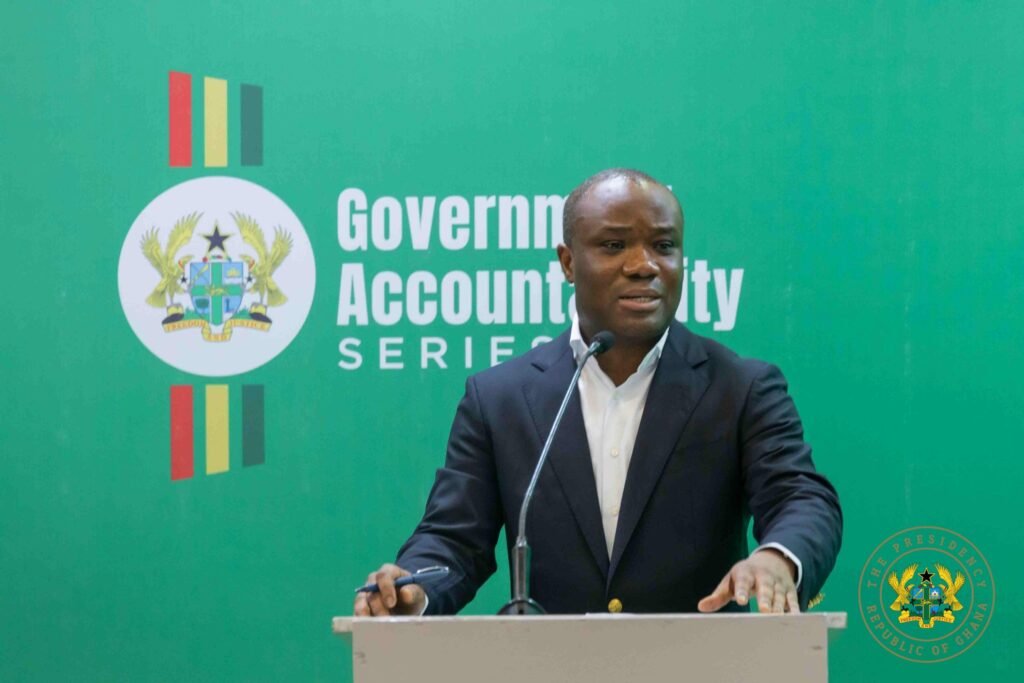
“Well, indeed, government is extremely concerned with the state of affairs, and as I indicated at the accountability series, normally, our public transport system is dominated by private sector players, as I said as well all these years”.
Presidential Spokesperson and Minister of State in Charge of Government Communications, Hon. Felix Kwakye Ofosu
He explained that Ghana’s public transport system has historically been dominated by private operators, a model that had functioned with relative stability for decades. However, he said the government observed a sudden and troubling scarcity of vehicles toward the end of last year, particularly during the festive season.
According to him, this shortage was not accidental but the result of rent seeking behaviour by some commercial drivers who deliberately reduced supply in order to exploit increased passenger demand and charge higher fares.
The government responded at the time by deploying about 40 buses from the State Transport Company to support intra-city movement. Hon. Kwakye Ofosu said the intervention brought immediate relief and eased pressure on commuters.

He noted, however, that once conditions improved, some drivers reverted to previous practices, once again holding passengers hostage through artificial scarcity. He said the Ministry of Transport has since taken steps to restore state-owned buses to active service.
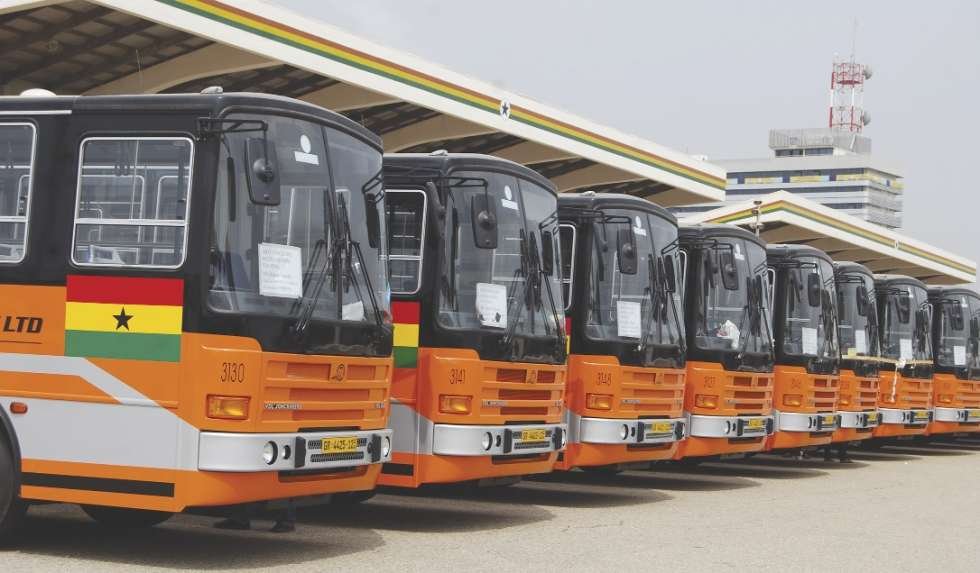
The STC buses used during the festive season have been returned to operations, while efforts are underway to repair broken-down Metro Mass Transit buses across several cities.
According to him, about ten large-capacity buses belonging to Metro Mass Transit are being fixed on an expedited basis and are expected to return to the roads within days. Hon. Kwakye Ofosu said these short-term measures are expected to significantly ease the pressure on commuters.
In addition, he revealed that the Vice President is leading engagements with transport unions, including the Ghana Private Road Transport Union, to confront what the government believes is exploitative behaviour by some drivers.
He said these discussions aim to address practices that are worsening the crisis and causing unnecessary stress, anxiety, and frustration for the travelling public. Beyond the immediate response, government is also revisiting the long term structure of public transport delivery.
Hon. Kwakye Ofosu said plans are underway to reinvest in state-owned transport institutions such as Metro Mass Transit and the State Transport Company to ensure more reliable and permanent solutions.
He acknowledged concerns that similar interventions in the past have not fully resolved public transport challenges. However, he argued that failure of previous attempts does not mean the ideas themselves were flawed, but rather that implementation and management weaknesses must be corrected.
He said public transport, by its nature and scale, must remain largely private sector led, as it has been for decades. He added that population growth and rapid urbanisation have increased demand to levels that now exceed supply, making reform unavoidable. According to him, the government is therefore exploring refined and better-managed models that combine private sector participation with strong public oversight.
Hon. Kwakye Ofosu stressed that there is no sustainable alternative to ensuring adequate transport capacity, whether through road, rail, or other systems, to allow citizens to commute in safety and dignity. He said even the most advanced countries rely heavily on bus-based public transport alongside rail systems and taxis.
He confirmed that government remains committed to long term infrastructure solutions, including plans for light rail, as outlined in the administration’s manifesto. However, he cautioned that such projects take time and should not leave commuters exposed to abuse in the interim.
Addressing questions about reviving the Bus Rapid Transit system introduced under a previous NDC’s administration, Hon. Kwakye Ofosu rejected claims that the initiative had failed. He said the project was well-intentioned and initially delivered visible improvements in affordability and availability of transport.
“We brought in 250 buses. Everybody saw its rollout. Unfortunately, the NPP left it to collapse. Out of the 250 buses, now only 87 are functional because they were basically abandoned. They were not properly looked after, and the whole scheme was mismanaged.”
Presidential Spokesperson and Minister of State in Charge of Government Communications, Hon. Felix Kwakye Ofosu
He said government intends to revive the BRT concept as part of a broader effort to stabilise public transport, noting that the earlier rollout demonstrated the potential for lower fares and improved service when properly managed.
Hon. Kwakye Ofosu also confirmed that Metro Mass Transit buses currently being repaired will be deployed regardless of operational challenges to help address the ongoing crisis.
He explained that although Metro Mass Transit operates both intra-city and intercity routes, some buses have been redirected to serve urban commuters because of the severity of the crisis. He said the company has agreed to cooperate fully to ensure the situation is resolved.
Government insists that these combined measures represent a coordinated attempt to stabilise the system while laying the foundation for a more reliable and equitable public transport network. Officials say the objective is to ensure that Ghanaians can travel to and from work without undue hardship as longer term solutions are rolled out.
READ ALSO: GOIL Shares Surge Nearly 95% in 2025 as Investor Confidence Returns