Public frustration over the state of Ghana’s urban transport system is intensifying, with renewed calls for a comprehensive reset aimed at ending extortion, improving safety, and phasing out the rickety trotros that dominate city roads.
Policy analysts, civil society leaders, and transport users are increasingly questioning why decades of investment in road infrastructure have not translated into a modern, efficient, and dignified public transport experience.
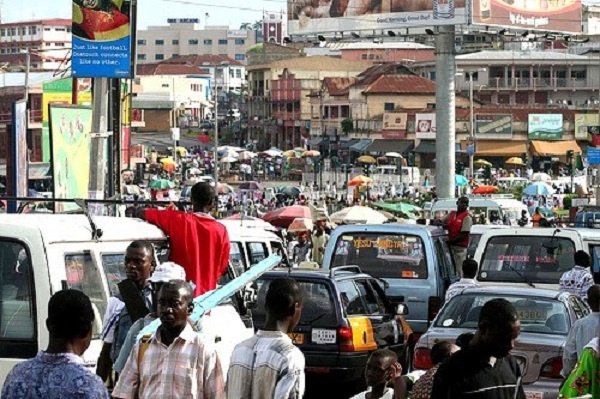
At the center of the debate is the continued reliance on privately operated minibuses, commonly known as trotros, which remain the backbone of daily commuting for millions of Ghanaians.
While they provide widespread coverage, critics argue that the system has become synonymous with congestion, poor maintenance, low capacity, and routine exploitation of passengers.
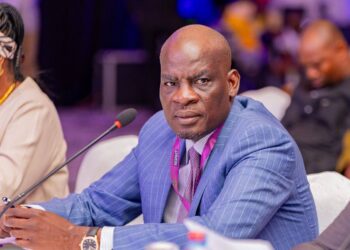
Executive Director of the Centre for Democratic Development Ghana, Professor H Kwasi Prempeh, has been particularly blunt in his assessment. He questioned the logic of spending vast public resources on road construction year after year only for those roads to be dominated by what he described as filthy and low capacity vehicles.
Fundamental Policy Failure
In his view, the current model reflects a fundamental policy failure rather than an inevitable reality of urban transport in a developing economy. Professor Prempeh argued that Ghana urgently needs a modern mass transit system that brings together both public and private sector participation under clear regulation and performance standards.

He maintained that the existing arrangements, particularly the dominance of groups such as the Ghana Private Road Transport Union, are no longer fit for purpose. According to him, public transport should serve national development goals, not merely the narrow interests of operators who resist reform.
Comparisons with other African cities are frequently cited to underscore what critics describe as Ghana’s missed opportunities. Cities such as Dar es Salaam, Lagos, and Ibadan have invested in structured bus terminals and rail-based systems that, while not perfect, demonstrate a clearer commitment to mass transit planning.
Bus Rapid Transport System
Even Accra, critics note, lags behind its potential despite being the country’s economic hub. The debate has been further energized by comments from the Executive Director of Global InfoAnalytics, Mussa Dankwah, who has called for a return to the Bus Rapid Transport concept.
He argued that Ghana abandoned the idea too quickly and allowed informal private transport to crowd out structured public systems. In his assessment, the decline of organized public transport has created space for extortion, fare manipulation, and declining service standards.
Mr Dankwah believes that reviving a properly planned Bus Rapid Transport system would help restore order and predictability to urban commuting. He cautioned that allowing the current situation to persist effectively hands control of a critical public service to actors whose incentives are not aligned with passenger welfare or long-term planning.

Public anger escalated following recent comments by Hon. Felix Kwakye Ofosu, the Presidential Spokesperson, who acknowledged that some trotro drivers deliberately create artificial scarcity to exploit passengers.
His remarks echoed widespread complaints from commuters who report sudden shortages of vehicles during peak hours, often followed by arbitrary fare increases. Transport operators swiftly rejected the accusation, insisting that fuel costs, traffic congestion, and vehicle maintenance challenges were responsible for service disruptions.
They accused the government of deflecting blame and challenged it to provide evidence of deliberate manipulation. The exchange highlighted the deep mistrust between commuters, operators, and policymakers.
The situation took another turn when the Ministry of Transport announced plans to deploy additional Metro Mass buses to support intra city travel. The announcement was welcomed by many commuters but quickly drew criticism from private transport operators, who accused the government of attempting to undermine their livelihoods.
In Action, Not an Option
Some drivers claimed the move was designed to spoil their business rather than solve structural problems. For activist Abdul Hameed, the reaction from drivers only reinforces the argument that public transport has been left in the wrong hands for too long.

He contended that transport is too important to be treated purely as a private commercial venture, especially when operators show little interest in improving safety, comfort, or service reliability. In his view, repeated resistance to reform reveals a system driven by short-term profit rather than public interest.
Mr Hameed argued that the government should take this moment to assert authority and push through long-delayed reforms, even if it provokes backlash from entrenched interests.
He believes that the continued presence of poorly maintained vehicles on major roads is not only an inconvenience but also a safety risk that undermines public confidence in governance.
Calls for reform are not limited to the complete exclusion of private participation. Many analysts argue instead for a regulated system in which private operators meet defined standards or are replaced by more competent entities.
Where the state lacks the capacity to operate services directly, critics say it should partner with credible firms that can deliver reliable mass transit under enforceable contracts.
The current system, critics argue, reflects a policy vacuum rather than an absence of solutions. Ghana has experimented in the past with state supported bus services, rail transport, and urban transit initiatives, but these efforts have often been undermined by inconsistent funding, weak management, and political interference.
The result has been a steady retreat from public provision and a growing dependence on informal operators. Commuters bear the cost of this failure daily through long waits, overcrowding, unsafe driving practices, and unpredictable fares.
For low income workers, unreliable transport translates directly into lost income, missed opportunities, and heightened stress. The social and economic costs, critics argue, far outweigh the investment required to build a functional mass transit system.
Time for Deeper Structural Reforms
As public debate intensifies, pressure is mounting on the government to articulate a clear vision for the future of urban transport. Deploying additional buses may provide short-term relief, but many argue it will not be sufficient without deeper structural reforms.
These include route planning, fleet renewal, enforcement of safety standards, and a gradual phase-out of unroadworthy vehicles. For now, the clash between government intentions and operator resistance continues to play out in the public eye. What is clear is that patience among commuters is wearing thin.

The growing consensus among policy experts, activists, and ordinary passengers is that Ghana can no longer afford to treat public transport as an afterthought or leave it entirely to fragmented private interests.
Whether this moment leads to decisive reform or another cycle of temporary fixes remains to be seen. But the demand for a reset is no longer confined to policy circles.
It is increasingly a public call rooted in everyday experience and a desire for a transport system that reflects the dignity, safety, and efficiency Ghanaians believe they deserve.
READ ALSO: Russia Expels British Diplomat Over Spying Claims