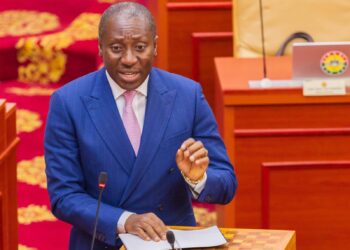

IMANI Africa’s Honorary Vice President, Bright Simons, has raised questions about the Narcotics Control Commission’s (NACOC) account of a joint controlled delivery operation following the seizure of 46.7 kilogrammes of cocaine at Beirut’s Rafic Hariri International Airport in Lebanon.
In a detailed reaction to the October 31, 2026 seizure, Mr Simons questioned whether Ghanaian narcotics authorities were involved in a controlled delivery from the outset, pointing to differences between NACOC’s statement and the account issued by Lebanese Customs.
He also questioned reports of an alleged bribe at Accra International Airport and called for a joint clarification from the two countries’ security agencies.
“I was about to heave a big sigh of relief after reading a statement by Ghana’s narcotics authorities (NACOC) about a joint operation with their counterparts in Lebanon … Then I looked again, closely, and started to scratch my head.”
IMANI Africa’s Honorary Vice President, Bright Simons
His concerns centre on the sequence of events leading to the arrest of a Syrian passenger who arrived in Beirut from Accra with the cocaine concealed in two suitcases.
While NACOC described the arrest as the outcome of a coordinated operation, Mr Simons argued that details released by Lebanese authorities raise questions about the nature and extent of Ghana’s involvement.
Bright Simons Questions Lebanese Account of Joint Operation
NACOC announced that the arrest followed a controlled delivery exercise involving Ghanaian and Lebanese drug law enforcement authorities. The Commission explained that the operation sought to identify and apprehend individuals at both ends of the drug supply chain while gathering intelligence to dismantle the wider transnational criminal network.

However, Mr Simons observed that the Lebanese General Directorate of Customs attributed the operation to its coordination with the country’s General Security, following security monitoring, intelligence gathering and field surveillance.
He noted that the Lebanese statement did not mention NACOC or cooperation with Ghanaian narcotics authorities. He further recalled that Lebanese Prime Minister Nawaf Salam praised the coordination and information exchange between the two Lebanese agencies without acknowledging Ghana’s involvement.
For Mr Simons, the omission raises questions about whether the operation was jointly coordinated from the beginning or whether Ghanaian authorities became involved after the passenger was apprehended.
He also pointed to Lebanon’s anti-narcotics structure, noting that its Counter-Narcotics branch operates under the Internal Security Forces (ISF). According to him, the branch is usually identified in public statements when it participates in joint drug enforcement operations.
Alleged Bribe at Airport Raises Further Questions
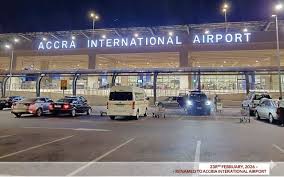
A major concern in Mr Simons’ assessment is a report attributed to Lebanese Customs sources by broadcaster LBCI, alleging that the Syrian passenger may have paid a bribe at Accra airport to get his two suitcases through.
Bright Simons questioned how such a payment could have occurred if the shipment had already been identified and placed under official supervision as part of a controlled delivery operation.
Under Section 111 of Ghana’s Narcotics Control Commission Act, 2020 (Act 1019), the Director-General may approve a controlled delivery by an authorised officer of the Commission.

The Act defines controlled delivery as allowing suspected narcotics consignments to pass through a territory with the knowledge and under the supervision of competent authorities to identify persons involved in drug-related offences.
Bright Simons argued that a properly supervised operation would require coordination with relevant airport security personnel and advance arrangements for the movement of the consignment. He therefore questioned the allegation that airport officials had been bribed to facilitate the passenger’s departure.
“If NACOC had already decided to let the bags pass, it would have been under Ghanaian SECURITY SUPERVISION as per Act 1019 and would have been authorised for clearance by the Director General of NACOC.”
IMANI Africa’s Honorary Vice President, Bright Simons
He further argued that Lebanese investigators would have been informed in advance about the controlled movement of the luggage if the operation had been jointly supervised from Ghana.
The IMANI’s Honorary Vice President also questioned why NACOC had not announced the arrest of the alleged Ghanaian accomplices, including the customs and aviation security officials reportedly implicated in the alleged bribery. These remain allegations, and no evidence of the officials’ involvement has been established in the information publicly available.
Suspect Was Already Under Lebanese Security Surveillance
Another issue raised by Mr Simons concerns the Syrian passenger’s movements before the Beirut seizure. According to Lebanese Customs, preliminary investigations indicated that the suspect had entered Lebanon from Syria through the Masnaa border crossing several weeks earlier before travelling to Accra and returning with the cocaine consignment.
Bright Simons suggested that the passenger may already have been under surveillance by Lebanese security authorities before his journey to Ghana. He argued that prior knowledge of the suspect’s movements does not, by itself, establish that NACOC supervised the shipment through Accra.
He also questioned the circumstances surrounding the discovery of the cocaine, which Lebanese authorities reported was concealed in 40 packages using sophisticated insulation and packaging materials designed to evade scanning equipment. Electronic tracking devices were also found inside the packages.
In his assessment, the reported surprise of Lebanese officers during the inspection raises further questions about whether they received detailed advance information about the consignment.
Previous Ghana-Lebanon Cocaine Shipment Raises Concern
Bright Simons also drew attention to an earlier cocaine seizure involving a shipment from Ghana to Lebanon in November 2025. According to a statement from Lebanese Customs, authorities became suspicious of an air freight consignment weighing approximately 600 kilogrammes that arrived from Ghana on November 26, 2025.
Declared as coconut oil in plastic bottles packed in 40 cartons, the shipment was subsequently found to contain approximately 70 kilogrammes of cocaine.
The seizure was publicly announced on December 22, 2025, after inspection and laboratory analysis. Mr Simons questioned why the incident received little attention in Ghana and why NACOC did not issue a public statement about it at the time.
He argued that the earlier case raises broader questions about the movement of cocaine consignments from Ghana to Lebanon and the effectiveness of airport and cargo screening arrangements. The latest incident has also renewed scrutiny of enhanced passenger screening measures at Accra International Airport.
Simons Calls for Joint NACOC-Lebanon Clarification
Bright Simons called for a joint statement from NACOC and Lebanon’s Internal Security Forces to address the apparent gaps between the two countries’ accounts of the operation.
He believes a coordinated explanation should clarify when Ghanaian authorities became involved, whether the cocaine was under surveillance before leaving Accra, and how the reported bribery allegation fits into NACOC’s description of a controlled delivery.

The Commission has maintained that the operation involved close cooperation between Ghanaian and Lebanese drug law enforcement authorities and that efforts are underway to identify and arrest suspected accomplices in Ghana.
However, the Lebanese Customs account publicly identifies coordination with General Security without detailing the role of Ghanaian agencies.
For Mr Simons, resolving these questions is important not only to establish the circumstances surrounding the Beirut seizure but also to assess the effectiveness of Ghana’s anti-narcotics enforcement and airport security arrangements.
He concluded that a joint clarification from the relevant agencies would help address public concerns and establish whether the operation followed the procedures governing controlled deliveries.
READ ALSO: BoG Governor Promises Ghanaians a Stable Cedi This Christmas