
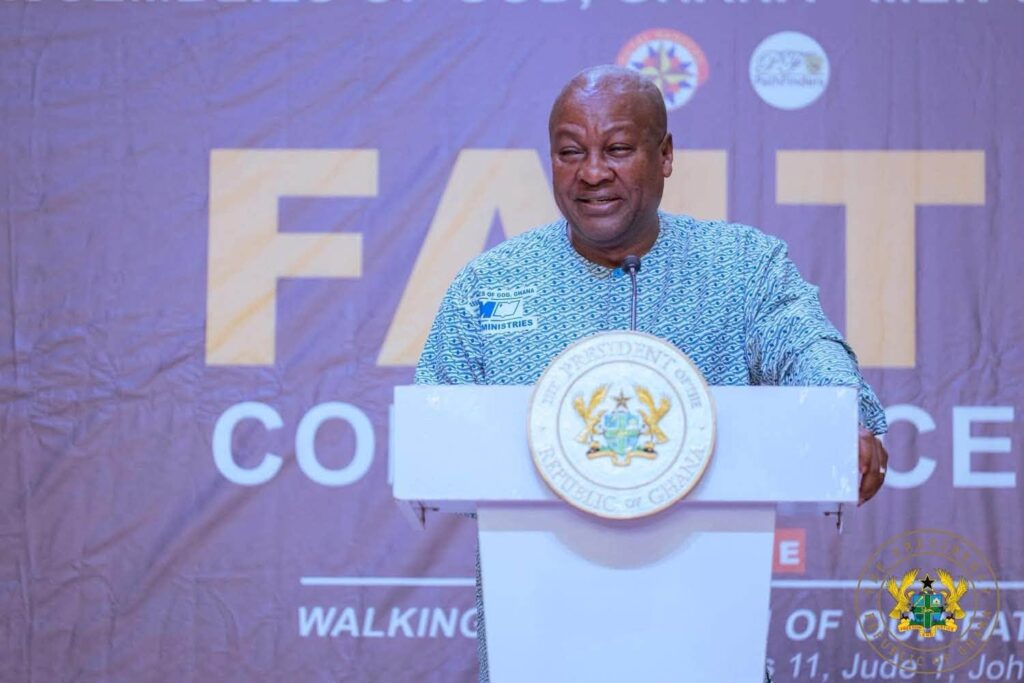
President John Dramani Mahama urged Ghanaians to take greater responsibility for protecting the environment, reacting to a viral video by environmental advocates Buz Stop Boys that exposed unsanitary fish-mongering conditions at Tema New Town.
He made the remarks during the Men’s Ministry Day Celebration at the Ringway Gospel Centre Assemblies of God Church on Sunday, August 2, 2026.
The video, which sparked widespread public discussion on sanitation and environmental practices, showed heaps of waste surrounding an area where fish was being dried for sale, raising serious concerns about the impact of poor sanitation on both public health and local livelihoods.
President Mahama referenced the footage directly, describing the troubling conditions he observed.
“Recently I was watching a video, Buz Stop Boys went to Tema New Town and if you see the rubbish there, meanwhile they were drying fish and that fish was supposed to come into the market. The worst one was, some nice woman on the beach doing her business. We must be responsible as citizens”
President John Dramani Mahama
The President stressed that government efforts to address sanitation challenges cannot succeed unless matched by responsible behaviour from ordinary citizens, framing environmental protection as a shared responsibility rather than one government can address alone.

Warning Against Post-Flood Waste Disposal
President Mahama expressed particular concern about how quickly citizens revert to indiscriminate waste disposal once floodwaters recede, describing a pattern that directly contributes to future flooding incidents.
“Now the floods have gone and so we are like the vulture. Throwing sachet water, Styrofoam, food packaging and everything into the drain, we should remember that when the floods come they will come and meet those things there.”
President John Dramani Mahama
The President argued that meaningful environmental protection requires a fundamental shift in citizen attitudes, with communities taking genuine ownership of their surroundings and understanding the long-term consequences of careless waste disposal habits.
Drawing on scripture to reinforce his message, President Mahama quoted James 2:17 to emphasise that belief must be accompanied by tangible action. “James 2:17 tells us that faith without works is dead and so if our faith must go with works, then it must show in our character,” he said.
A Major Enforcement Operation Followed the Viral Video
President Mahama’s comments arrive against the backdrop of a significant public health crackdown triggered by the viral footage. Following the video’s circulation in late July 2026, a joint task force comprising the Food and Drugs Authority, Tema Metropolitan Assembly, Ghana Police Service and the Ghana Armed Forces stormed the landing site on July 28, 2026.
The operation resulted in the seizure and safe disposal of several baskets of contaminated smoked and salted fish, including products from the Awudum area, preventing them from reaching local markets and posing risks to consumers.
Simultaneously, the Tema East Sub-Metro began demolishing unauthorised structures, processing sheds and makeshift settlements along the shoreline, part of a broader effort to facilitate a complete cleanup of accumulated waste in the area.
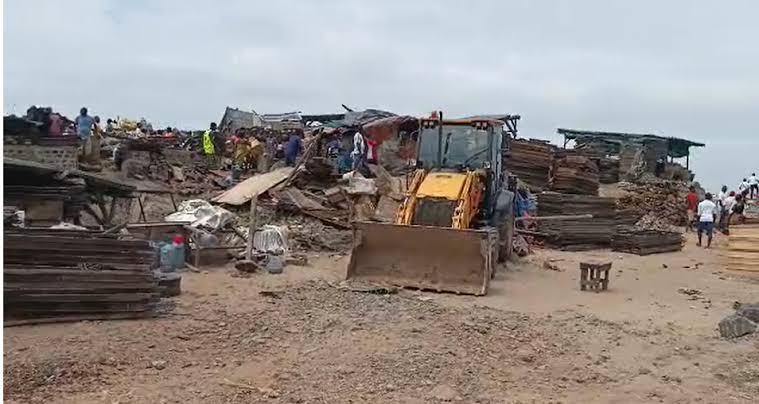
The swift nature of the demolition exercise displaced dozens of local fishmongers and widows who depended on the site for their livelihoods. Many affected traders have since publicly appealed for government assistance, describing how their entire financial livelihoods were destroyed virtually overnight following the enforcement action.
Plans for Modern, Hygienic Processing Facilities
To address the underlying sanitation issues on a more sustainable basis, the Tema Metropolitan Assembly has announced plans to clean and formally demarcate the shoreline.
Authorities have promised to construct modern, hygienic fish-processing platforms alongside proper drying centres, aimed at ensuring safer handling practices for fishmongers operating in the area going forward.
President Mahama’s remarks reflect ongoing national concern over sanitation, waste management and the connection between indiscriminate dumping and Ghana’s recurring flooding challenges.
His comments align with previous statements he has made during his ResettingGhana tour, where he similarly called on citizens and traditional authorities to take greater responsibility for protecting waterways, wetlands and drainage systems from encroachment and pollution.
A Test Case for Balancing Enforcement and Livelihoods
The Tema New Town incident illustrates the difficult balance authorities must strike between enforcing public health standards and protecting the livelihoods of vulnerable traders who depend on informal economic activity for survival.
While the enforcement operation succeeded in preventing potentially contaminated fish from reaching consumers, the resulting displacement of fishmongers highlights the human cost that can accompany rapid sanitation crackdowns when not paired with adequate transition support for affected workers.
As the Tema Metropolitan Assembly moves forward with plans to redevelop the shoreline into a properly regulated processing zone, the success of this initiative will likely depend on how effectively authorities can restore displaced traders’ livelihoods while ensuring the improved facilities genuinely prevent a recurrence of the unsanitary conditions that triggered public outrage in the first place.
READ ALSO: Ghana Gas Profit Surges 97% as Processing and LPG Output Rise