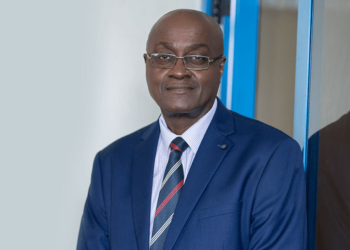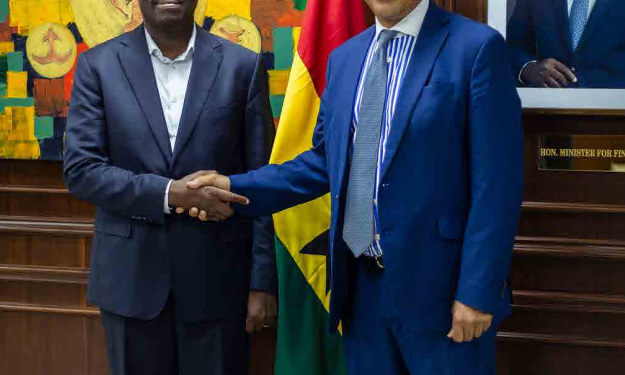
Ghana International Bank (GHIB) is positioning itself for a transformative role in Ghana’s economic future, with its Chief Executive Officer, Ian Greenstreet, unveiling an ambitious strategy aimed at helping Ghanaian businesses expand beyond local borders and compete confidently on the international stage.
Speaking after his first official visit to Ghana since assuming office, Greenstreet reaffirmed the bank’s long standing commitment to the country and declared that Ghana’s greatest economic opportunities are still ahead. His remarks painted a picture of a financial institution determined to move beyond traditional banking by becoming a strategic partner for businesses seeking international growth.
Greenstreet revealed that he dedicated 10 of his first 30 working days as CEO to visiting Ghana, describing the trip as essential in understanding the industries, institutions and entrepreneurs that have shaped GHIB’s identity for more than 60 years.
A Return to the Bank’s Roots
According to Greenstreet, Ghana occupies a unique place in the history and future of the bank.
“Ghana is not simply one of our markets. It is our home, our heritage and the foundation upon which GHIB was established. Since 1959, we have served as a bridge between Ghana and the world’s financial markets.”
Ian Greenstreet
His visit included meetings with government officials, financial regulators, commercial banks, exporters, manufacturers, entrepreneurs and leaders of state owned enterprises. He also toured factories, warehouses, ports and processing facilities to gain first hand knowledge of the realities facing businesses across the country.
The engagements, he explained, strengthened his confidence that Ghana possesses enormous untapped potential that can be unlocked through strategic financing and stronger international partnerships.
Ghanaian Products Impress on the Global Stage
One of the strongest impressions Greenstreet took away from his visit was the quality and competitiveness of Ghanaian products.
He expressed admiration for the innovation and determination of local entrepreneurs, noting that many Ghanaian manufactured goods are already outperforming products from established international markets.
“Perhaps most inspiring was seeing products designed, manufactured and assembled in Ghana not only competing with, but often outperforming, established American, European and Chinese products in international markets.”
Ian Greenstreet
The observation reinforces growing confidence that Ghana’s industrial sector has the capacity to become a significant contributor to export earnings if businesses receive the financial backing required to scale production and access new markets.
Government Pushes for Investment and Industrialisation
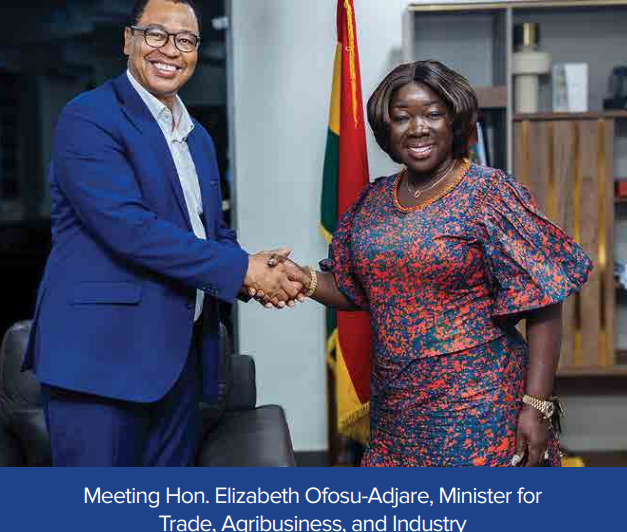
Greenstreet disclosed that discussions with Finance Minister Dr. Cassiel Ato Forson, Foreign Affairs Minister Samuel Okudzeto Ablakwa and Trade, Agribusiness and Industry Minister Elizabeth Ofosu-Adjare focused on accelerating investment, industrialisation and export driven growth.
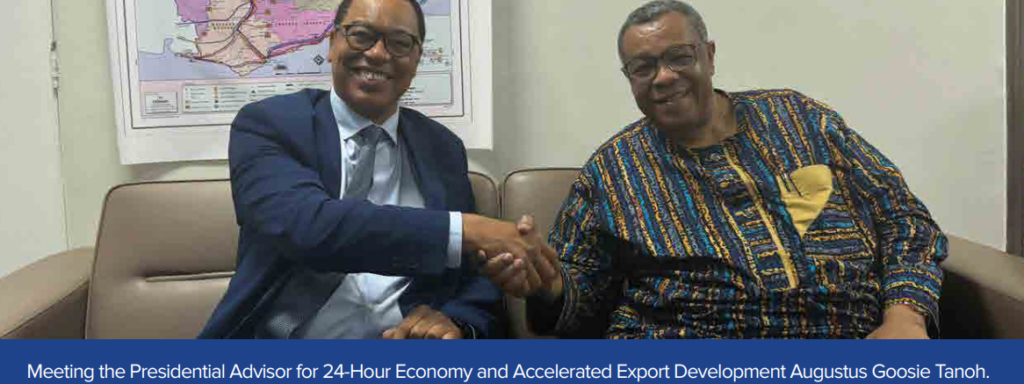
He also held engagements with the 24 Hour Economy Secretariat, the Ghana Infrastructure Investment Fund, the Minerals Income Investment Fund, COCOBOD and the Ghana Gold Board.
According to him, a common concern emerged from virtually every institution. Many ambitious projects struggle to attract international investors because they are not sufficiently structured to meet global financing requirements. “The best ideas, unfunded, go nowhere,” Greenstreet stressed.
He explained that no matter how innovative a project may be, it cannot generate jobs, create wealth or transform communities without access to well prepared and sustainable financing.
Unlocking International Capital
To bridge this financing gap, GHIB plans to work closely with government agencies, development finance institutions and private investors to structure investment ready projects capable of attracting international funding.
Greenstreet believes this approach will enable Ghana to secure larger volumes of foreign capital while giving investors greater confidence in local opportunities.
By serving as a connector between Ghanaian enterprises and international financial markets, GHIB hopes to accelerate infrastructure development, industrial expansion and export growth across multiple sectors.
Ambition to Lead Africa’s Commodity Banking Sector
Greenstreet also outlined a broader continental vision for the bank.
He revealed GHIB’s ambition to become Africa’s leading commodity and natural resources bank by providing specialised financing, trade solutions and risk management services across strategic industries.
These sectors include gold, cocoa, oil and gas, bauxite and critical minerals, all of which remain central to Ghana’s economic development.
The strategy is expected to strengthen the country’s ability to maximise value from its natural resources while improving access to international trade finance.
Digital Banking and Export Support Take Centre Stage
Supporting exporters will remain one of GHIB’s highest priorities.
The bank intends to deepen collaboration with local financial institutions and Ghana EXIM Bank to expand trade finance and foreign currency solutions for exporters seeking access to overseas markets.
Greenstreet also announced plans to introduce an enhanced digital banking platform designed specifically for Ghanaian entrepreneurs, internationally active businesses, high net worth individuals and members of the Ghanaian diaspora.
The initiative is expected to improve access to international banking services while creating a seamless financial experience for businesses operating across multiple markets.
A Long Term Commitment to Ghana
Greenstreet concluded by reaffirming GHIB’s unwavering commitment to Ghana’s economic transformation.
He stressed that the bank’s objective is to become the first institution Ghanaian businesses and investors think of whenever they seek international opportunities.
“Our ambition is simple: whenever Ghanaian businesses, financial institutions or investors think internationally, we want Ghana International Bank to be their first choice.”
Ian Greenstreet
He further noted that GHIB’s profits are reinvested into Ghana and returned to its Ghanaian shareholders, ensuring that the bank’s success directly contributes to national development.
With a renewed leadership vision, stronger engagement with government and industry, and an aggressive strategy focused on global connectivity, GHIB appears determined to play a pivotal role in helping Ghanaian businesses secure the capital, partnerships and international exposure needed to thrive in an increasingly competitive global economy.
READ ALSO: Liquidity Crunch Could Trigger Government Defaults: Ghana’s Precarious Position