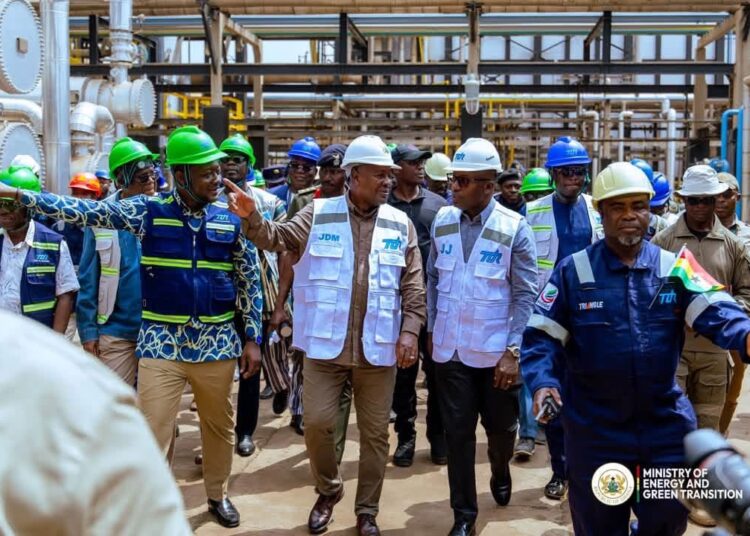
Ghana has taken a significant step in its effort to revive strategic energy infrastructure with the official commissioning of the refurbished Crude Distillation Unit (CDU) at the Tema Oil Refinery (TOR), a development government says is central to restoring domestic refining, strengthening energy security and supporting industrial transformation.
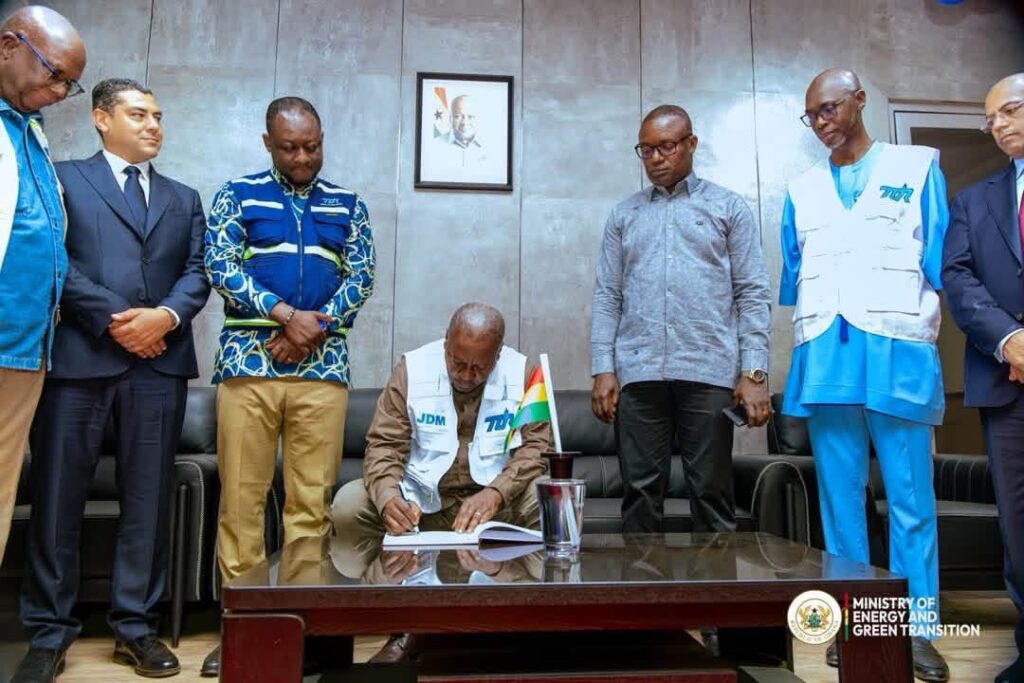
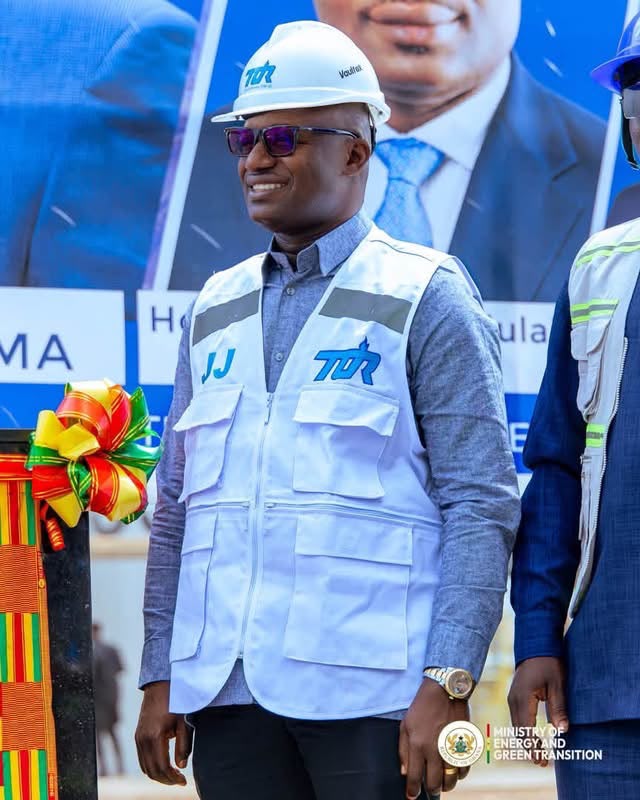
The commissioning, attended by President John Dramani Mahama, the Minister for Energy and Green Transition Dr. John Abdulai Jinapor, and other stakeholders, marks the first major operational milestone in government’s broader plan to reposition TOR after years of underutilisation and financial distress.
For a country that produces crude oil but continues to import large volumes of refined petroleum products, the return of refining operations carries significance beyond the refinery itself.
It touches on foreign exchange pressures, fuel supply security, industrial policy and Ghana’s ambition to become a stronger downstream petroleum player within the West African sub-region.
In a statement posted on the Ministry’s official platforms, Dr. Jinapor described the refinery’s revival as a key milestone in the government’s energy sector reset agenda.
Today, we have restored TOR to its rightful place as a key pillar of Ghana’s energy security and industrial transformation.
Minister for Energy and Green Transition Dr. John Abdulai Jinapor
A refinery with strategic importance
The refurbishment of the CDU is not merely a technical upgrade.
The crude distillation unit is the heart of any refinery, separating crude oil into intermediate products that can then be processed into fuels such as petrol, diesel, kerosene and other petroleum products.
Without a functioning CDU, the refinery cannot perform its core refining role.
Government says that when it assumed office, TOR had been operating under a private operating arrangement that failed to revive the refinery’s core activities, leaving major refining operations largely dormant.
The new administration is now presenting the refinery’s return as a strategic reversal of that situation.
The transformation of TOR is critical to restoring investor confidence, refining Ghana’s own crude oil locally, reducing our dependence on imported refined petroleum products, and advancing the President’s 24-Hour Economy and Reset Agenda.
Minister for Energy and Green Transition Dr. John Abdulai Jinapor
The emphasis on investor confidence is notable. TOR’s operational history has often been cited by investors as an indicator of the broader challenges facing Ghana’s downstream petroleum sector, including financing constraints, governance concerns and inconsistent operational performance.
Why local refining matters
Ghana’s petroleum paradox has long been that the country exports crude oil while importing most of the refined products consumed domestically.
That structure exposes the economy to international refining margins, shipping costs and foreign exchange volatility.

Local refining cannot completely insulate Ghana from global oil markets, especially if crude is purchased at international prices, but it can improve supply security and reduce some costs associated with importing finished products.
It can also create additional economic activity through storage, logistics, maintenance, petrochemical linkages and supporting industries.
The government’s argument is therefore not simply about producing fuel locally; it is about retaining more value within the domestic economy.
The 100,000 barrels per day roadmap
Perhaps the most consequential announcement from the commissioning was the Minister’s disclosure that a comprehensive roadmap has been prepared to expand TOR’s refining capacity to 100,000 barrels per day.
According to Dr. Jinapor, the roadmap will be presented in line with a directive from President Mahama.
The proposed expansion is intended to enable Ghana to process a larger share of its own crude oil, meet more domestic fuel demand, create jobs and strengthen the country’s position as a regional petroleum hub.
If achieved, a 100,000-barrel-per-day refinery would represent a significant increase in Ghana’s refining capability and could alter the scale of the country’s downstream operations.
However, the announcement also raises important questions about financing, technology, feedstock supply and commercial sustainability.
Operational revival is only the first step
The commissioning of the CDU should be viewed as an important operational achievement, but not yet as proof that TOR’s long-term challenges have been solved.
The refinery has experienced several cycles of shutdowns, rehabilitation efforts and financial difficulties over the years.
A sustainable turnaround will require more than refurbished equipment.
It will depend on consistent crude supply, efficient operations, maintenance discipline, strong governance and access to working capital.
The Minister acknowledged the role of TOR’s management and workforce in bringing the refinery back into operation.
I commend the Managing Director, Edmond Kombat, the Board, management, and the dedicated workforce of TOR for their commitment, resilience, and hard work in bringing the refinery back into operation.
Minister for Energy and Green Transition Dr. John Abdulai Jinapor
A test of Ghana’s industrial policy
The revival of TOR also speaks to a broader policy debate about the role of strategic state-owned assets in Ghana’s industrial transformation.

Government is linking the refinery directly to the 24-Hour Economy agenda, suggesting that reliable energy and fuel infrastructure are essential for continuous industrial operations, logistics, manufacturing and value addition.
This connection is economically meaningful.
A functioning refinery can support industrial activity not only through fuel supply but also through the development of downstream industries and associated services.
Yet history suggests that state-owned refineries succeed only when commercial discipline is maintained alongside strategic objectives.
The bigger challenge: from refurbishment to competitiveness
The deeper question is whether TOR can become competitive rather than merely operational.
Refineries around the world compete on efficiency, scale, energy consumption, product yields and financing costs.

For TOR to evolve into a genuine regional refining and petroleum hub, it will need to demonstrate that it can operate commercially, attract investment and integrate effectively with Ghana’s upstream and downstream sectors.
The proposed capacity expansion therefore deserves careful scrutiny.
Ambitious infrastructure targets can generate momentum, but they must be backed by transparent financing plans, realistic timelines and a clear commercial strategy.
A meaningful signal, but execution will determine the outcome
The commissioning of the refurbished CDU is unquestionably a meaningful signal for Ghana’s energy sector.
It shows that government is prioritising the revival of strategic petroleum infrastructure and seeking to reconnect refining with broader economic and industrial goals.

The move could strengthen confidence in Ghana’s downstream ambitions and provide a foundation for further investment if operational performance improves.
At the same time, the refinery’s history is a reminder that infrastructure revival and sustainable transformation are not the same thing.
The true measure of success will not be the commissioning ceremony, but whether TOR can maintain reliable operations, process crude consistently, improve financial performance and eventually justify the larger expansion now being proposed.
If those conditions are met, the refinery could once again become a significant pillar of Ghana’s energy security and industrial development.
If they are not, the country risks adding another chapter to a long history of refinery rehabilitation efforts that generated optimism but struggled to deliver durable commercial results.
READ MORE: Liquidity Crunch Could Trigger Government Defaults: Ghana’s Precarious Position