Ghana’s economic growth is being quietly strangled by transport inefficiencies that drain productivity, inflate costs, and erode quality of life, according to a critical analysis by policy think tank IMANI Centre for Policy and Education.
The policy think-tank argued that while modern economies run on the ability to move people and goods quickly and efficiently, Ghana’s wheels have slowed to a crawl, turning daily mobility challenges into a structural constraint on national development.
“From the steam engines of the British Industrial Revolution to the Interstate Highways in the US; the Boeing, Airbus and Antonov to the behemoth MSC China and Irina ocean liners; and from the oasis-class cruises of the Royal Caribbean to the 300 km/h Shinkansen in Japan, the history of economic power has simply been the history of moving people and goods bulkier and faster”
IMANI Centre for Policy and Education
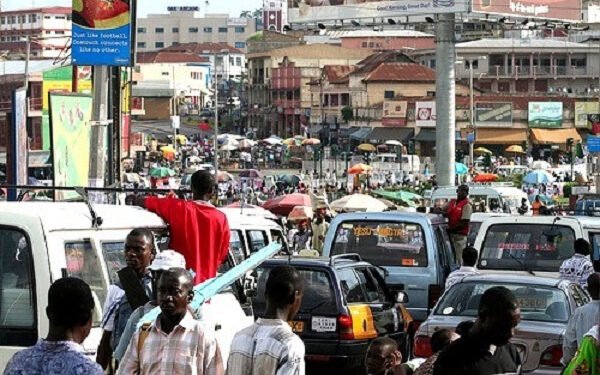
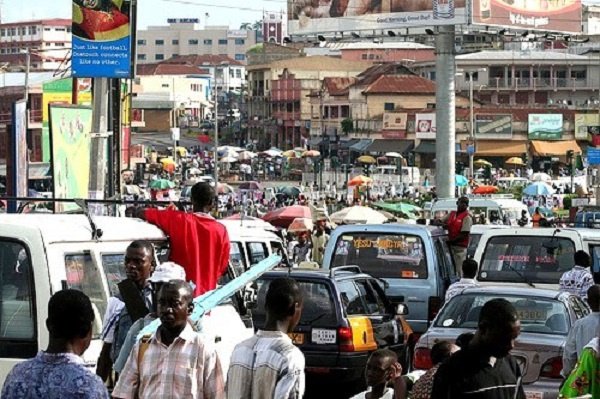
In contrast, IMANI noted that Ghana’s current transport reality, particularly in major urban centres such as Accra and Kumasi, reflects stagnation rather than progress. What should be short commutes have become exhausting daily ordeals that sap time, energy, and economic output.
Economists often reference the idea that people naturally allocate about an hour a day to commuting. This travel budget shapes how far workers can live from jobs and how wide an economy can realistically function.

IMANI noted that in Ghana, this balance has collapsed, adding that a journey of less than 20 kilometres within Accra, such as from Amasaman to Madina, can take more than an hour and a half. As a result, the effective size of the urban economy shrinks, limiting labour mobility and business efficiency.
According to the analysis, when transport speed increases, economic geography contracts. Farmers can reach broader markets, managers can oversee distant operations, and supply chains become more efficient.


Delay as an Invisible Tax on Ecoonomy
In Ghana, the opposite is happening. Routes such as Nsawam to Accra, which should take under an hour, now regularly consume up to three hours. This delay functions as an invisible tax on the economy, raising costs for businesses and reducing overall productivity.
For many workers, the workday now begins long before sunrise. IMANI described thousands of commuters leaving their homes as early as 3:30 in the morning, not out of choice but desperation to escape gridlock.
“By 6:00 AM, the major arteries leading into the capital, Madina-Accra, Tema-Accra, Nsawam Accra, and Kasoa-Accra, are already swollen with more private cars and trucks than trotros, and no functioning mass transit system.
“This early-morning exodus is a desperate attempt to beat a traffic monster that devours nearly 20% of a worker’s waking life.”
IMANI Centre for Policy and Education
The think tank linked this daily stress to broader public health concerns. It pointed to national mortality data showing that conditions such as hypertension, heart failure, respiratory complications, and stroke rank among the leading causes of death.
While not solely caused by traffic, IMANI argued that prolonged stress, air pollution, and physical fatigue from commuting significantly worsen health outcomes.
Beyond commuting, Ghana’s logistics sector faces what IMANI described as a state of purgatory. Major highways critical to trade and food distribution remain incomplete or in a state of disrepair after years of stalled construction.
Roads such as the Accra-Nsawam-Kumasi corridor have sections that turn into dust bowls during the dry season and become mud traps during therains. These conditions slow freight movement, increase vehicle breakdowns, and raise the cost of goods nationwide. The absence of a functional rail system has compounded the problem.
Once a backbone of national transport, railways have deteriorated to the point where about 95 percent of passenger and freight movement now depends on roads. Heavy trucks accelerate road damage, leading to potholes, slower speeds, and rising maintenance costs.
Prices Drive Up
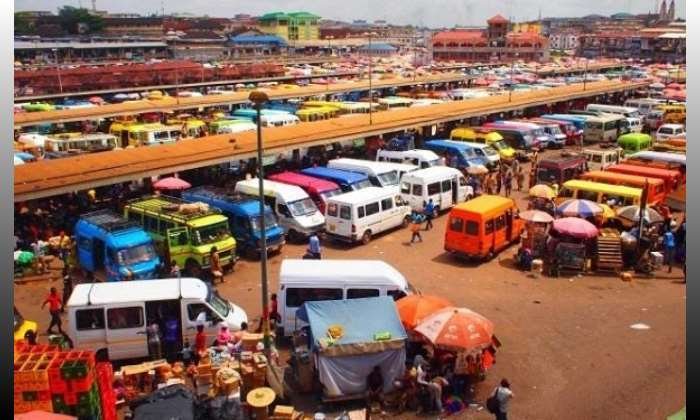
This cycle ultimately drives up prices, as delays and spoilage affect everything from tomatoes to manufactured goods. In urban transport, private commercial buses have stepped in to fill the gap left by the state.
While operators under unions such as GPRTU and PROTOA provide essential services, IMANI argued that the lack of structured competition has created vulnerabilities for commuters.
“While these operators provide a vital service, the power dynamic is lopsided. At bus stops in the evening rush hour, workers stand in sweltering heat, stranded as they wait for a vehicle with an empty seat. And there, they are exposed to the dangerous ‘bus stop mafia’ who hustle the bus drivers for ‘loading’ or picking the passengers.”
IMANI Centre for Policy and Education
IMANI warned that without alternatives such as light rail or dedicated bus systems, commuters are left with little bargaining power. During rainstorms or high-demand periods, fares can increase arbitrarily, forcing low-income workers to choose between transportation and basic needs.
The analysis concluded that Ghana’s ambition to build a twenty-four-hour economy will remain unattainable unless transport infrastructure is fundamentally reformed.

IMANI called for a renewed focus on moving freight by rail, prioritising people over cars through dedicated bus lanes, improving safety and standards in public transport, and completing existing road projects rather than launching new ones for political visibility.
According to IMANI, the lesson from history is clear. Economic transformation belongs to societies that refuse to be constrained by distance and delay. Ghana now faces a choice between allowing productivity to bleed away in traffic congestion or investing deliberately in mobility that unlocks growth.
The wheel, the policy think tank argued, was meant to move societies forward, insisting that Ghana’s task is to make it turn again for the full benefit of its citizens.
READ ALSO: Sadio Mané Shines as Hero in Senegal’s 2026 AFCON Triumph