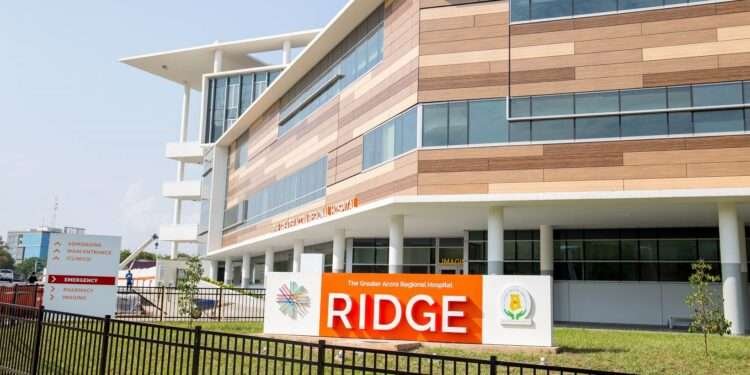

The Ministry of Health has announced plans to investigate allegations of unprofessional conduct at the Greater Accra Regional Hospital, Ridge, following the publication of an investigative report by The Fourth Estate.
The report, which has circulated widely on social media, raises concerns about practices at the facility described as medical kalabule and has triggered renewed public debate about accountability and service delivery within Ghana’s health system.
A press release issued by Tony Goodman, Head of Health Training Institutions and spokesperson for the Ministry, acknowledged awareness of the investigative piece and its growing reach among the public.
“The Ministry sympathises with patients and relatives who may have been subjected to any form of unprofessional conduct in any health facility across the country.”
Tony Goodman, Head of Health Training Institutions and spokesperson for the Ministry
It reaffirmed government’s broader commitment to reducing both the stress and financial burden associated with accessing healthcare services. While expressing concern for affected patients, the Ministry also described itself as deeply surprised by some of the revelations contained in the report.
According to the statement, the issues raised are considered serious and deserving of careful and thorough examination. As a result, the Ministry has begun the process of constituting an investigative committee to examine the claims in detail.
Investigation Timeline
The committee, once formed, is expected to complete its work and submit a report within fourteen working days. The Ministry indicated that it expects the full cooperation of all relevant stakeholders in the process.


These include management and staff of the health facility involved, regulatory bodies and The Fourth Estate itself. The Ministry said such cooperation would be necessary to help establish the facts, obtain additional details and ensure accountability while improving service delivery within the health system.
The Ridge Hospital investigation comes at a time when public confidence in healthcare institutions is closely tied to issues of transparency, professionalism and patient welfare.
For many observers, the decision to institute a formal inquiry signals recognition of the potential impact such allegations can have on trust in public health facilities.
Reacting to the Ministry’s response, Sulemana Braimah, Executive Director of the Media Foundation for West Africa, under which The Fourth Estate operates, welcomed the move and highlighted the role of investigative journalism in strengthening governance.
He said the latest development underscores the importance of supporting journalism that seeks to expose wrongdoing and prompt institutional reform. “When journalism is supported and done well, it can be at the forefront of efforts to make our country better,” Mr Braimah stated.

He noted that within the space of one month, two separate government committees have been set up to investigate revelations published by The Fourth Estate. According to him, this demonstrates the tangible impact of sustained investigative work on public accountability.
Mr Briamah also reflected on the challenges associated with this type of journalism. He said producing such investigations often involves significant sacrifice and can generate discomfort among individuals and institutions affected by the findings.
“Doing this kind of journalism requires a lot of sacrifice. People are made unhappy. But we hope that those who support our journalism are far more”.
Sulemana Briamah, Executive Director of the Media Foundation for West Africa
Support for Accountability-Driven Journalism
Despite this, he expressed hope that public support for accountability-driven journalism would outweigh any opposition. He appealed to the public and partners to continue supporting The Fourth Estate and similar initiatives, noting that sustained backing is essential for investigative work to continue.
He added that without such support, the ability of journalists to pursue complex and resource-intensive investigations would be limited. The Ministry of Health’s statement was signed by Tony Goodman, Head of Health Training Institutions and spokesperson for the Ministry.
His endorsement of the release reflects the Ministry’s official position and its intention to follow through with the investigation within the stated timeframe.

As the investigative committee begins its work, attention is likely to focus on whether the inquiry leads to concrete reforms and sanctions where necessary. Health sector analysts note that beyond establishing facts, the credibility of the process will depend on transparency, independence and the willingness of authorities to act on the findings.
The Ridge Hospital case adds to a growing list of instances where investigative journalism has prompted official scrutiny of public institutions. For many patients and advocates, the outcome of the inquiry will be seen as a test of the health system’s capacity to address alleged misconduct and protect the rights and welfare of those who depend on public healthcare services.
READ ALSO: BoG Projects Inflation at Lower End of Medium-Term Target