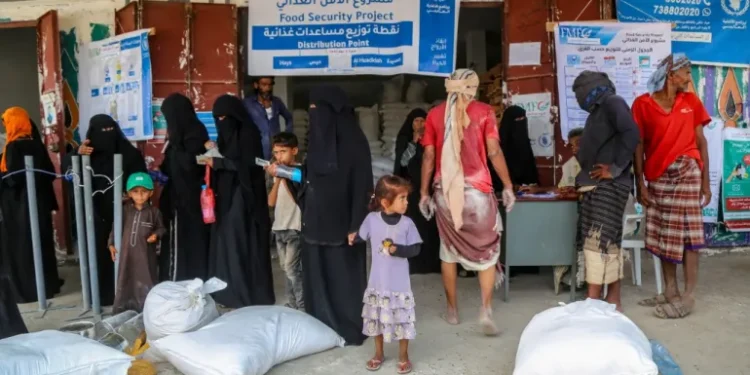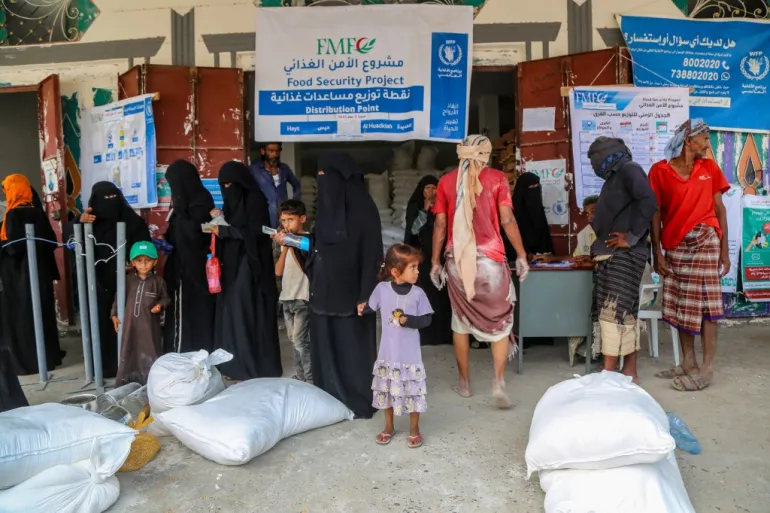
According to the International Rescue Committee (IRC), Yemen is entering a perilous new phase of food shortages with more than half the population, about 18 million people, expected to face worsening hunger in early 2026.
The warning follows new projections under the Integrated Food Security Phase Classification hunger-monitoring system that were released and show an additional one million people at risk of life-threatening hunger.
It also comes as Yemen, one of the world’s most impoverished nations, is experiencing its latest internal conflict with external regional actors involved in fighting in the nation’s south.
The assessment also forecasts pockets of famine affecting more than 40,000 people across four districts within the next two months – the bleakest outlook for the country since 2022.
Years of war and mass displacement have shattered livelihoods and limited access to basic health and nutrition services.
Those pressures now overlap with a nationwide economic collapse that has slashed households’ purchasing power and driven up food prices. At the same time, humanitarian assistance has sharply declined.


The IRC stated that by the end of 2025, Yemen’s required humanitarian response was less than 25 percent funded; the lowest level in a decade, while life-saving nutrition programmes received under 10 percent of the funding required.
It asserted that while the hunger crisis is nationwide, evidence from IRC-supported districts in southern Yemen shows its consequences clearly.
The IRC noted that following major donor funding withdrawals in early 2025, nutrition service reach declined by 63% within one year. Health facilities and therapeutic feeding centers closed, mobile teams were overstretched, and admissions for severe acute malnutrition fell“—not because children were healthier, but because fewer who were sick could access services.”
It added that nearly 80% of households assessed by IRC reported severe hunger, and half of households with children under five reported at least one malnourished child.
The organisation said in a statement that this rapid deterioration; driven by catastrophic humanitarian funding cuts, climate shocks, economic collapse, and compounded by recent insecurity, calls for urgent action to reverse the unfolding catastrophe.
The humanitarian warning comes amid renewed political and security tensions. Yemen has been an acute focus of strain between Gulf neighbours Saudi Arabia and the United Arab Emirates in recent months.
In December, the UAE-supported southern separatist Southern Transitional Council seized swaths of southern and eastern Yemen, advancing close to the Saudi border before Saudi-backed forces regained much of the territory.
Analysts warned that unresolved rivalries alongside disputes over geopolitics and oil policy risk dragging Yemen back into wider conflict, further compounding a hunger crisis that aid agencies said is already spiralling.
IRC Yemen Director Bemoans Decline
Caroline Sekyewa, the IRC’s country Director in Yemen, said that the speed of the decline is alarming.
“People of Yemen still remember when they didn’t know where their next meal would come from. I fear we are returning to this dark chapter again. What distinguishes the current deterioration is its speed and trajectory.”
Caroline Sekyewa
She described families being forced into desperate choices. “Food insecurity in Yemen is no longer a looming risk; it is a daily reality forcing parents into impossible choices,” Sekyewa said, adding that some parents have resorted to collecting wild plants to feed their children.
Despite the dire picture, Sekyewa said that the crisis is preventable. “Yemen’s food security crisis is not inevitable,” she said, urging immediate donor action and pointing to cash assistance as one of the most effective tools to help families meet their basic needs with dignity. “It is not too late to prevent an even greater tragedy,” she added.
READ ALSO: Starmer Downplays Retaliatory Tariffs Over Greenland