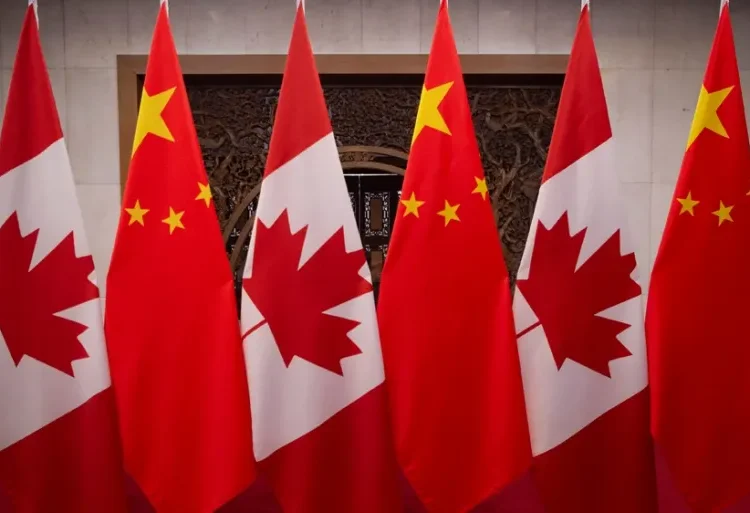
The leaders of China and Canada have pledged to improve relations between their two nations after years of acrimony.
The discussions between China’s leader Xi Jinping and Canada’s Mark Carney come shortly after the two governments unveiled an agreement to expand bilateral energy trade, along with other strategies on lumber, cultural exchanges and pet food exports.
Xi told visiting Prime Minister Mark Carney that he is willing to continue working to improve ties, noting that talks have been underway on restoring and restarting cooperation since the two held an initial meeting in October on the sidelines of a regional economic conference in South Korea.
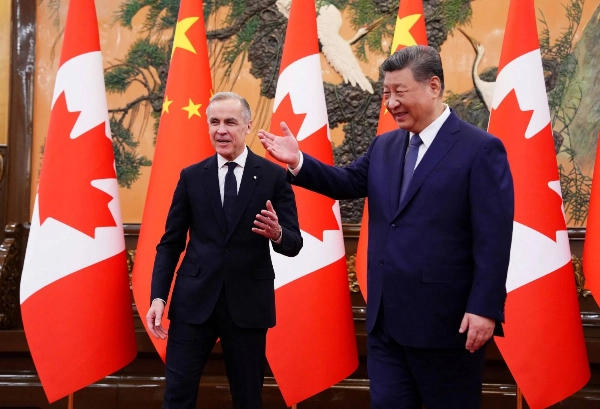
“It can be said that our meeting last year opened a new chapter in turning China–Canada relations toward improvement.”
Xi Jinping
Xi expressed optimism, noting “positive results” in restoring ties that had been frosty for years.
“The healthy and stable development of China-Canada relations serves the common interests of our two countries and is also conducive to world peace, stability and prosperity.”
Xi Jinping
Canadian Prime Minister, Mark Carney hailed his strategic partnership with Xi Jinping, hours after touting the importance of their ties in the face of the “new world order,” a veiled reference to US President Donald Trump’s foreign policy swings.
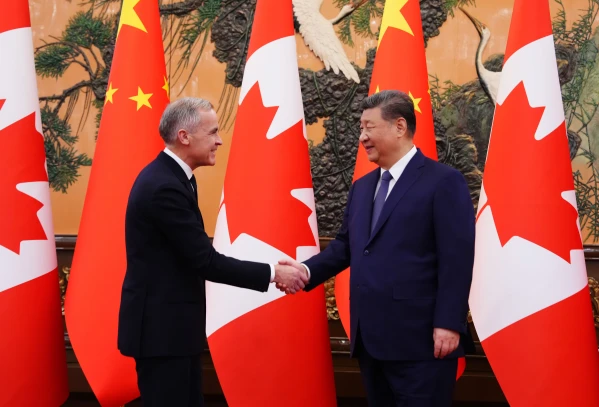
Carney signaled a calibrated reengagement with China at a time when neighboring US is increasingly pursuing a “spheres of influence” doctrine in the Western Hemisphere and a disruptive trade agenda. “I’m extremely pleased that we are moving ahead with our new strategic partnership,” Carney told Xi.
Carney, the first Canadian Prime Minister to visit China in eight years, said that better relations would help improve a global governance system that he described as “under great strain.”
He called for a new relationship “adapted to new global realities” and cooperation in agriculture, energy and finance.
Those new realities reflect in large part the so-called America-first approach of U.S. President Donald Trump. The tariffs he has imposed have hit both the Canadian and Chinese economies.
Carney, who has met with several leading Chinese companies in Beijing, said ahead of his trip that his government is focused on building an economy less reliant on the US at what he called “a time of global trade disruption.”
No Announcement Made On Tariffs Between China and Canada
No announcement was made on tariffs between China and Canada, which is a sticking point in the relationship.
Canada followed the US in putting tariffs of 100% on EVs from China and 25% on steel and aluminum under former Prime Minister Justin Trudeau, Carney’s predecessor.
China responded by imposing duties of 100% on Canadian canola oil and meal and 25% on pork and seafood. It added a 75.8% tariff on canola seeds last August.
Collectively, the import taxes effectively closed the Chinese market to Canadian canola, an industry group has said. China is hoping Trump’s pressure tactics on allies such as Canada will drive them to pursue a foreign policy that is less aligned with the United States. The US President has suggested Canada could become America’s 51st state.
Since taking office last year, Carney has tried to reset relations with China and deepen Canadian trade with the Asian superpower.
He is among a stream of leaders including the UK’s Keir Starmer and Germany’s Friedrich Merz making trips to Beijing early this year to rebuild ties after the US and China stabilized relations with a trade truce.
However, Carney is walking a fine line, as difficult negotiations loom with Trump on the North American free trade pact.
READ ALSO: NAIMOS Hunts Illegal Miners along River Ankobrah, Apprehends 7 Operators