• About
  • Advertise
  • Privacy Policy
  • Contact
Saturday, August 29, 2026
  • Login
The Vaultz News
  • Top Stories
  • News
    • General News
    • Education
    • Health
    • Opinions
  • Economics
    • Economy
    • Finance
      • Banking
      • Insurance
      • Pension
    • Securities/Markets
  • Business
    • Agribusiness
    • Vaultz Business
    • Extractives/Energy
    • Real Estate
  • World
    • Africa
    • America
    • Europe
    • UK
    • USA
    • Asia
    • Around the Globe
  • Innovation
    • Technology
    • Wheels
  • Entertainment
  • 20MOBPL2DNew
  • Jobs & Scholarships
    • Job Vacancies
    • Scholarships
No Result
View All Result
The Vaultz News
  • Top Stories
  • News
    • General News
    • Education
    • Health
    • Opinions
  • Economics
    • Economy
    • Finance
      • Banking
      • Insurance
      • Pension
    • Securities/Markets
  • Business
    • Agribusiness
    • Vaultz Business
    • Extractives/Energy
    • Real Estate
  • World
    • Africa
    • America
    • Europe
    • UK
    • USA
    • Asia
    • Around the Globe
  • Innovation
    • Technology
    • Wheels
  • Entertainment
  • 20MOBPL2DNew
  • Jobs & Scholarships
    • Job Vacancies
    • Scholarships
No Result
View All Result
The Vaultz News
No Result
View All Result
in Economy, Sub Top Stories1

IMF Justifies $214M DGPP Losses, Warns Against Holding Losses on BoG Balance Sheet

Bless Banir Yarayeby Bless Banir Yaraye
January 16, 2026
Reading Time: 5 mins read
Add as Preferred on Google
Julie Kozack, IMF Director of Communications

Julie Kozack, IMF Director of Communications

The International Monetary Fund (IMF) has reaffirmed its assessment that the Bank of Ghana’s (BoG) Domestic Gold Purchase Programme (DGPP), operated in collaboration with the Ghana Gold Board (GoldBod), incurred a quasi-fiscal loss of approximately US$214 million.

This valuation, detailed in the Staff Report for the Fifth Review of Ghana’s Extended Credit Facility, underscores the financial cost of a policy that the Fund simultaneously credits with stabilizing the cedi and rebuilding international reserves.

By classifying the deficit as “quasi-fiscal,” the IMF emphasizes that while the loss does not appear on the central government’s immediate budget, it remains a tangible liability for the Ghanaian state.

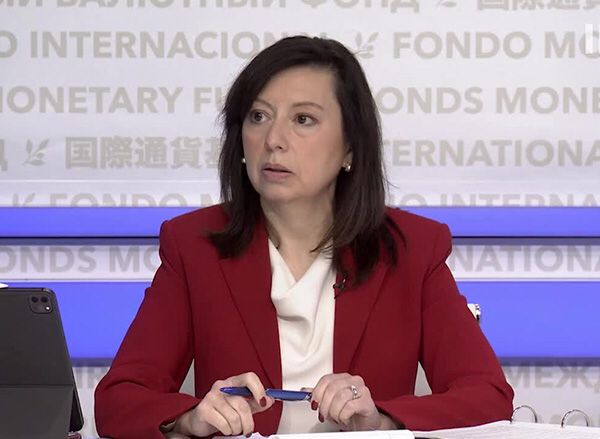
“The loss stemmed from trading activities, fees, exchange rate movements. And to help address this, our recommendation is to strengthen transparency, governance, and risk management, especially for the GoldBod-linked channel under this domestic gold purchase program. We also strongly recommend that the losses should be brought on balance sheet rather than held on the balance sheet of the Central Bank.”

Julie Kozack, IMF Director of Communications

WhatsApp Image 2026 01 12 at 3.14.41 PM
Dr. Johnson Pandit Asiama

The Fund’s stance serves as both a validation of the programme’s macroeconomic utility and a stern warning regarding its accounting and governance structures.

ADVERTISEMENT

The US$214 million loss is attributed to a combination of trading activities, intermediary fees, and the inherent volatility of exchange rate movements.

During a period of severe economic distress, the DGPP allowed the central bank to accumulate non-debt foreign exchange reserves, which were instrumental in easing pressure on the forex market.

However, the mechanism of purchasing gold at market-competitive rates from the artisanal and small-scale mining (ASM) sector, often using multiple exchange rate benchmarks, created a financial gap.

To safeguard the long-term solvency of the Bank of Ghana (BoG), the IMF is now advocating for “stronger transparency, governance, and risk management” within the GoldBod-linked supply chain.

A critical component of this recommendation is the migration of these losses from the central bank’s balance sheet to the national fiscal budget, ensuring the BoG remains “well” and focused on its core mandate of price stability.

ADVERTISEMENT

Navigating the Controversies of the BoG-GoldBod Nexus
WhatsApp Image 2026 01 16 at 9.36.33 AM
Julie Kozack, IMF Director of Communications

The DGPP has become a lightning rod for controversy, primarily due to the opacity surrounding the “Gold-for-Reserves” and “Gold-for-Oil” schemes.

Critics have long argued that the programme lacks a clear legislative framework, creating a “monopoly” environment that shields operational inefficiencies from public scrutiny.

Tensions have peaked over whether the reported US$214 million is a “trade loss” or an “accounting translation effect.”

ADVERTISEMENT

While GoldBod management maintains the board recorded a surplus from its service fees, the IMF’s data suggests the broader system where the BoG acts as the principal, is bleeding value.

The conflict of interest involving private off-takers and the high costs of the ASM supply chain have only fueled demands for a more rigorous, independent audit of the entire gold-to-reserve pipeline.

The Perils of Hidden Quasi-Fiscal Liabilities

WhatsApp Image 2025 11 20 at 16.30.29 87d2cb3a
Lawyer Sammy Gyamfi, Gold Board CEO

The IMF’s insistence on moving these losses to the government’s fiscal balance sheet is rooted in the “danger” of eroding the central bank’s equity.

Holding quasi-fiscal losses on the BoG balance sheet can impair the bank’s ability to conduct effective monetary policy, as it essentially “monetizes” the deficit.

This practice risks triggering inflationary pressures and creates a “fiscal illusion,” where the government’s actual deficit appears smaller than it truly is.

By masking the cost of the gold programme, the state delays necessary fiscal adjustments, potentially leading to a larger, more sudden crisis in the future.

Experts warned that unless these losses are treated as formal state expenditures, the BoG’s balance sheet integrity will continue to be compromised by commodity market risks it is not designed to absorb.

Strengthening Extractive Governance and Risk Reforms

WhatsApp Image 2025 12 12 at 08.41.29 d7946f41
Ghana Gold Minerals

Addressing these financial leakages requires a structural overhaul of how GoldBod interacts with the BoG. The IMF recommends that the government “internalize the policy cost” as a direct expense in the annual budget rather than an off-balance-sheet item.

This would subject the gold purchase costs to parliamentary oversight, forcing a higher standard of accountability for every ounce of gold sourced. Furthermore, refining the pricing mechanism for ASM gold is essential to eliminate the arbitrage opportunities that contribute to exchange rate losses.

As Ghana moves forward, the focus must shift from merely accumulating gold volumes to ensuring that the “macroeconomic stabilization” benefits are not outweighed by the “quasi–fiscal” costs borne by the taxpayer.

READ ALSO: China, Canada Pledge To Bolster Ties In Xi-Carney Meeting

ADVERTISEMENT

Sign Up to Our Newsletter

Fresh updates, Straight to your inbox

Tags: ASMBank of GhanaDomestic Gold Purchase ProgrammeFifth Review of Ghana’s Extended Credit FacilityGold BoardGold for oilgold for reservesIMFmacroeconomic stabilizationparliamentary oversight
Please login to join discussion
Previous Post

China, Canada Pledge To Bolster Ties In Xi-Carney Meeting

Next Post

Yoon Sentenced to Five Years Over Martial Law Declaration

Related Posts

Group photo taken at GRIDCO's Annual General Meeting
Extractives/Energy

GRIDCo Posts GH¢584m Profit As Power Transmission Strengthens

August 28, 2026
BoG Bets on Ratings Upgrade as Economy Strengthens
Economy

BoG Bets on Ratings Upgrade as Economy Strengthens

August 28, 2026
Bright Simons, Honorary Vice President of IMANI Centre for Policy and Education
Extractives/Energy

Bright Simons Urges Data-Driven Exploration to Fix Africa’s Mineral Gap

August 28, 2026
Ghana’s Economic Growth Accelerates to 6.4% Amid Reform Pressures
Economy

Ghana’s Economic Growth Accelerates to 6.4% Amid Reform Pressures

August 27, 2026
ADVERTISEMENT

Sign Up to Our Newsletter

Fresh updates, Straight to your inbox

ADVERTISEMENT

Recent News

Lithium Product

Critical Mineral Ownership Alone Cannot Drive African Industrialization- Expert

August 29, 2026
Launch of the Turnkey Project under the Rural Electricity Acceleration and Urban Intensification Initiative (REIP) in the Volta Region

Ghana Launches GH¢598m Volta Electrification Project

August 29, 2026
image 310

Iraola Awaits First Win as Forest Hold Liverpool At Anfield

August 29, 2026
Mahama Ayariga, Minister for Local Government, Chieftaincy and Religious Affairs, responds on behalf of both newly sworn-in ministers at Jubilee House. Photo: The Presidency

We’ll Not Disappoint You, Mahama Ayariga Assures Mahama After Swearing-in Ceremony

August 29, 2026
President John Dramani Mahama presents the instrument of appointment to Dr Zanetor Agyeman-Rawlings, Minister for Environment, Science and Technology, at Jubilee House on Saturday. Photo: The Presidency

Mahama Charges Zanetor to Confront Illegal Mining and Protect Water Bodies

August 29, 2026
ADVERTISEMENT
Next Post
Lee Jae-Myung Projected To Win South Korea’s Presidential Election

Yoon Sentenced to Five Years Over Martial Law Declaration

The Vaultz News

Copyright © 2025 The Vaultz News. All rights reserved.

Navigate Site

  • About
  • Advertise
  • Privacy Policy
  • Contact

Follow Us

Welcome Back!

Login to your account below

Forgotten Password?

Retrieve your password

Please enter your username or email address to reset your password.

Log In
No Result
View All Result
  • Top Stories
  • News
    • General News
    • Education
    • Health
    • Opinions
  • Economics
    • Economy
    • Finance
      • Banking
      • Insurance
      • Pension
    • Securities/Markets
  • Business
    • Agribusiness
    • Vaultz Business
    • Extractives/Energy
    • Real Estate
  • World
    • Africa
    • America
    • Europe
    • UK
    • USA
    • Asia
    • Around the Globe
  • Innovation
    • Technology
    • Wheels
  • Entertainment
  • 20MOBPL2D
  • Jobs & Scholarships
    • Job Vacancies
    • Scholarships

Copyright © 2025 The Vaultz News. All rights reserved.

This website uses cookies. By continuing to use this website you are giving consent to cookies being used. Visit our Privacy and Cookie Policy.