
Ghana currently has no less than six weeks of petroleum product stocks available to the domestic market, providing a buffer against the tightening global supply environment even as international market pressures threaten to push local fuel prices higher.
The National Petroleum Authority (NPA) says the country’s supply position remains sufficiently strong to meet near-term demand, with additional petroleum cargoes already at sea expected to reinforce stocks as they arrive.
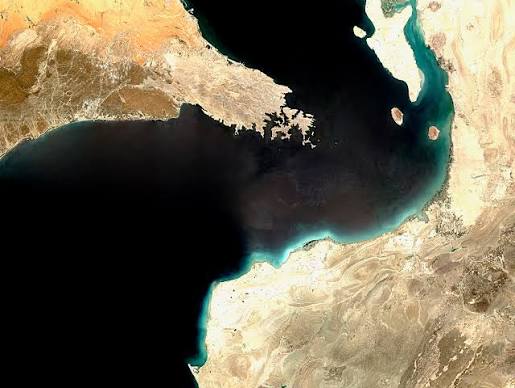
The assurance comes at a time when international oil markets are facing heightened supply uncertainty, with geopolitical tensions and disruptions to established petroleum trade routes putting pressure on crude and refined-product availability.
NPA Chief Executive Officer, Godwin Edudzi Tamakloe, said the immediate challenge for Ghana is therefore less about running out of fuel and more about managing the effect of international market conditions on domestic prices.
“Currently, we have not less than 6 weeks of cover. Not less. And if you look at the number of vessels even on the high seas, it is significant. So at this point, yes, I have some supply.”
Godwin Edudzi Tamakloe, Chief Executive Officer, NPA
The distinction is important for Ghana because the country’s downstream petroleum market remains heavily exposed to international prices.
Even when physical stocks are adequate, higher global product prices, freight costs, insurance premiums and exchange-rate movements can raise the cost of replenishing those stocks.
That means a country can have enough fuel in storage while simultaneously facing significant pressure at the pump.
Supply Security Provides A Temporary Buffer
Ghana’s six-week cover gives petroleum distributors some room to absorb short-term disruptions without immediately translating every international supply disturbance into a physical shortage.
The additional cargoes on the water provide another layer of protection.
For an import-dependent market, this matters because supply security is not determined solely by what is already inside domestic storage facilities.
The timing and reliability of incoming cargoes also influence how comfortably the market can respond to disruptions.
The NPA’s assessment suggests that Ghana is not currently approaching a situation in which motorists, businesses or industries would be unable to obtain petroleum products because of insufficient physical stocks.
The buffer nevertheless should not be interpreted as immunity from the international petroleum market.
Fuel stored in Ghana ultimately has to be replaced. If the international cost of those replacement cargoes rises sharply, the pressure can eventually feed through to domestic prices even when local tanks remain adequately supplied.
This is why the NPA’s emphasis has shifted towards price rather than availability.
“No, my major concern now is price.”
Godwin Edudzi Tamakloe, Chief Executive Officer, NPA
That concern reflects the structure of Ghana’s downstream market.
The country can protect itself against a temporary physical disruption by maintaining inventories and securing incoming cargoes. It has considerably less control over the international price at which those products are purchased.
International Volatility Could Still Reach Ghanaian Consumers
The distinction between supply and price risk is particularly relevant as global petroleum markets experience renewed volatility.
Ghana imports substantial volumes of refined petroleum products, meaning international market developments can have a direct bearing on domestic pricing.
When global product prices rise, importers require more foreign exchange to purchase the same quantity of fuel.
Shipping and insurance costs can add further pressure, while movements in the cedi-dollar exchange rate can amplify or moderate the effect.
The result is that Ghana’s energy security has two dimensions.
The first is whether sufficient physical fuel is available.
The second is whether that fuel can be procured at a cost that does not place excessive pressure on consumers, businesses and the wider economy.
At present, the NPA says the first risk is contained.
The second remains more difficult.
That distinction also explains why a strong domestic stock position does not necessarily translate into stable pump prices. Inventories provide time. They do not permanently insulate an importing economy from higher international replacement costs.
For consumers, the consequences extend beyond what is displayed on the price board at a filling station.
Petrol affects private and commercial transport, while diesel is particularly important to freight operators, agriculture, construction, mining and businesses that rely on generators or heavy-duty equipment.
A sustained increase in petroleum prices can therefore raise operating costs across several sectors of the economy.
Regional Supply Networks Add Another Layer Of Resilience
Ghana’s supply outlook is also being influenced by developments elsewhere in West Africa.
The emergence of Nigeria’s Dangote refinery has altered the regional refining landscape by creating a large additional source of refined petroleum products within West Africa.
The NPA has pointed to Dangote as part of the changing supply environment, highlighting the significance of having refining capacity closer to Ghana than many traditional international sources.
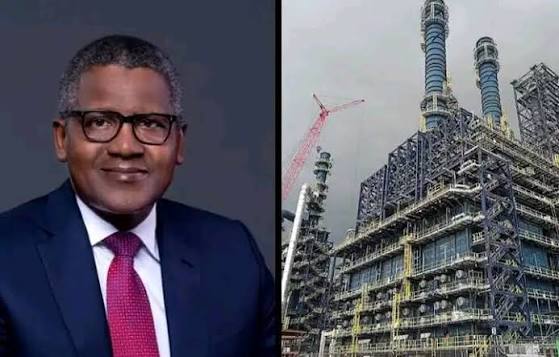
“Dangote is here.” Godwin Edudzi Tamakloe, Chief Executive Officer, NPA
The importance of regional refining extends beyond Nigeria.
For Ghana, access to a major West African refinery could potentially shorten supply chains, provide another sourcing option and reduce some exposure to long-distance international cargo movements.
It does not, however, eliminate exposure to global petroleum prices. Refineries still require crude, and their products remain connected to international commodity markets.
Regional refining therefore offers diversification rather than complete insulation.
That distinction is becoming increasingly important as petroleum markets become more vulnerable to geopolitical disruptions.
Export Decisions Do Not Currently Signal Domestic Shortage
The NPA’s assurance also comes against the backdrop of recent concerns surrounding fuel movements from Ghana to neighbouring Burkina Faso and Mali.
BOSTenergies recently clarified that reduced export volumes to the two Sahelian markets should not be interpreted as evidence of an imminent shortage in Ghana.
The company attributed the reduction primarily to ongoing revamp works at its Bolgatanga depot, which serves as an important gateway for supplying the northern and Sahelian markets.

BOSTenergies said regional supply has continued through alternative arrangements while work at the facility progresses.
The clarification is significant because Ghana’s role as a petroleum supply point for landlocked countries means domestic supply decisions can have regional implications.
Ghana must therefore manage two competing considerations: maintaining adequate domestic stocks while participating in a regional petroleum market in which neighbouring countries also depend on access to reliable fuel supplies.
The current position from the NPA is that domestic availability remains adequate.
Private Participation Requires Stronger Safeguards
Beyond the immediate supply outlook, Tamakloe has also raised a broader issue concerning the structure of Ghana’s downstream petroleum market and the relationship between private operators and national energy security.
Ghana relies heavily on private companies for the importation, distribution and sale of petroleum products.

That model has expanded private participation and reduced the extent to which government directly controls day-to-day fuel distribution.
But the structure also creates a policy challenge.
If a small number of private operators were to control an excessive proportion of supply infrastructure or distribution capacity, disruptions involving those companies could potentially have consequences beyond individual businesses.
The NPA therefore says safeguards have been introduced to prevent a recurrence of earlier difficulties in the downstream petroleum sector.
“I think there are some buffers that we put in place to ensure that the 2014-2015 events do not happen again. And like I said, that’s a particular concern, a great concern, to the President of the Republic, so we don’t get to a point where the private sector can effectively hold the whole country to ransom.” Godwin Edudzi Tamakloe, Chief Executive Officer, NPA
The comment points to a larger question surrounding energy security in a liberalised petroleum market: how can Ghana benefit from private capital and commercial efficiency without allowing the failure of individual companies or infrastructure nodes to become a national supply crisis?
The answer increasingly lies in diversification, inventory requirements, regulatory oversight and maintaining multiple supply channels.
Six Weeks Of Cover Buys Ghana Time, Not Immunity
The current six-week stock position gives Ghana an important short-term cushion.
It means international disruptions do not automatically translate into queues at filling stations or an immediate inability to supply the domestic market.
But inventories are ultimately a temporary defence.
If global supply disruptions persist, the cost of replacing Ghana’s stocks could continue rising.
The country would then face the more difficult task of balancing consumer affordability with the actual cost of importing petroleum products.
That makes the next phase of Ghana’s energy-security strategy particularly important.
The country needs not only sufficient stocks, but also diversified sources of supply, stronger regional refining relationships, predictable access to foreign exchange and infrastructure capable of moving petroleum products efficiently across the country.
The longer-term solution is even broader.
Reducing Ghana’s exposure to international petroleum shocks will require greater use of domestic energy resources, expanded gas utilisation, stronger domestic refining capacity and continued investment in alternative energy sources.
For now, however, the NPA’s message is clear: Ghana is not facing an imminent fuel shortage.
The immediate vulnerability is increasingly the price Ghana must pay to maintain that security.
With six weeks of cover and additional cargoes at sea, the country has bought itself time. The challenge is ensuring that the buffer remains strong enough, and affordable enough to withstand whatever comes next in the global petroleum market.
READ ALSO: Ghana Eyes Africa’s First Astronaut After Historic Wakata Visit, Ablakwa Says