Ghana’s petroleum regulator has sought to calm growing public concern over the risk of fuel shortages arising from renewed geopolitical tensions in the Middle East, saying the country currently holds more than five weeks of combined petrol and diesel stocks and continues to receive regular fuel imports.
The assurance comes at a sensitive moment for the domestic energy market, with global oil traders closely watching developments involving major crude-producing countries and their potential impact on petroleum supply chains, freight costs and refined-product prices.
The issue has gained additional prominence following the government’s recent announcement of a GH¢2-per-litre diesel relief measure aimed at cushioning consumers from another round of fuel price increases.
NPA says availability is the first line of defence
According to the National Petroleum Authority (NPA), the immediate risk to Ghana is not a shortage of fuel but the possibility of continued price volatility if international market tensions persist.
The NPA’s Director of Economic Regulation and Planning, Abass Tasunti, said the authority’s primary objective is to ensure uninterrupted product availability across the country.
“Our topmost priority as a regulator is to ensure availability of petroleum products at all times,” Tasunti said, warning that shortages would have far more severe consequences for the economy than temporary price increases.
The intervention appears aimed at preventing panic buying and reassuring transport operators, businesses and households that supply arrangements remain intact.
Current stocks exceed five weeks
Tasunti said Ghana currently has a little over five weeks of average stock cover for both petrol and diesel, providing what regulators consider a meaningful buffer against short-term external disruptions.
He stressed, however, that the figure should not be interpreted as a fixed reserve that is simply being drawn down.

When we say we have a little over five weeks, it does not mean we are consuming that stock without replenishment.
NPA’s Director of Economic Regulation and Planning, Abass Tasunti
The authority says fuel stocks are continuously replenished through scheduled imports, and the stock-cover figure reflects a dynamic system rather than a static inventory.
Imports continue without interruption
A key part of the NPA’s message is that Ghana’s petroleum import chain remains active despite global uncertainty.
Tasunti said vessels are continuing to discharge products at import facilities, with supply operations proceeding according to the country’s Line-up Programme, which is used to plan and sequence petroleum imports.
The implication is that Ghana is not currently experiencing any interruption in physical fuel deliveries.
This distinction is important because international crises often affect prices before they affect actual supply availability.
Local refining adds a second layer of resilience
The NPA also pointed to domestic refining as an additional source of supply security.
Tasunti said the Tema Oil Refinery (TOR) has been operating consistently and has not halted production since last year.
That statement is significant because it links the recent revival of TOR to a broader national resilience strategy rather than presenting it solely as an industrial or political achievement.
A functioning refinery does not eliminate import dependence, but it can reduce pressure on imported finished products and provide additional flexibility during periods of market stress.
The bigger story is supply-chain management
The regulator’s comments reveal a deeper feature of Ghana’s downstream petroleum system: energy security is increasingly being managed through supply-chain planning rather than large emergency stockpiles alone.

The combination of scheduled imports, continuous discharge operations and domestic refining suggests that the country is relying on a layered supply model.
In practice, this means security depends on: uninterrupted maritime imports, efficient storage and distribution, refinery reliability, and effective coordination between regulators and market operators.
Middle East tensions still matter
While the NPA has downplayed the risk of immediate shortages, the international context remains important.
Any escalation involving major producers or shipping routes could still affect Ghana through higher crude prices, increased freight costs, insurance premiums and refined-product market volatility.
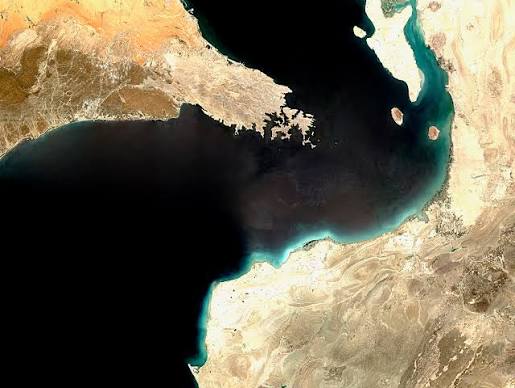
For an import-dependent downstream market, those effects are transmitted primarily through prices rather than physical availability in the short term.
This explains why pump prices can rise even when domestic stock levels remain comfortable.
A useful correction to the public debate
The reassurance from the NPA also helps correct a common misconception that fuel security and fuel prices are the same issue.
A country can have adequate fuel stocks and still experience rising pump prices if international replacement costs increase.

Conversely, a country can face shortages even when global prices are relatively stable if logistics, financing or import arrangements break down.
The current evidence suggests Ghana is facing the former risk rather than the latter.
What the five-week figure really means
The stock-cover number should be viewed as a measure of short-term resilience, not long-term self-sufficiency.
Five weeks of supply provides a buffer against temporary disruptions, but it does not fundamentally change Ghana’s continued dependence on imported petroleum products.
The country remains exposed to international crude markets, refined-product pricing and exchange-rate movements.
That broader vulnerability has become increasingly evident in recent months as global oil volatility and cedi pressures have combined to push domestic fuel prices higher.
The deeper energy-security question
The most important insight from the NPA’s intervention is not simply that Ghana has enough fuel today.
It is that the country’s energy security still rests on a combination of import planning, foreign-exchange availability and operational coordination.

The reassurance is therefore credible in the short term, but it also highlights the longer-term challenge: building a petroleum system that is less vulnerable to external shocks.
That challenge extends beyond emergency stocks. It includes the future of TOR, the diversification of energy sources, the expansion of domestic gas use, and the gradual reduction of the economy’s dependence on imported refined fuels.
For now, the immediate signal from the regulator is clear: Ghana is not facing an imminent fuel shortage.
The more strategic question is whether the current combination of imports, refining and inventory management can evolve into a stronger and more resilient energy-security framework as global geopolitical risks become more frequent and less predictable.
The assurance was provided by the National Petroleum Authority during an interview carried by JoyNews’ PM express business edition, where officials sought to reassure consumers and market participants that fuel supplies remain adequate despite heightened international uncertainty.