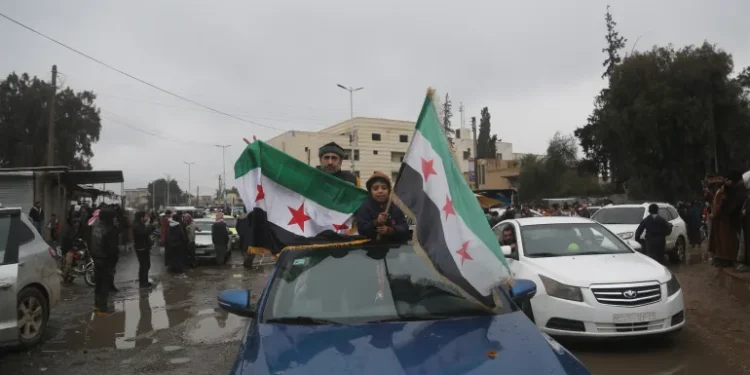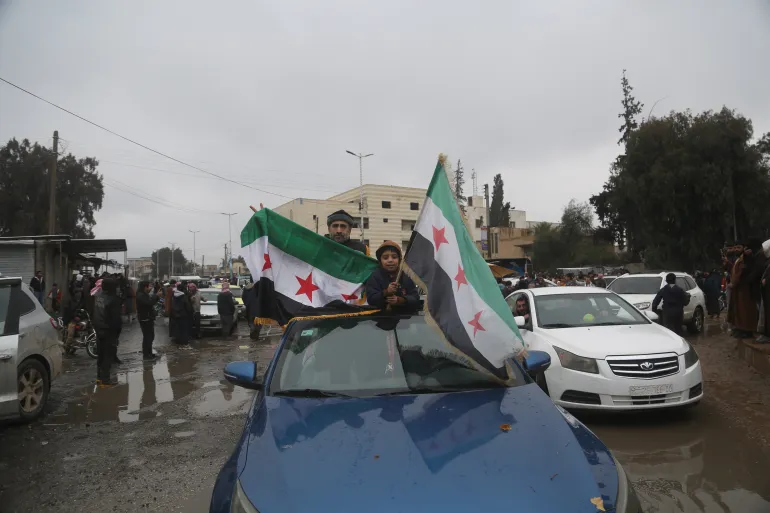
The Syrian government has announced a ceasefire with the Syrian Democratic Forces(SDF), taking almost full control of the country and dismantling the Kurdish-led forces that controlled the northeast for over a decade.
Syrian President, Ahmed al-Sharaa made the announcement after he met United States Special Envoy to Syria, Tom Barrack in Damascus. SDF Chief Mazloum Abdi was supposed to be at the meeting, but al-Sharaa said that weather conditions meant that his trip would be postponed.
The agreement includes dismantling the SDF and having its forces join Syria’s military and security forces, while senior military and civilian officials would be given high-ranking positions in state institutions.
The SDF would have to give up the Raqqa and Deir el-Zour provinces, both Arab-majority areas, to the Syrian military and government, as well as its border crossings and oil and gas fields.
Hassakah Province, the heartland of the Kurdish population, is only expected to give its civilian administration back to Damascus, while the Kurdish-led agencies that handled prisons and sprawling camps with thousands of detained Islamic State group fighters and families would be handed over to Damascus.
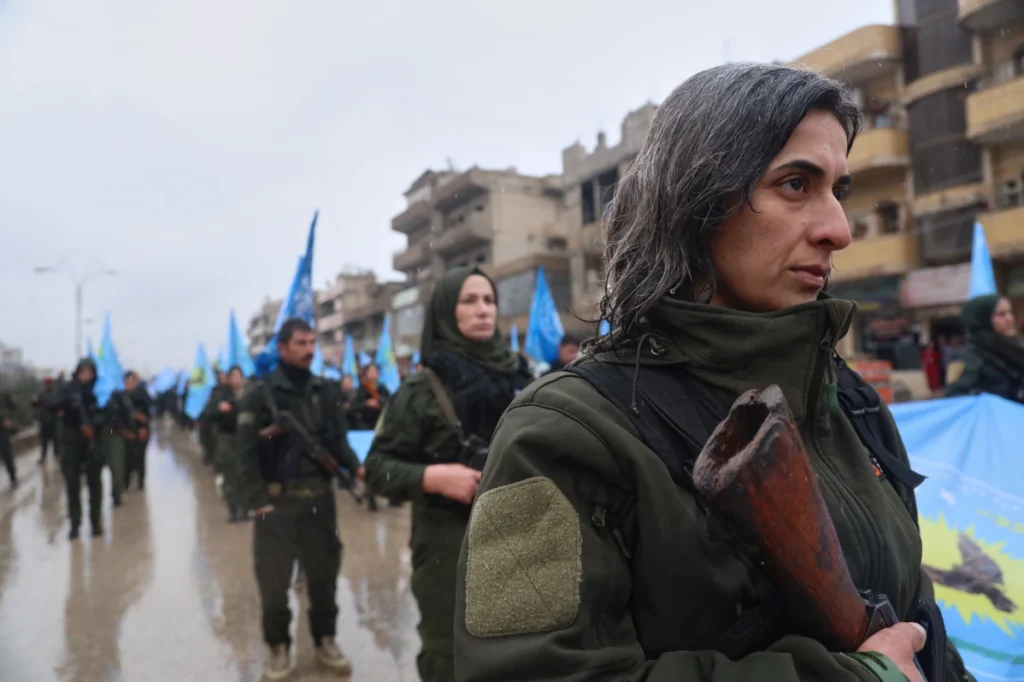
Hours after the government announced the deal, SDF leader Mazloum Abdi confirmed it in a video statement, saying the group had accepted the agreement, which stipulates their withdrawal from Raqqa and Deir el-Zour provinces “to stop the bloodshed.” “We will explain the terms of the agreement to our people in the coming days,” he said.


Syria’s new leaders, since toppling Bashar Assad in December 2024, have struggled to assert their full authority over the war-torn country.
An agreement was reached in March that would merge the SDF with Damascus, but it didn’t gain traction as both sides accused each other of violating the deal.
The previous agreement in March that included the integration of SDF forces into the Syrian military was not implemented, and fighting has periodically broken out between the two sides in recent months, increasing in ferocity this month.
The announcement comes as tensions between government forces and the SDF boiled over earlier this month, eventually resulting in a major push by government forces toward the east. The SDF appeared to have largely retreated after initial clashes on a tense front line area in eastern Aleppo province.
Syria’s Defense Ministry said that it ordered the fighting to halt on the front lines after the agreement was announced.
Ceasefire Between Syria And SDF Hailed

Speaking to journalists after signing the agreement, al-Sharaa asserted that it’s a victory for all Syrians of all backgrounds. “Hopefully Syria will end its state of division and move to a state of unity and progress,” he added.
US Envoy Tom Barrack also praised the agreement, saying that it will lead to “renewed dialogue and cooperation toward a unified Syria,” ahead of working on the details of implementing the integration. “This agreement and ceasefire represent a pivotal inflection point, where former adversaries embrace partnership over division,” Barrack said in a post on X.
“President al-Sharaa has affirmed that the Kurds are an integral part of Syria, and the United States looks forward to the seamless integration of our historic partner in the fight against ISIS with the Global Coalition’s newest member, as we press forward in the enduring battle against terrorism.”
Tom Barrack
Meanwhile, Turkish President Tayyip Erdogan also discussed the latest developments in Syria with al-Sharaa during a phone call and said that Ankara would continue to support Damascus.
According to the Turkish presidency, Erdogan also told Sharaa that “the complete elimination of terrorism from Syrian territory is necessary for both Syria and the entire region.”
Turkiye has long opposed the SDF, considering it an extension of the Kurdistan Workers’ Party, which it considers a “terrorist” group.
There was no clear timeline on when and how the different elements of the agreement will take effect.
Al-Sharaa told journalists that it will be gradually implemented, beginning with the cessation of hostilities.
READ ALSO: Energy Analyst Attributes Fuel Price Relief to Regulation, Strong Cedi and NPA Coordination