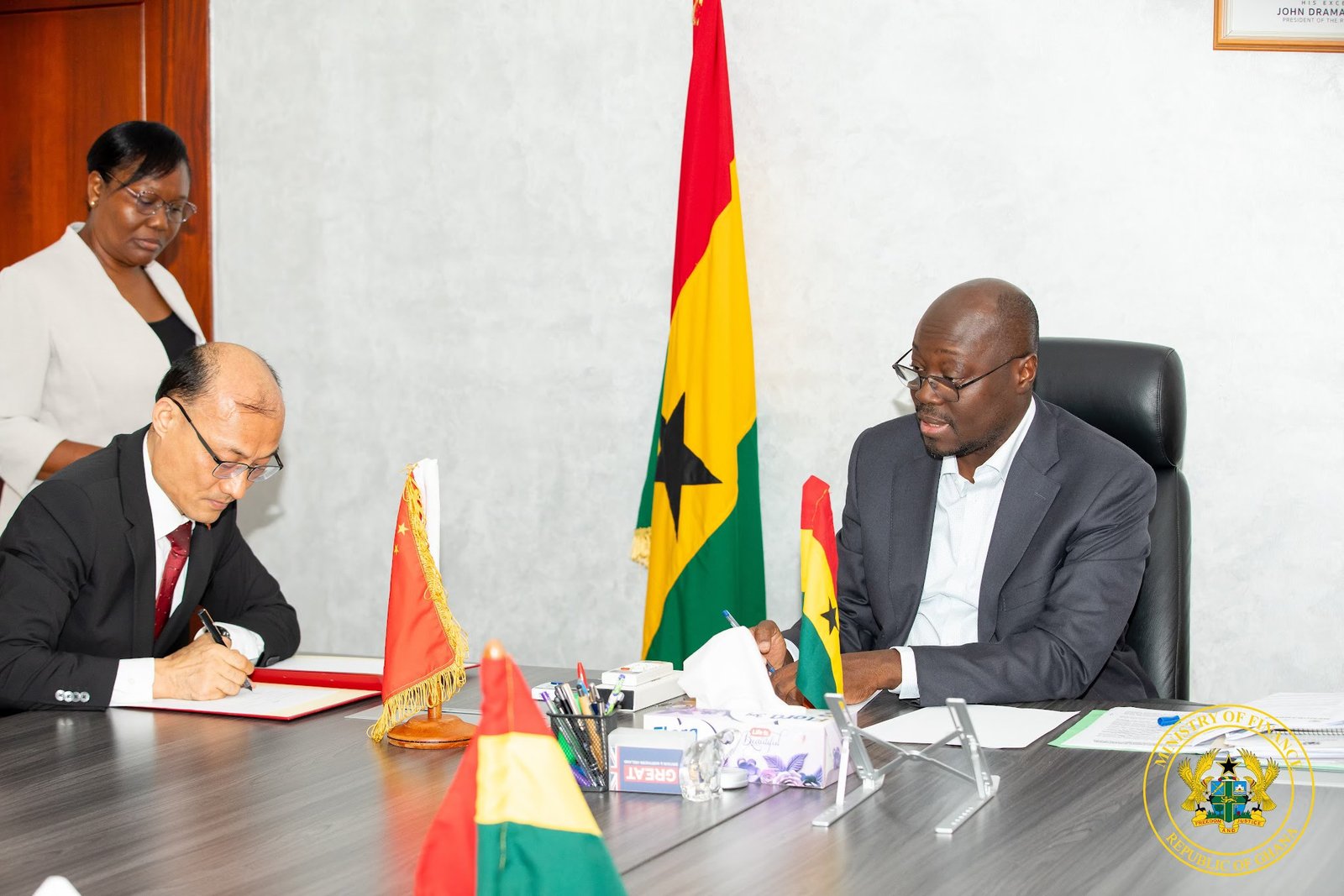
Ghana and China have taken another step in deepening their long standing bilateral relations with the signing of a US$30 million grant agreement to support the construction of a university in Damongo in the Savannah Region.
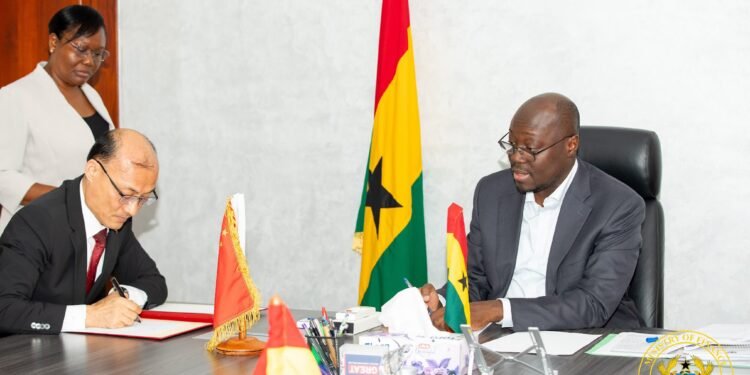
The agreement was concluded during a meeting between Ghana’s Minister for Finance, Dr Cassiel Ato Forson, and the outgoing Chinese Ambassador to Ghana, H E Tong Defa, marking a significant moment in development cooperation between the two countries.
The agreement forms part of broader efforts to expand access to higher education while promoting regional development. For the government, the project is expected to strengthen human capital development in northern Ghana and contribute to long term social and economic transformation in the Savannah Region.
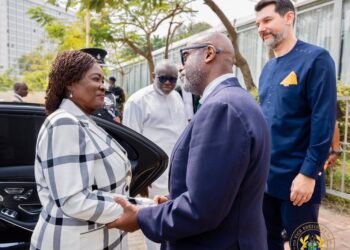
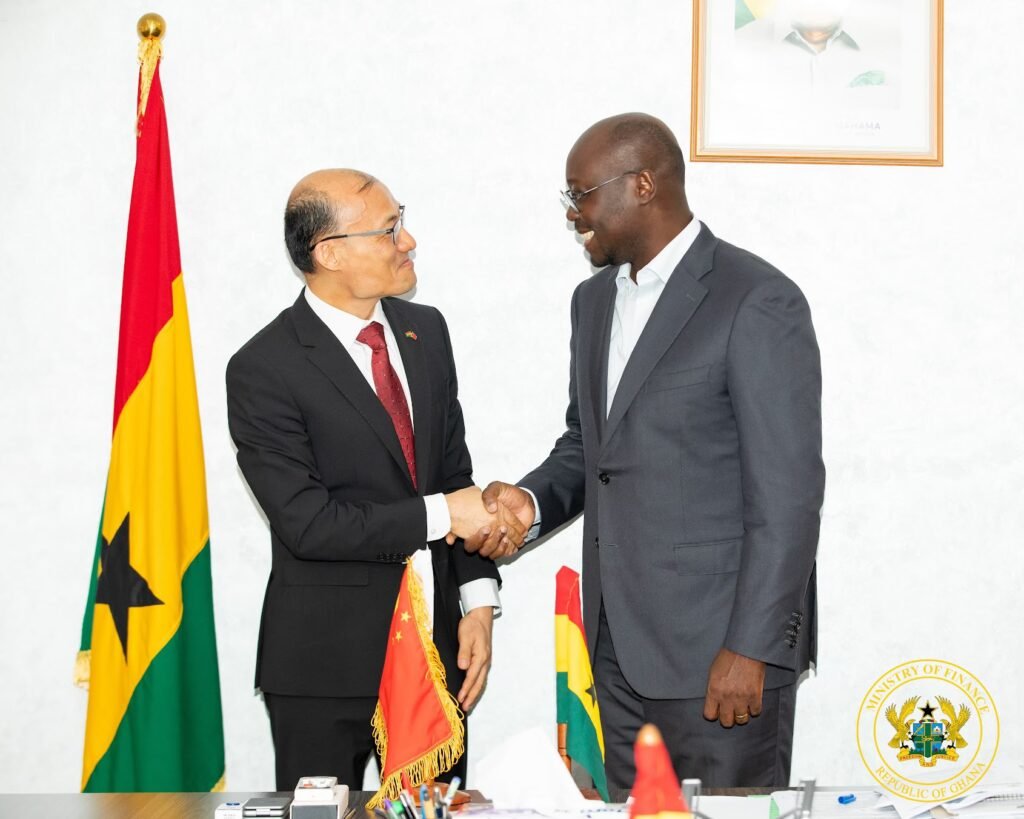
Receiving the Ambassador earlier in the day, Dr Forson described the visit as both symbolic and substantive, noting that it coincided with the successful conclusion of an important grant agreement.
The Finance Minister said the meeting represented “an important moment in our bilateral cooperation,” as both countries committed resources toward the construction of the Damongo University.
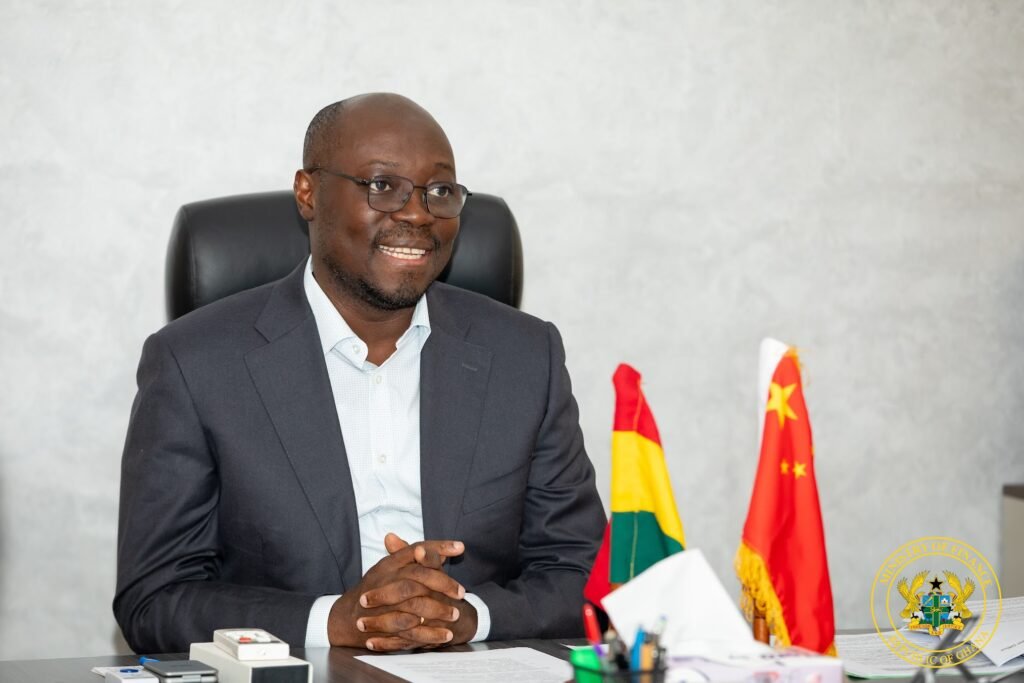
Dr Forson expressed appreciation to Ambassador Tong on behalf of President John Dramani Mahama and the people of Ghana, commending his efforts to strengthen Ghana-China relations during his tenure. He acknowledged that although the Ambassador’s stay in Ghana was relatively brief, it had been productive and impactful.


“I thanked Ambassador Tong on behalf of President Mahama and the people of Ghana for his service and commitment to strengthening Ghana-China relations”.
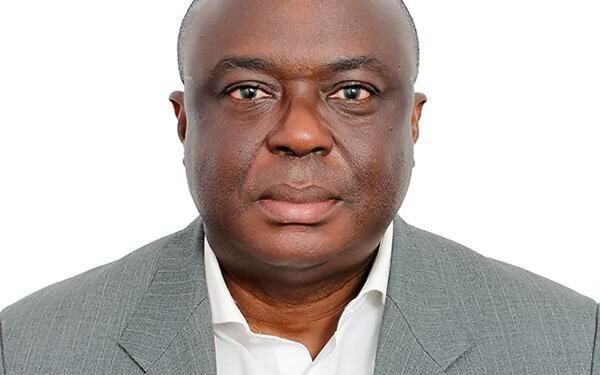
Ghana’s Minister for Finance, Dr. Cassiel Ato Forson
The Finance Minister noted that the Ambassador’s tenure coincided with the conclusion of two major grant agreements that will have lasting benefits for Ghana. In addition to the Damongo university project, China also provided funding for the construction of a multipurpose market in Aflao, a project aimed at boosting local commerce and cross border trade.
Dr Forson used the occasion to highlight the broader contribution of Chinese support and investment to Ghana’s economy, describing the partnership as one rooted in history and mutual respect.
He recalled that diplomatic and economic ties between Ghana and China date back to the era of Ghana’s first President, Dr Kwame Nkrumah, and Chairman Mao Zedong of China, a foundation that continues to shape cooperation today.
Deepen Economic Cooperation
Beyond infrastructure and development assistance, the Finance Minister stressed the need to deepen economic cooperation in ways that enhance efficiency and reduce costs.
He raised concerns about exchange losses associated with bilateral trade and argued that continued reliance on third-party currencies remains an unnecessary burden when Ghana and China trade directly.
Dr Forson stated, “It is only logical that trade between Ghana and China should increasingly be settled in our own currencies.” He explained that settling trade in the Ghanaian cedi and the Chinese currency, the renminbi, would help reduce transaction costs and improve trade efficiency.
According to him, such an approach would reflect the maturity of the bilateral relationship and align with Ghana’s broader goal of strengthening its domestic currency framework. He assured the outgoing Ambassador that discussions on this proposal would continue at the policy level, including engagements with the Bank of Ghana.
Ambassador Tong, for his part, expressed gratitude to the Finance Minister and the Government of Ghana for the cooperation and support he received during his tour of duty. He congratulated Dr Forson on Ghana’s improving economic performance and said he was encouraged by the positive indicators emerging from the economy.
Chinese Ambassador’s Staisfaction
Reflecting on his time in Ghana, the Ambassador said he was proud of the state of Ghana-China relations and satisfied with the tangible outcomes achieved within a relatively short period.
He noted that development cooperation, particularly grant-supported projects, remains a strong pillar of the partnership between the two countries. “I am encouraged by the tangible outcomes achieved within a short period, especially in the area of development cooperation,” Ambassador Tong remarked.
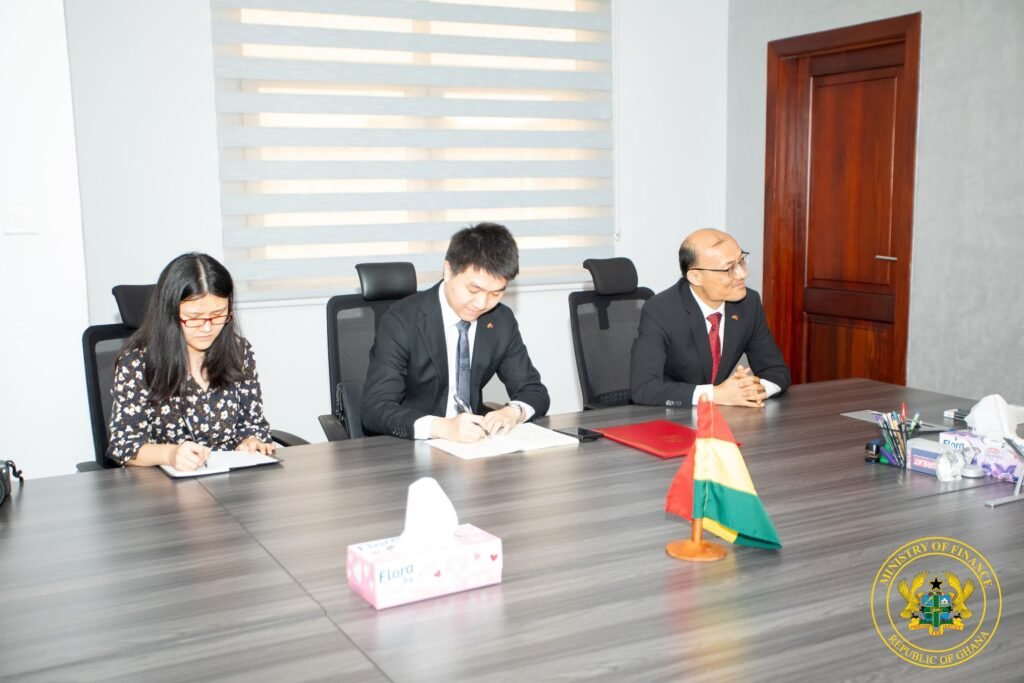
The Damongo university project is expected to serve as a lasting symbol of this cooperation, reinforcing China’s role as a key development partner while supporting Ghana’s agenda of expanding educational infrastructure across underserved regions.
As Ambassador Tong prepares to conclude his assignment, Dr Forson wished him well in his future endeavours and expressed confidence that Ghana China relations would continue to strengthen. He emphasized that the grant agreement reflects not only shared development goals but also a commitment to sustained partnership grounded in mutual benefit.
The signing of the US$30 million grant agreement therefore stands as both a development milestone and a diplomatic statement, underscoring Ghana’s determination to leverage strategic partnerships to advance education, regional development and economic cooperation.
READ ALSO: Ghana Set to Refine One Tonne of Gold Weekly