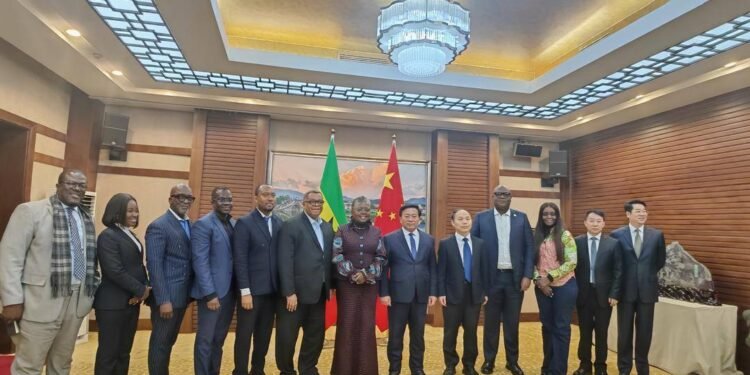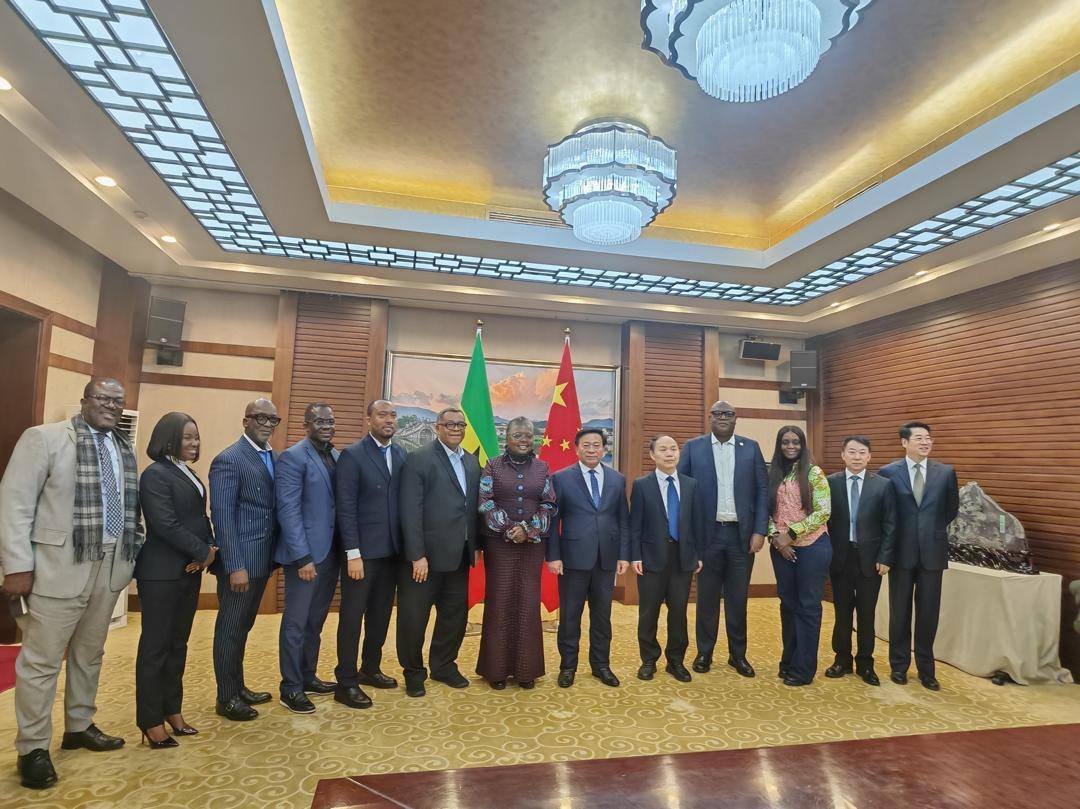
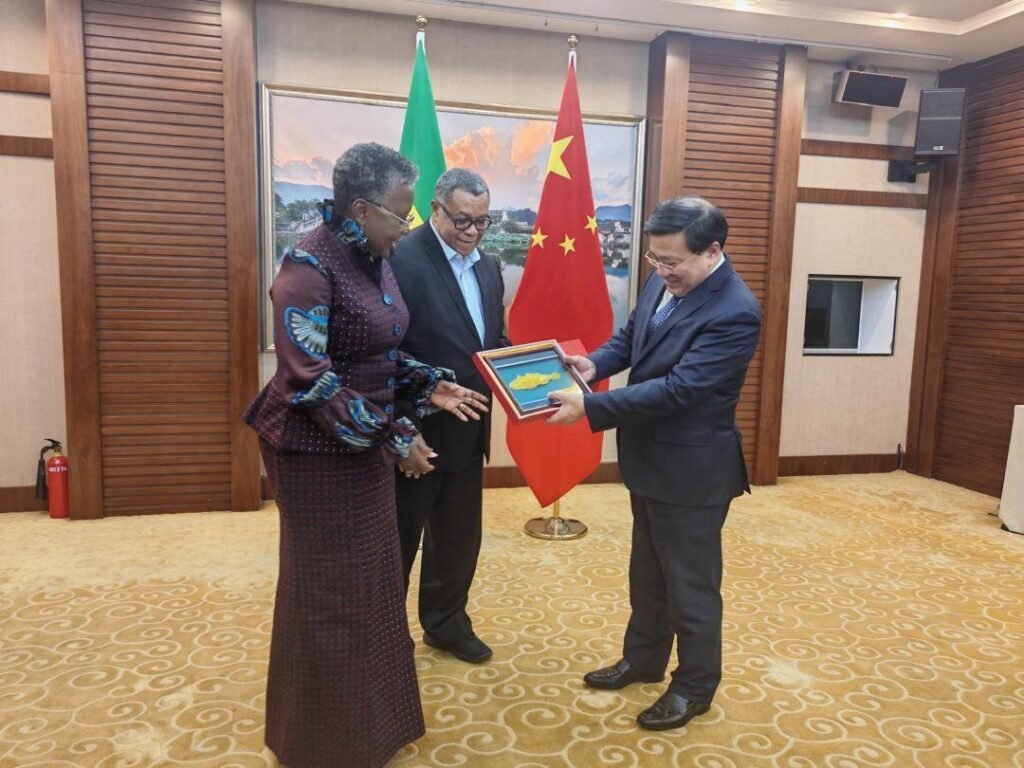
The Minister for Fisheries and Aquaculture Development, Hon. Emelia Arthur, has finalized a landmark fisheries framework in Beijing, positioning Ghana as the strategic gateway for Chinese investment into the African “blue economy.”
Speaking at the conclusion of a high-level diplomatic mission to the People’s Republic of China this week, the Fisheries Minister confirmed that she has secured a commitment for a comprehensive Ghana–China Fisheries Partnership.
The engagement, held with China’s Minister of Agriculture and Rural Affairs, Han Jun, marks a decisive shift in Ghana’s food security strategy – moving away from a reliance on depleted marine stocks and toward a science-driven, industrial-scale aquaculture model designed to close a staggering US$800 million annual supply deficit.
“The future of Ghana’s fish supply lies in responsible aquaculture development supported by technology, investment and strong institutional collaboration. Fish contributes more than 60 percent of our nation’s animal protein intake and supports millions of livelihoods.
“We are ready to partner with China to unlock large-scale growth across the fisheries value chain, ensuring that we move from a state of deficit to one of surplus and export readiness”
Hon. Emelia Arthur, Minister for Fisheries and Aquaculture
For Hon. Arthur, the mission to Beijing was driven by a sobering domestic reality: Ghana’s annual demand for fish stands at 1.28 million metric tonnes, yet local production languishes at just 684,000 metric tonnes.
This 590,000-tonne shortfall forces the nation to spend nearly a billion dollars annually on imports, even as the world’s largest artificial lake, Lake Volta, remains utilized at less than five percent of its capacity. By presenting the Fisheries Partnership Framework to Chinese leadership, Hon. Arthur effectively invited the world’s most advanced aquaculture practitioners to help Ghana unlock its vast natural endowments.
Reclaiming the Blue Economy
The Minister’s agenda in China focused heavily on reversing the collapse of Ghana’s marine stocks, which have been decimated by overfishing and illegal activity.


According to the Fisheries Ministry, data presented to the Chinese Ministry of Agriculture and Rural Affairs revealed that key stocks like sardinella have plummeted to just 13.8 percent of sustainable levels.
To combat this, Hon. Emelia Arthur is pivoting the national strategy toward aquaculture, with a target of hitting 177,000 metric tonnes by 2027. This transition requires more than just water; it requires the high-tech biosecurity systems that China has pioneered globally.
“We have identified an urgent need to strengthen our aquatic animal health systems to address the viruses that have hindered our progress. Ghana is seeking collaboration with China in vaccine development, laboratory twinning, and disease surveillance systems.
“We recognize China’s global leadership in aquaculture biosecurity and are eager to integrate these technologies into our National Aquaculture Centre to support the wider West African sub-region”
Hon. Emelia Arthur, Minister for Fisheries and Aquaculture Development
A critical component of the discussions involved the biosecurity of Ghana’s tilapia farms, which have been ravaged by the Infectious Spleen and Kidney Necrosis Virus (ISKNV). With nearly 80 percent of aquaculture farms currently affected, Hon. Arthur has prioritized collaboration in vaccine development and laboratory twinning.
“By securing Chinese expertise in SPF (Specific Pathogen Free) hatchery technology, the Minister aims to stabilize the sector and provide local farmers with the resilient fingerlings needed to scale production without the constant threat of mass mortality”
Ministry of Fisheries and Aquaculture Development
A $40 Million Investment
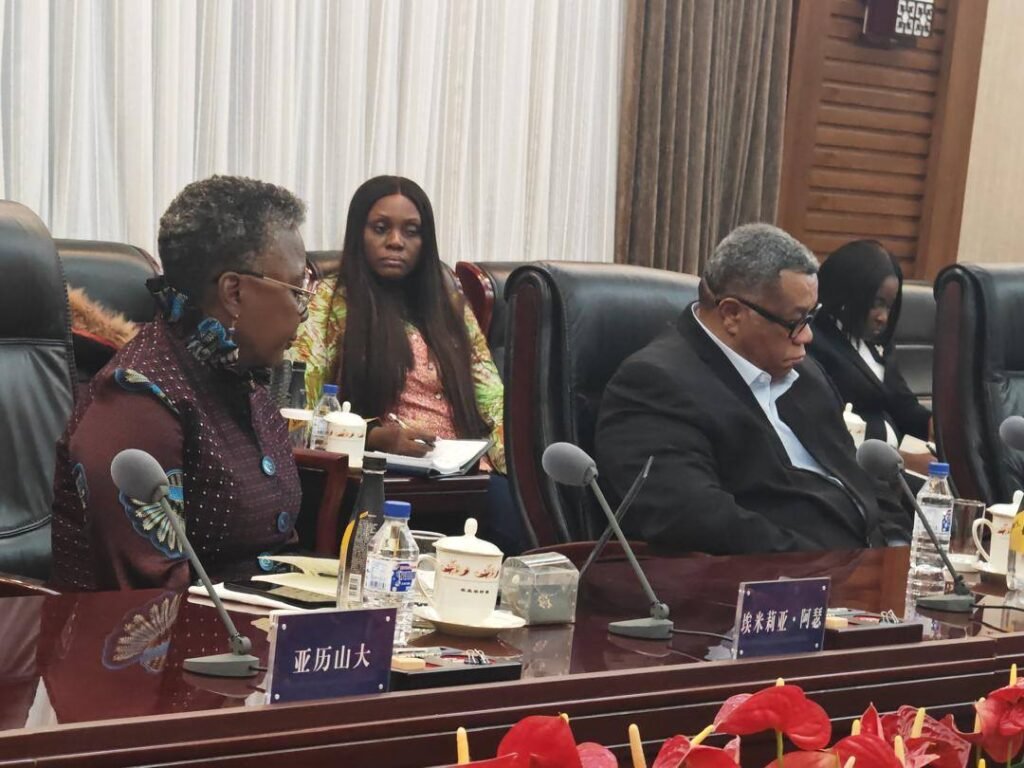
According to the Ministry, the partnership framework presented by Hon. Emelia Arthur did not stop at biosecurity; it outlined specific, shovel-ready projects for Chinese enterprises.
Chief among these is the development of the Shama Fishing Port in the Western Region. Identified as a flagship project, the port requires an estimated investment of $25 million to $40 million and is projected to create over 10,000 jobs.
The Minister also highlighted the $12 million Ghana National Aquaculture Centre, which is currently seeking a strategic Chinese partner to manage operations, research, and technical training.
Beyond infrastructure, the Minister courted investments in the “missing middle,” of the value chain: cold storage and processing. Currently, post-harvest losses in Ghana’s inland fisheries reach as high as 50 percent because of a lack of refrigeration.
By establishing “modern filleting and surimi processing facilities through joint ventures or Public-Private Partnerships,” Hon. Arthur believes Ghana can finally capture the value that currently disappears between the net and the market.
“With the AfCFTA Secretariat headquartered in Accra, Ghana offers access to a 1.3 billion-consumer African market valued at US$3.4 trillion. We are inviting Chinese investors to explore flexible models – including wholly owned ventures and PPPs – supported by our Free Zones incentives.
“Our strategic location and stable democracy make us the perfect gateway for those looking to establish a foothold in the African fisheries and aquaculture market”
Hon. Emelia Arthur, Minister for Fisheries and Aquaculture Development
Cultivating Human Capital
Hon. Emelia Arthur remained adamant that technology and infrastructure must be paired with human expertise to be sustainable. To this end, her proposal included a structured human capital development program.
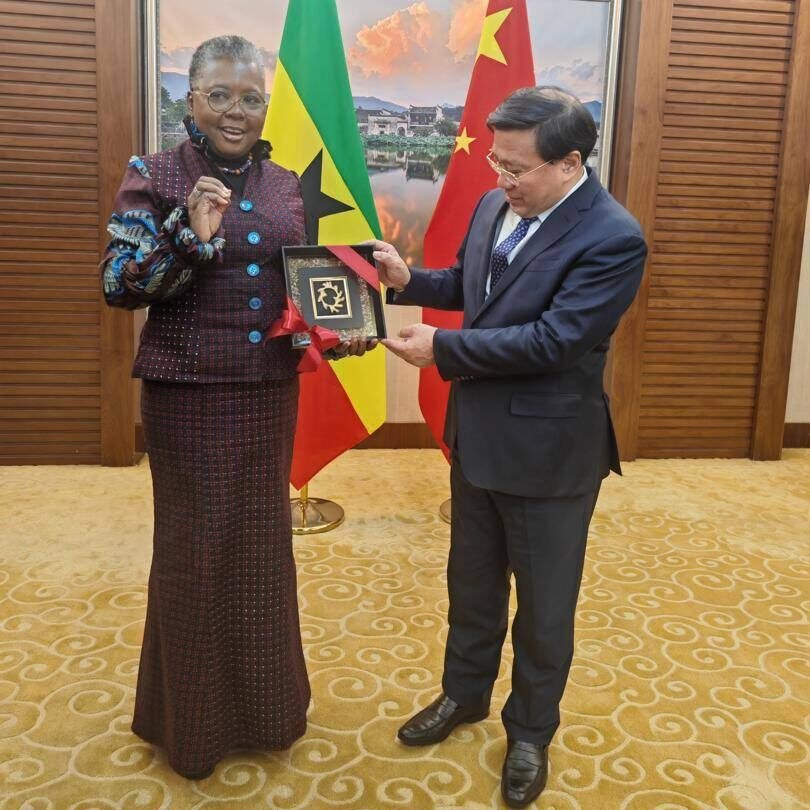
“The goal is to train 1,200 Ghanaian professionals over the next five years in areas ranging from processing technology to fisheries policy. By creating a pipeline of skilled laboratory technicians and biosecurity experts, the Ministry is ensuring that the transition to a high-tech blue economy is led and maintained by Ghanaians”
Ministry of Fisheries and Aquaculture Development
This partnership is designed to serve both nations for generations by combining China’s advanced aquaculture expertise with Ghana’s natural resources and strategic access to the African market.
The engagement in Beijing concluded with a call for a formal Memorandum of Understanding (MoU) to solidify these joint investment roadmaps. For Hon. Arthur, this is about more than just a short-term trade deal; it is about building a partnership that will secure Ghana’s food sovereignty for generations to come.
By leveraging Chinese technology to farm Lake Volta and modernize the coastal ports, she is setting the stage for an industrial fisheries revolution.