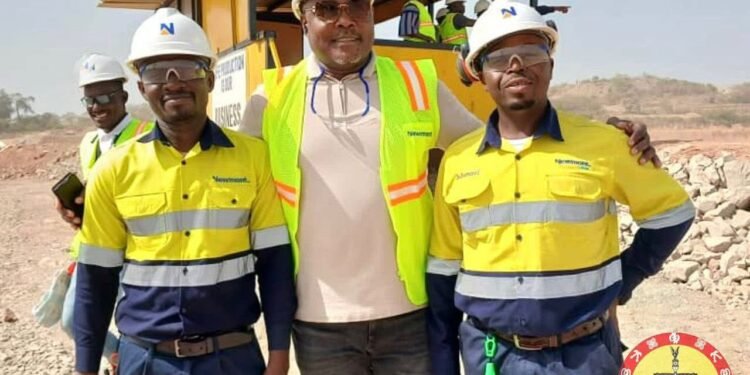
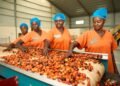
Abdul Razak Baba, the Deputy Chief Executive Officer (DCEO) of the Ghana Investment Promotion Centre (GIPC), has pledged a decisive institutional push to revitalize one of Cape Coast’s most storied industrial landmarks, the Ameen Sangari Factory, during a high-level facility.
Mr. Baba, speaking during the tour emphasized that the factory’s shift toward large-scale rice production is a critical component of Ghana’s broader strategy to achieve food sovereignty.
“The Ameen Sangari Factory is a prime example of the resilient, homegrown agribusinesses we are targeting through the IOMP. By scaling up domestic rice production and milling, this factory is not just creating jobs; it is actively reviving Ghana’s local value chain”
Abdul Razak Baba, DCEO of GIPC
Established in 1972, Ameen Sangari has long been a pillar of the Central Region’s economy, originally known for its soaps and industrial oils. However, under the leadership of Managing Director Perry Mensah, the multi-generational agribusiness is now pivoting back to its roots in rice milling to counter the influx of low-cost imports that have historically stifled local value chains.

For Baba, the success of Ameen Sangari is a bellwether for the government’s Investment Opportunity Mapping Project (IOMP). By integrating smallholder networks into a sophisticated farm-to-factory model, the factory is moving beyond ad-hoc processing to a structured, industrial output that can compete on both quality and price.
Managing Director Perry Mensah revealed that the factory is currently producing approximately 1,200 bags of rice per day. While significant, Mr. Mensah noted that this is only the beginning of a phased expansion plan.
The factory is targeting a massive increase in its land footprint, aiming for a plantation scale between 500 and 1,000+ acres. This vertical integration – where the factory controls everything from seed to sack – is designed to stabilize paddy prices for local farmers and ensure a consistent supply of high-quality raw materials.


However, the transition is not without hurdles. Mr. Mensah highlighted the intense capital requirements and the competitive pressure from cheaper, subsidized foreign rice. He argued that without increased mechanization and targeted policy support to lower equipment costs, local producers would continue to struggle against the “import dependency,” that has long plagued the sector.
Regional Investment Roadshow
The visit was part of the GIPC’s Regional Investment Roadshow, an initiative designed to bring investment-ready projects to the attention of both local and international financiers.

Mr. Abdul Razak Baba reaffirmed that GIPC would take a lead role in “hand-holding,” Ameen Sangari through its next growth phase. This includes actively pitching the factory’s expansion plans to development partners who are focused on climate-smart agriculture and import substitution.
The DCEO noted that the Central Region is being prioritized as a hub for agribusiness, and the Ameen Sangari model serves as a blueprint for other districts. By documenting the factory’s needs through the IOMP, GIPC is creating a data-driven path for investors to enter the Ghanaian rice market with confidence.
“We will continue to engage with investors to enhance the factory’s milling capacity and expand its production footprint. This is not just about one company; it is about promoting domestic rice and reducing our reliance on foreign exchange for food imports”
Abdul Razak Baba, DCEO of GIPC
The return to rice milling represents a full-circle moment for Ameen Sangari. After decades of diversifying into sectors like electricity poles and detergents, the refocus on agriculture aligns with the national “Feed Ghana” agenda.
The factory’s ability to adapt its 50-year-old infrastructure for modern rice processing is a testament to the enduring nature of Cape Coast’s industrial heritage.

As the engagement concluded, Mr. Perry Mensah stressed that the revival of the factory would act as an economic engine for the entire metropolis, absorbing labor and stimulating secondary businesses in the logistics and retail sectors.
READ ALSO: Ghana’s Central Bank Admits Six Crypto Firms