
Policy think-tank IMANI Centre for Policy and Education (IMANI Africa) has cautioned the New Patriotic Party against what it described as an overreliance on ceremonial peace pacts, arguing that strict adherence to law and institutional rules is the only sustainable path to credible internal democracy.
In a governance brief issued ahead of the NPP presidential primaries scheduled for January 31, IMANI said the party risks weakening its own democratic foundations by prioritising symbolism over enforcement of existing rules.
The NPP enters the primaries still grappling with the fallout from its 2024 electoral defeat and mounting pressure to reorganise ahead of the 2028 general election. While the early flagbearer contest is intended to reenergise the party, IMANI observed that the atmosphere surrounding the race has been deeply strained.
Rather than a contest of ideas that highlights policy alternatives and ideological direction, the campaign has been marked by personal attacks, recriminations and open disagreements over responsibility for the party’s recent loss.
“Come to think of it, in many ways, such has been the nature of electoral politics. It is bruising, as candidates courts the loyalty of delegates.
“However, this intense vitriol has framed the party as even more fragmented, and lacking the leadership for a united front against the ruling National Democratic Congress (NDC) that is enjoying the goodwill of Ghanaians”.
IMANI Centre for Policy and Education
Internal Fragmentation
The think tank noted that this internal fragmentation has once again produced a familiar Ghanaian response to political tension, the signing of a peace pact among aspirants. While acknowledging the symbolic intent behind such gestures, IMANI argued that their recurrence is itself evidence of deeper institutional shortcomings.

In the brief, IMANI questioned the real value of peace pacts that lack legal force. It stressed that elections are not governed by goodwill ceremonies but by clear laws, party constitutions and established dispute resolution mechanisms.


Once individuals choose to contest for office, the group argued, they automatically submit themselves to the legal and procedural frameworks that regulate the process. Any breaches already attract sanctions under existing rules, making additional pledges unnecessary.
IMANI warned that elevating peace pacts above the rule of law sends troubling signals. First, it suggests that key institutions, including party structures, security agencies and judicial mechanisms, are incapable of managing electoral disputes without voluntary commitments from candidates.
Second, it implies that political personalities wield more authority than the systems they seek to lead, with the power to either restrain or incite supporters at will. The think tank further argued that peace pacts tend to be effective only when losing candidates are satisfied with the conduct of an election.
“If a candidate is genuinely aggrieved by the conduct of the election, they should—and will—seek redress through the laid-down legal channels. If it is a fair process, a peace pact is redundant; if the process is flawed, the pact is a gag order.
“The insistence of these ceremonies is in many ways, a collective time-wasting exercise. It signals to all and sundry that our politics is fragile and that our respect for the rule of law is optional, based on a non-legal undertaking that can be broken the moment tensions rise.”
IMANI Centre for Policy and Education
Beyond Handshake
Drawing parallels with national elections, IMANI observed that peace pacts organised by bodies such as the National Peace Council have not always prevented violence or post election disputes.
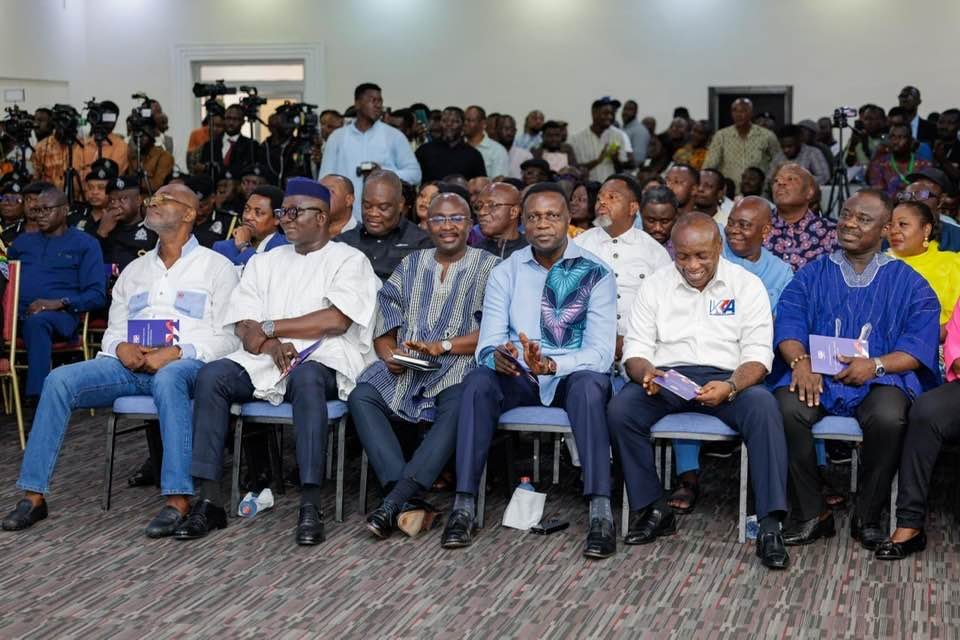
The think-tank argued that peace cannot be sustained through handshakes and public affirmations alone but through confidence in systems that are fair, transparent and firm. When political actors treat peace as a favour granted by candidates rather than a legal obligation, IMANI warned, democratic norms are weakened.
As the NPP prepares to elect its flagbearer, IMANI urged party members and observers to shift attention away from the optics of peace pact ceremonies and focus instead on compliance with the party’s constitution.
It stressed that internal democracy must be grounded in rules based procedures that apply equally to all aspirants, without fear or favour. The true test of the process, the brief noted, is not how warmly candidates pose for photographs but whether the party has respected its own laws.
Consistent Application of Law
IMANI concluded that Ghana’s democracy, and the credibility of political parties within it, depends on the consistent application of law. It called on aspirants to demonstrate respect for the offices they seek by obeying established rules rather than relying on nonbinding undertakings.
More importantly, the group emphasised the need for institutions to function effectively so that peace pacts become unnecessary and obsolete. The brief forms part of IMANI’s critical analysis of governance issues covering the period from January 19 to January 24, 2026.

As the NPP heads into a decisive internal contest, the think tank’s message is clear. Sustainable peace and unity cannot be negotiated through ceremonies but secured through unwavering commitment to the rule of law.