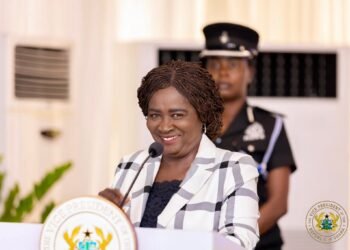
Vice President of the Republic, Professor Jane Naana Opoku-Agyemang, has reinforced the government’s commitment to the Ministry of Lands and Natural Resources, declaring that the strategic preservation of Ghana’s ecological and mineral wealth is the bedrock of the nation’s long-term prosperity.
During a high-level working visit to the Ministry, the Vice President highlighted that government views the sustainable management of natural assets not merely as a policy goal, but as a fundamental requirement for national survival.
Welcomed by the Sector Minister, Hon. Emmanuel Armah-Kofi Buah, and the Ministry’s senior leadership, Professor Opoku-Agyemang’s visit signaled a shift from remote oversight to direct field engagement.
The Vice President utilized the session to bridge the gap between policy formulation and the technical staff executing environmental mandates, acknowledging the massive scale of land reclamation needed to counter the devastation caused by illegal mining.
By connecting with the “human effort” behind the reports, she aimed to boost morale within the agencies tasked with patrolling Ghana’s “thousands of football fields” worth of degraded landscapes.
“We are not somewhere far away, receiving reports written by faceless people. Protecting the environment is protecting ourselves. We have your back and we will support you every step of the way.”
rofessor Jane Naana Opoku-Agyemang
Digitisation and Gender Equity in Resource Governance

A pivotal theme of the Vice President’s address focused on the modernization of land administration through aggressive digitisation.


She noted that streamlining land records is the only viable path to resolving chronic disputes over ownership and transparency that often stifle extractive investments.
Furthermore, the Vice President pivoted to a socio-economic imperative: the creation of land banks specifically for women.
By “consciously reserving portions of land banks for women,” she argued that the government can unlock latent economic potential, ensuring that natural resource policy is both inclusive and productive.
Decentralisation: Taking Service Delivery to the Grassroots
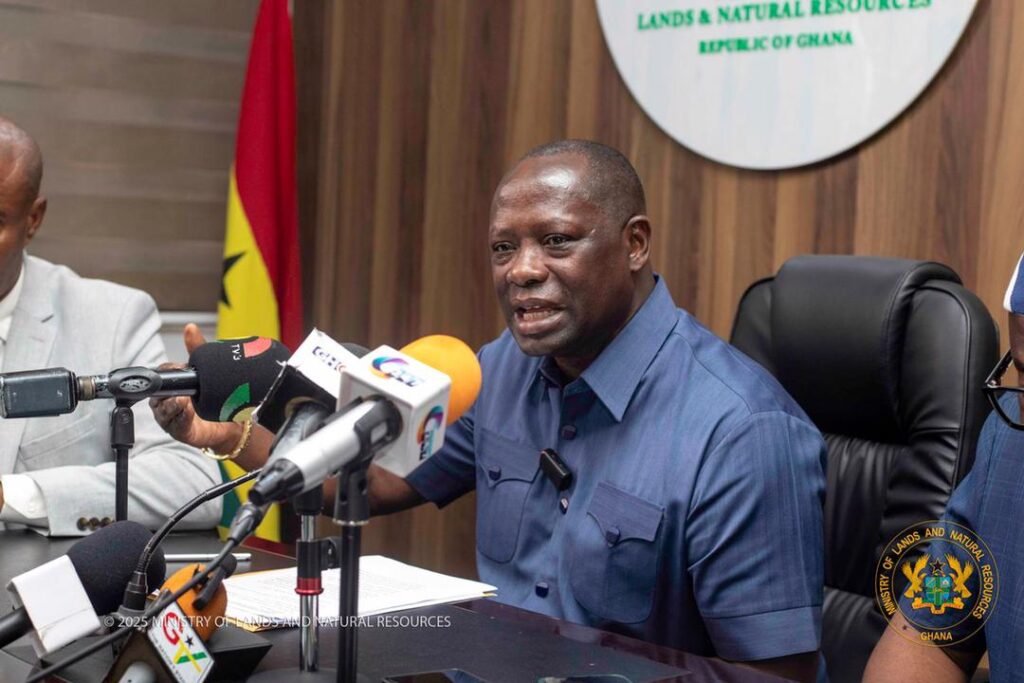
Addressing the structural hurdles of the Ministry, Professor Opoku-Agyemang lauded ongoing decentralisation efforts as a remedy for the “Accra-centric” nature of past administrations.
She emphasized that for environmental stewardship to be effective, it must be felt in the rural communities where mining and forestry activities actually occur.
This grassroots approach is intended to ensure that the Ministry’s interventions ranging from wildlife protection to mineral regulation reach the people most affected by the extractive industry’s footprint.
Strategic Assurance and the Future of Ghana’s Extractive Pillar
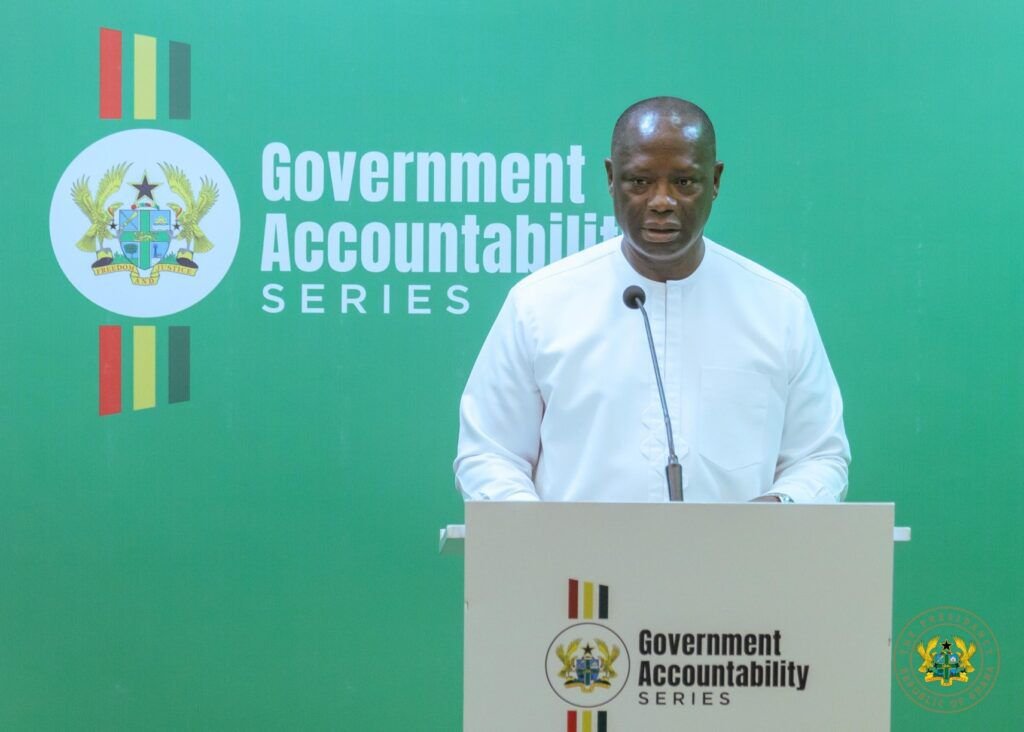
In an industry-shaping presentation, Hon. Emmanuel Armah-Kofi Buah outlined the Ministry’s role as a “critical pillar in the country’s development architecture.”
The assurance of “unwavering support” from the Vice Presidency provides the Ministry with the necessary political capital to enforce stringent reforms in the mining and forestry sub-sectors.
For the extractive industry, this visit underscores a government-wide mandate to transform natural resources into “job creation and revenue generation” while maintaining a “strong premium” on sustainability.
This executive backing is expected to accelerate the implementation of new legal frameworks and audit processes designed to protect public lands from mismanagement and encroachment.