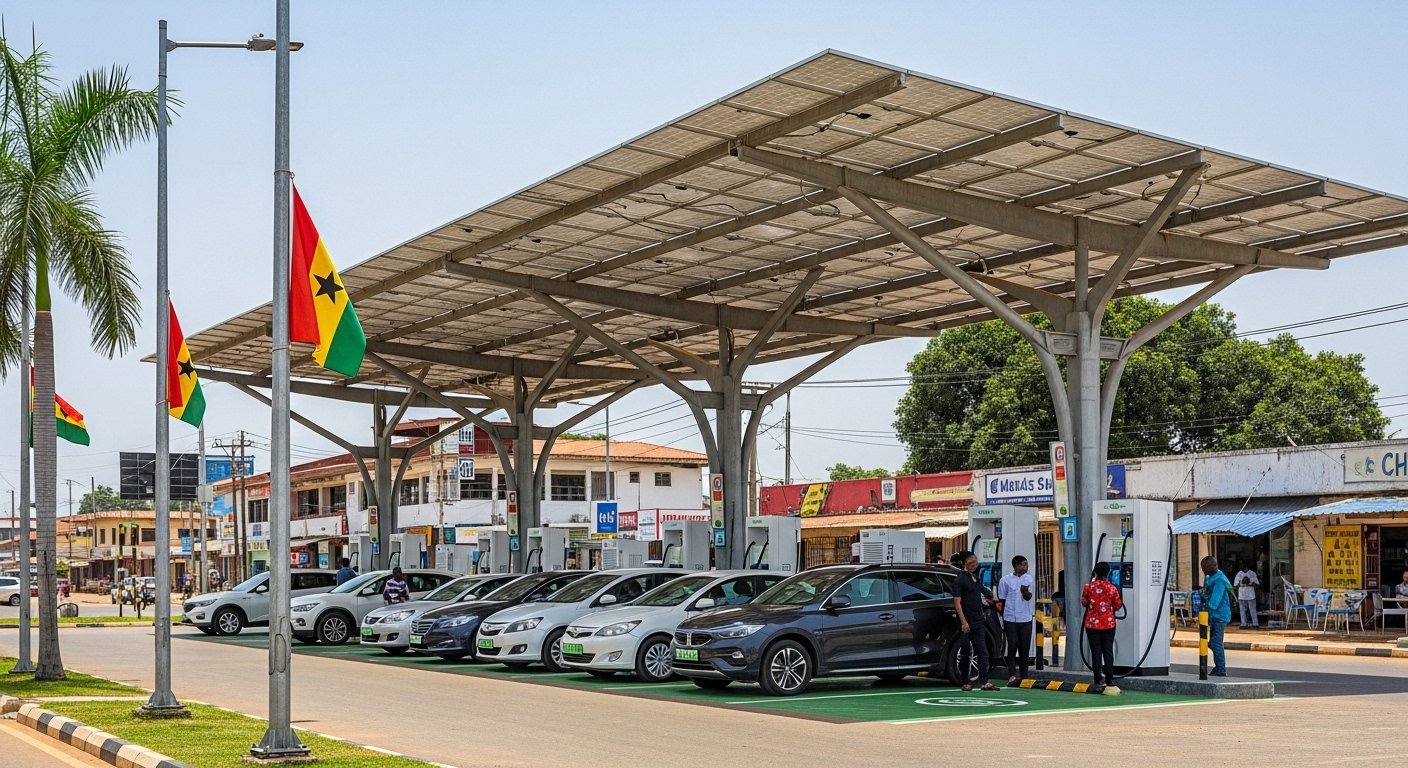
The government of Ghana has announced plans to roll out solar-backed electric vehicle charging stations across selected transport hubs as part of efforts to manage the rapid growth of electric vehicles and protect the national power grid.
The Minister for Energy and Green Transition, Dr John Abdulai Jinapor, disclosed the plans while outlining government’s response to the rapid growth of electric vehicles and rising electricity demand.
“Ghana has about 17,000 EV vehicles. The highest in the world of Africa.
“And when I look at the trend, if we don’t do anything, these vehicles alone would consume all electricity.”
Dr John Abdulai Jinapor, Minister for Energy and Green Transition
To prevent electric vehicles from placing excessive strain on the national grid, the Ministry is prioritising the deployment of solar-powered charging infrastructure. Dr Jinapor said the strategy is to remain ahead of demand by pairing EV adoption with renewable energy solutions.

Under the plan, EV owners will be able to locate and access charging points through a mobile application, pay digitally, and recharge their vehicles within minutes.
“With modern technology, in five minutes, you can charge your car. And when you charge the car, depending on how you use it, it can take one week.”
Dr John Abdulai Jinapor, Minister for Energy and Green Transition
The solar-backed approach, he said, will ensure that EV charging does not worsen pressure on existing electricity infrastructure while keeping costs affordable for users.


Cost Savings Drive Focus on Solar EVs

Beyond grid protection, Dr Jinapor highlighted the significant cost advantages of solar-powered electric vehicles compared to traditional fuel-powered cars.
“And if you compare the solar car in terms of fuel consumption to normal fuel, you save 50% as compared to ordinary fuel.
“So it’s an area we really want to focus on.”
Dr John Abdulai Jinapor, Minister for Energy and Green Transition
The minister argued that these savings, combined with reduced emissions, make solar-powered mobility a strategic investment for Ghana’s long-term development.
Dr Jinapor disclosed that the solar-backed charging stations will be installed at selected locations where vehicles regularly load passengers. These include major transport terminals and high-traffic areas, ensuring easy access for drivers.
“We want to install solar-backed charging stations across some selected stations where the vehicles load.”
Dr John Abdulai Jinapor, Minister for Energy and Green Transition
The approach, he explained, is designed to integrate clean energy solutions directly into existing transport infrastructure rather than creating parallel systems that are difficult to access.
Expansion of Solar Street Lighting
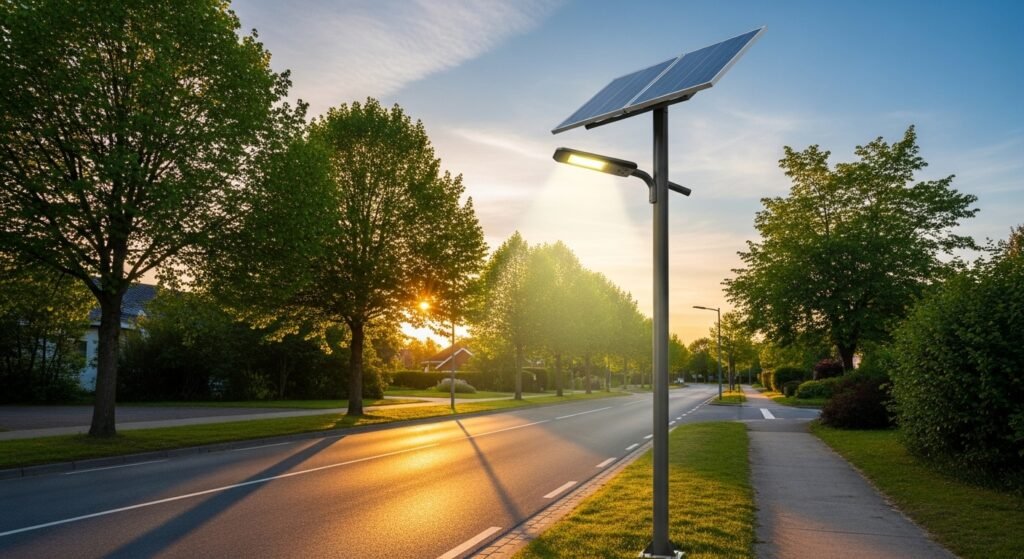
In addition to EV charging infrastructure, the government plans to scale up the installation of solar street lights nationwide. Dr Jinapor said the initiative will improve public safety, reduce electricity costs, and further embed renewable energy into everyday life.
“We’re also going to do a lot of solar street light,” he noted, describing the effort as part of a broader shift toward sustainable urban and rural development.
The combination of solar street lighting and EV charging infrastructure, he added, reflects a deliberate policy direction aimed at reducing reliance on fossil fuels while making clean energy visible and practical.
The Energy Ministry says the EV charging initiative aligns with Ghana’s broader green transition agenda, which seeks to balance economic growth with environmental sustainability.

By prioritizing solar energy in the transport sector, the government aims to cut emissions, lower energy costs, and future-proof infrastructure.
Analysts say the plan could position Ghana as a regional leader in clean transport innovation if implemented effectively. However, they note that success will depend on sustained investment, public awareness, and collaboration with the private sector.
As electric vehicle numbers continue to rise, the government’s emphasis on solar-backed solutions signals a proactive approach to managing change.
For Dr Jinapor, the goal is clear: to stay ahead of the curve while ensuring that cleaner transport delivers real economic and environmental benefits for Ghanaians.
READ ALSO: TCDA Deploys Enforcement Unit to Protect Tree Crops