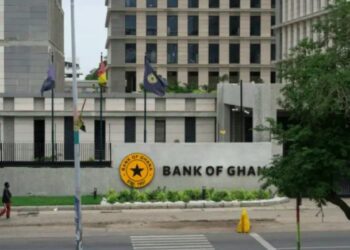
Ghana Association of Banks has revealed a remarkable turnaround in the country’s banking sector, with total industry assets climbing to an impressive GH¢446.9 billion in 2025.
The latest financial indicators point to a sector that is steadily regaining strength, rebuilding public confidence, and positioning itself as a key driver of economic recovery.
After several years of economic uncertainty marked by inflationary pressures, debt restructuring, and financial market instability, the latest figures suggest that Ghana’s banking industry is entering a new phase of resilience and expansion.
According to the industry analysis, total banking sector assets increased by 21.5 percent from GH¢367.8 billion in 2024 to GH¢446.9 billion in 2025. This significant growth reflects improved balance sheets across major institutions and renewed momentum within the financial system.
The strong performance is being viewed by analysts as a clear signal that the banking sector is regaining its footing and becoming increasingly capable of supporting economic growth.
Customer confidence drives deposit growth
One of the clearest signs of recovery is the sharp rise in customer deposits. Total deposits rose by 17.8 percent, moving from GH¢276.2 billion in 2024 to GH¢325.3 billion in 2025.
The growth in deposits indicates that individuals, businesses, and investors are gradually rebuilding trust in the banking system. In times of economic uncertainty, deposit behavior often reflects public confidence, and the latest figures suggest customers are becoming more comfortable keeping their funds within the formal financial sector.
Financial experts say this growing confidence could support broader economic activity by increasing the availability of funds for lending and investment.
As banks attract more deposits, they are better positioned to finance productive sectors of the economy, including trade, manufacturing, agriculture, and small business development.

Lending activity picks up
The report also shows improved lending activity across the sector. Total advances, which measure loans and credit extended by banks, rose by 16 percent from GH¢95.7 billion in 2024 to GH¢111 billion in 2025.
This increase suggests that banks are gradually expanding credit to households and businesses, a critical step in stimulating economic growth and job creation.
Access to credit remains a major concern for many businesses in Ghana, particularly small and medium enterprises. The rise in advances may therefore provide some relief to entrepreneurs seeking capital to expand operations, purchase equipment, or meet working capital needs.
Industry observers believe sustained credit expansion could have a positive impact on productivity and economic competitiveness.
Capital strength improves significantly
Another major highlight from the report is the improvement in the sector’s capital position.
The Capital Adequacy Ratio, which measures a bank’s ability to absorb financial shocks, increased from 14 percent in 2024 to 17.5 percent in 2025. This places the sector comfortably above regulatory requirements and reflects stronger financial buffers across institutions.
More importantly, the Capital Adequacy Ratio without regulatory reliefs improved sharply from 11.3 percent to 17.5 percent.
This development suggests that banks are no longer relying heavily on temporary regulatory support to maintain financial stability. Instead, the improved figures point to genuine balance sheet strengthening, better earnings performance, and stronger internal risk management systems.
For investors and policymakers, this is a critical indicator of long-term sector stability.
Bad loans decline sharply
Asset quality also showed notable improvement in 2025.
Non-performing loans, commonly referred to as bad loans, declined from 21.8 percent in 2024 to 18.9 percent in 2025. Even more encouraging, non-performing loans excluding loss-category loans fell sharply from 8.5 percent to just 5 percent.
The decline in bad loans suggests that banks have become more effective in managing credit risk, recovering troubled loans, and improving lending practices.
It also points to stronger repayment performance across parts of the economy, which may indicate improving business conditions for borrowers.
Lower bad loan ratios reduce systemic risk within the financial system and create a healthier environment for lending, investment, and economic expansion.
Stronger banks support economic recovery
The Ghana Association of Banks noted that the sector continues to demonstrate steady improvements in risk management and overall financial stability in 2025.
The latest performance reflects a banking industry that is not only growing in size but also improving in quality, efficiency, and resilience.
For businesses, investors, and households, the numbers offer cautious optimism. A stronger banking sector means better access to financial services, increased lending opportunities, and greater confidence in the broader economy.
As Ghana continues its journey toward economic recovery, the banking sector’s renewed strength could play a central role in supporting investment, employment, and sustainable growth.
The impressive rebound in assets, stronger capital positions, rising deposits, and falling bad loans all point to one clear message. Ghana’s banks are back on a growth path and are increasingly prepared to support the nation’s economic ambitions.
READ ALSO: Analyst Forecasts Ghana Stock Market Golden Run Following Fitch Upgrade